
Last updated September 10, 2026
Full 25-point door and opener safety check with every visit - springs, cables, rollers, tracks, and your LiftMaster or Chamberlain opener included
You get a price before we start. It does not change when the truck arrives.
 Before
 After
After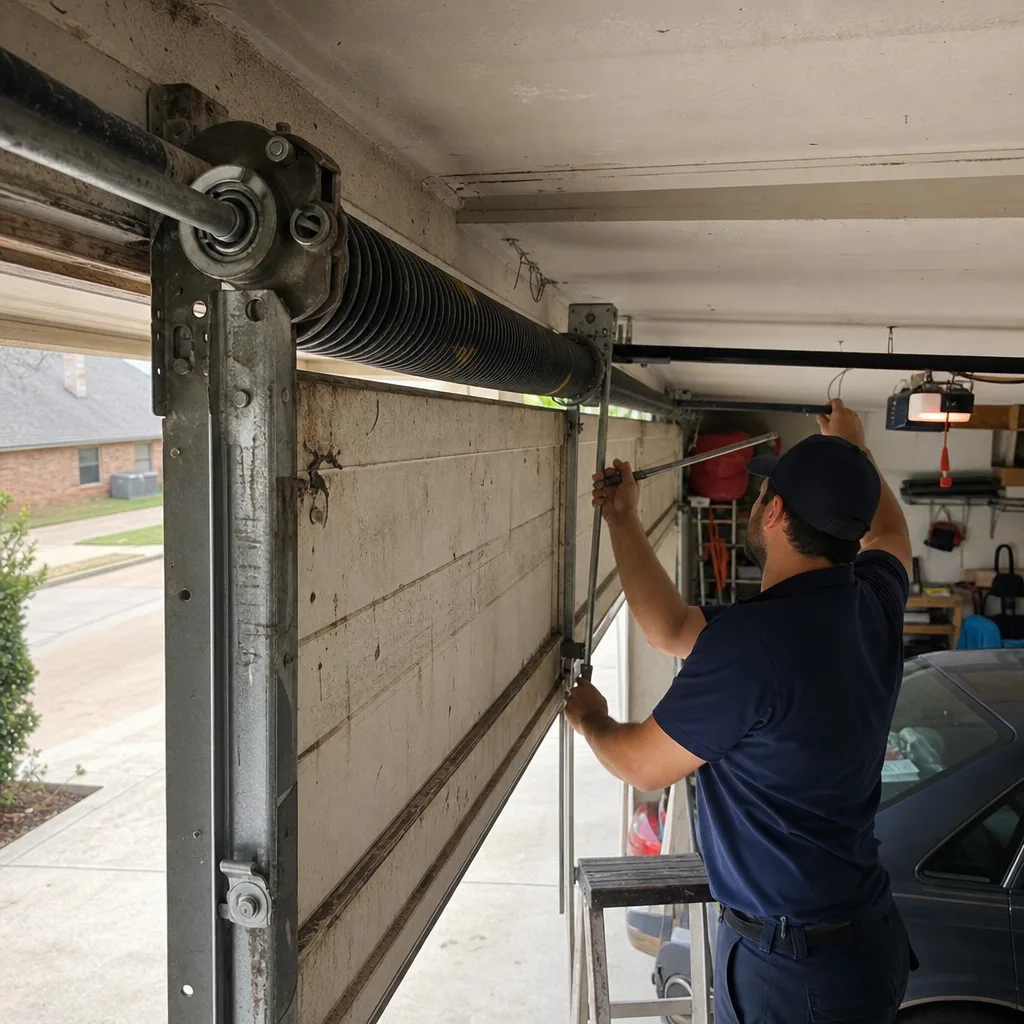 Before
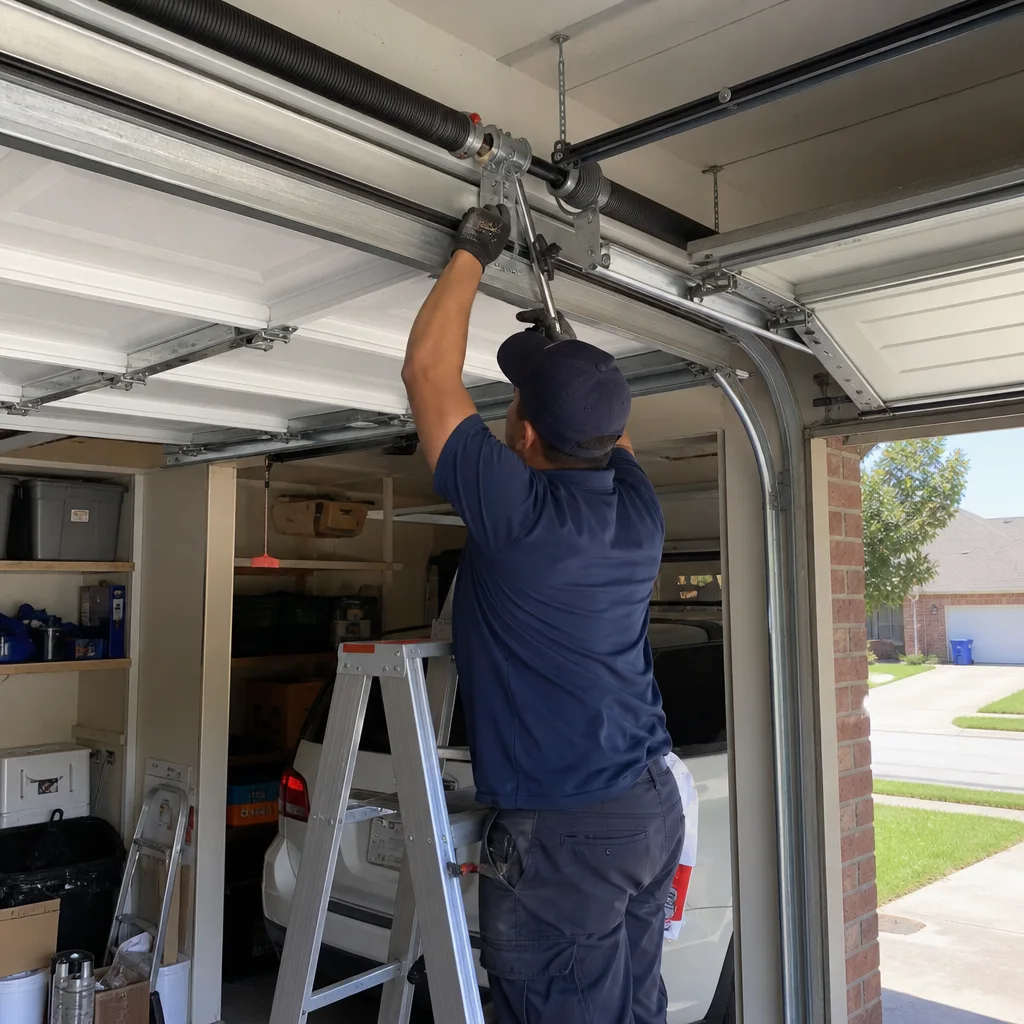 After
After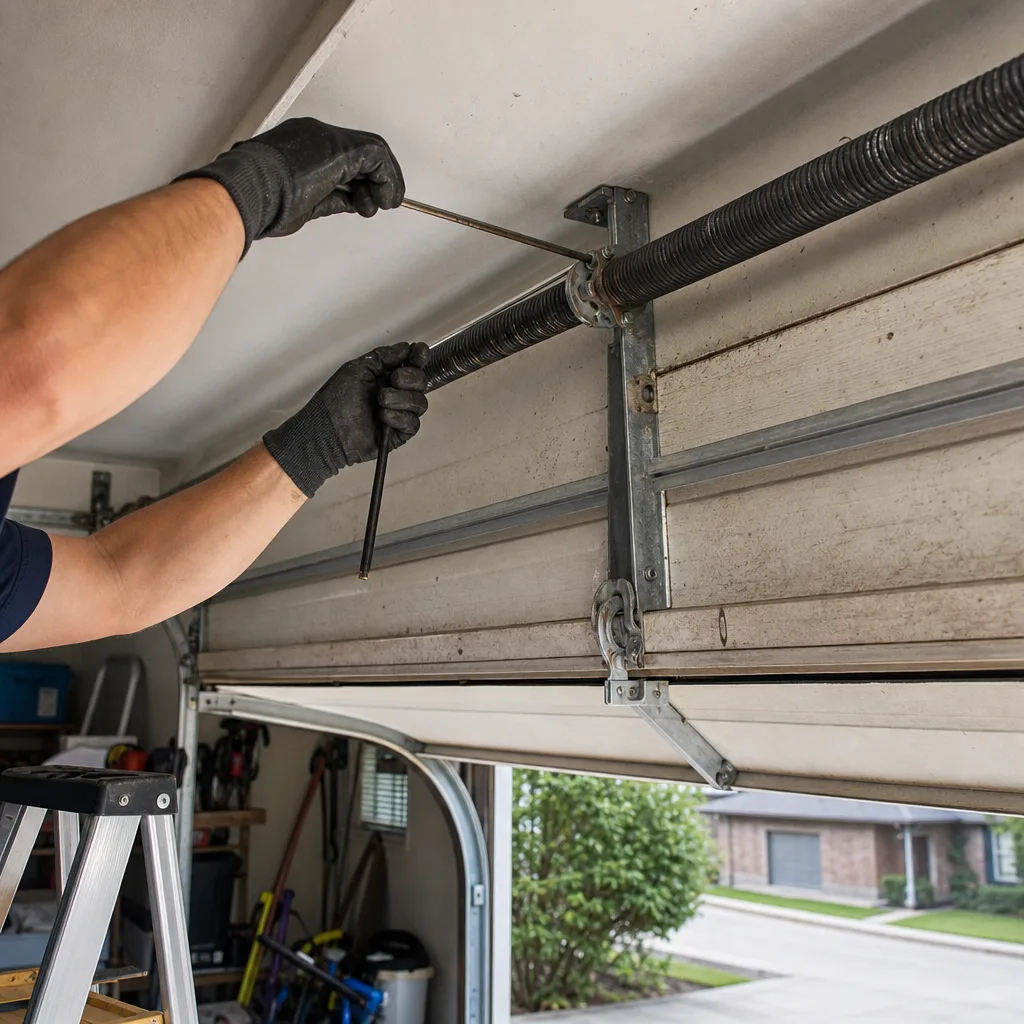 Before
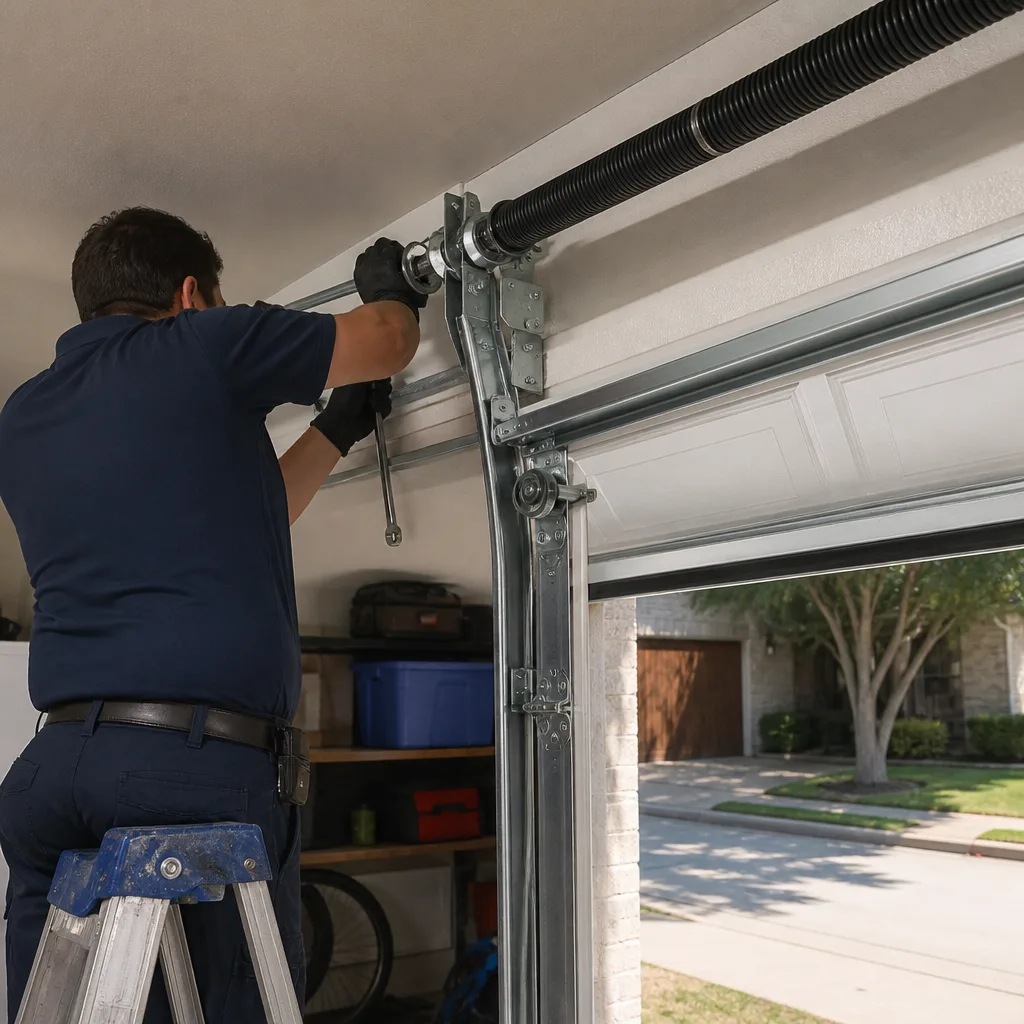 After
AfterGarage Door Warning Signs: A Richardson Homeowner’s Reference Guide
The noise your garage door started making three months ago is not normal break-in sounds. It is a component telling you exactly what it needs, in the only language it has. In Richardson, where summer heat pushes metal past 140 degrees and winter cold snaps contract steel overnight, garage doors wear faster than most homeowners realize. We’ve been called to homes in Canyon Creek and Heights Park where a door that “worked fine yesterday” is now wedged half-open, and in every case, the door had been sending warning signals for weeks. This guide maps each symptom to its specific cause, gives you the timeline before failure, and shows you which tests you can run yourself and which require a trained technician - or see our step-by-step guide on hiring a garage door contractor in Richardson when you need professional help.
Quick Answer
Garage doors in Richardson typically show five to seven warning signs before complete failure: unusual noises (grinding, squealing, rattling), slow or uneven movement, intermittent response to controls, visible panel stress or cable fraying, and reversal behavior changes. Most symptoms progress from noticeable to critical within 2-6 weeks in our climate. A door that “just takes two tries” is usually 10-14 days from total failure.
Table of Contents
- The Symptom-to-Cause Index: What Each Noise Means
- Slow Reversal Speed: The Most Overlooked Spring Warning
- Visual Signs Your Door Is Misaligned, Not Just Aging
- The 60-Second Test: Motor Failure vs. Drive Mechanism Failure
- “It Works Fine, It Just Takes Two Tries”: What Intermittent Failure Really Means
- How Richardson’s Climate Accelerates Specific Failures
- A Seasonal Maintenance Timeline for Richardson Homes
- Common Mistakes to Avoid
- When to Call a Professional
- Frequently Asked Questions
- The Bottom Line
The Symptom-to-Cause Index: What Each Noise Means
Garage doors have no dashboard lights. They speak in sound, movement, and resistance. After 42 years in this trade, we’ve learned to translate.
Grinding: The Sound of Metal Eating Metal
Grinding comes from the opener’s drive gear or from rollers binding in bent tracks. The difference matters. Opener grinding is a steady, low rumble that builds when the door moves. Track grinding is sharper, often rhythmic, and changes pitch at the curve where vertical meets horizontal.
In Richardson’s older neighborhoods like Greenwood Hills, we see track grinding caused by settled foundations shifting the door frame 1/8 inch or less. That small shift forces rollers to scrape instead of roll. Left alone, the rollers flatten on one side and the track wears a groove. Replacement cost doubles when the track needs replacement too.
Urgency: 2-4 weeks before failure. DIY check: Visually inspect rollers for flat spots or rust streaks on the track. Do not attempt to bend track back yourself - the spring tension makes this dangerous.
Squealing: Dry Components Crying for Lubrication
High-pitched squealing means metal-on-metal friction without adequate lubrication. The source is usually rollers, hinges, or spring coils. In Richardson’s dry summers, factory lubrication evaporates faster than in humid climates, which is why seasonal garage door care matters more here than in other regions.
Here’s what most homeowners miss: squealing from the torsion spring itself indicates the spring is cycling dry against its own coils. That friction generates heat, which weakens the steel microscopically. A squealing spring fails 30-40% sooner than a quiet one of the same age.
Urgency: Squealing rollers and hinges are maintenance items. Squealing springs need professional inspection within 1-2 weeks.
Rattling: Loose Hardware or Failing Opener Mount
Rattling that shakes the entire door usually means loose bolts at hinges or roller brackets. Rattling isolated to the opener head, especially in Richardson homes with ceiling-mounted units on drywall, often means the header bracket is pulling free.
We replaced an opener mount in Duck Creek last March where the homeowner had ignored rattling for six months. The lag bolts had wallowed out 3/4-inch holes in the header. The repair required a structural wood backer and new fasteners. Caught early, it would have been a $15 hardware kit.
Urgency: Immediate for opener mount issues - a falling opener is a safety hazard. Loose door hardware: 2-3 weeks.
Stuttering or Jerking: The Start of Opener Drive Failure
A door that moves in pulses or jerks, especially at startup, is struggling against resistance or receiving inconsistent power from the opener. The test in our next section separates these causes.
Slapping or Popping: Cable or Spring Issues
A single loud pop when the door starts or stops often means a cable has slipped its drum groove and is slapping against the track. Repeated popping from overhead usually indicates a torsion spring with a cracked coil that’s catching and releasing.
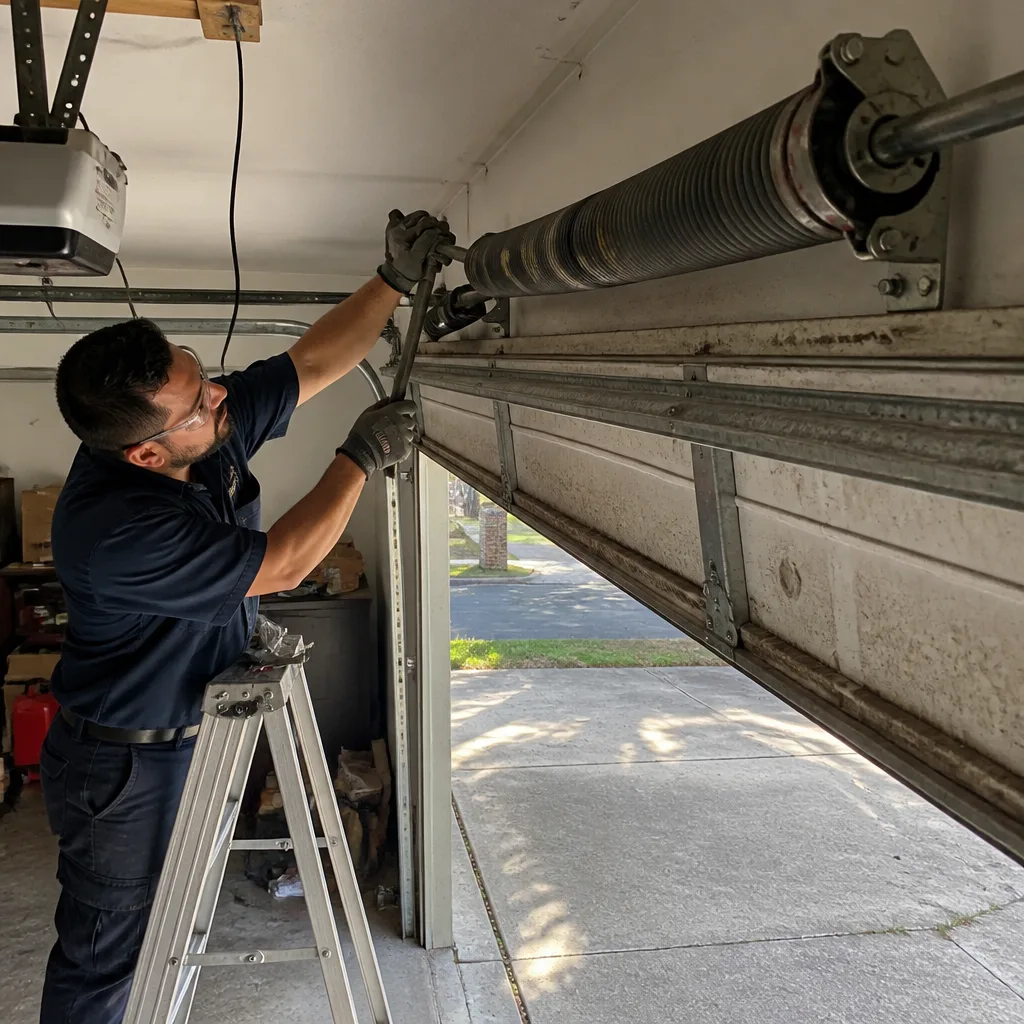
Safety note: Torsion springs store enough energy to cause serious injury or death. Never attempt to adjust, wind, or release a torsion spring. This work requires specialized tools and training.
Slow Reversal Speed: The Most Overlooked Spring Warning
The most dangerous warning sign is the one homeowners normalize. A garage door that reverses slowly - taking noticeably longer to return to the open position than it did two years ago - is showing spring fatigue in real time.
Here’s why: garage door springs counterbalance the door’s weight. A properly spring-assisted 150-pound door feels like 8-10 pounds to the opener. As springs weaken, the door’s effective weight increases. The opener strains to lift, moves slower, and works harder. The homeowner notices “the opener seems tired” and considers replacing the opener. The real problem is the springs.
How to Time Your Door’s Cycle
- Stand inside the garage with the door fully closed.
- Press the wall button and count seconds until the door is fully open.
- Press again and count seconds until fully closed.
- A healthy residential door in Richardson opens in 10-14 seconds and closes in 12-16 seconds.
- If opening takes 18+ seconds, or if the door visibly slows in the last 2 feet of travel, springs are likely fatigued.
We timed a door in Richland Park last fall at 24 seconds to open. The homeowner had adapted to the slowness over eight months. The springs were two coils away from breaking. When torsion springs fail on an open door, the full weight drops - a hazard to anyone nearby and a guaranteed bent door if it crashes.
Spring replacement in Richardson typically runs $180-$340 depending on door weight and spring type. Opener replacement, which the homeowner nearly purchased unnecessarily, runs $650-$1,400. The cycle test saves both money and risk.
Visual Signs Your Door Is Misaligned, Not Just Aging
Richardson homeowners often mistake panel stress for cosmetic wear. Faded paint, yes, that’s age. But these specific patterns indicate mechanical problems that will destroy the door if ignored.
Diagonal Creases at Panel Junctions
When a door is out of plumb or a cable is unevenly tensioned, panels twist slightly with each cycle. Over hundreds of cycles, this creates faint diagonal lines at the horizontal panel joints, usually from the corner toward the center hinge. We see this frequently in Richardson’s 1980s-era homes where original doors have settled with the foundation.
The creases start as paint cracks. Eventually the steel fatigues and cracks through. At that point, the panel must be replaced or the entire door replaced if the model is discontinued.
Bottom Panel Rub Marks
A door that is not vertically plumb wears its bottom panel against the weatherstrip on one side. Look for polished metal, paint loss, or rubber transfer on the panel’s bottom edge, always heavier on one side. This indicates track misalignment or a twisted door frame.
In Richardson’s clay soils, foundation movement is common. A door that was square in 1995 may be 1/2 inch out of plumb today. The fix is track realignment, not door replacement, if caught before the panel wears through.
Cable Fraying and Rust Jacking
Lift cables run from the bottom brackets to the drums overhead. Fraying - visible unwinding of the wire rope - means replacement is needed within days, not weeks. Rust jacking, where rust builds between cable strands and forces them apart, is accelerated by Richardson’s humidity swings and is common on north-facing doors that stay damp longer.
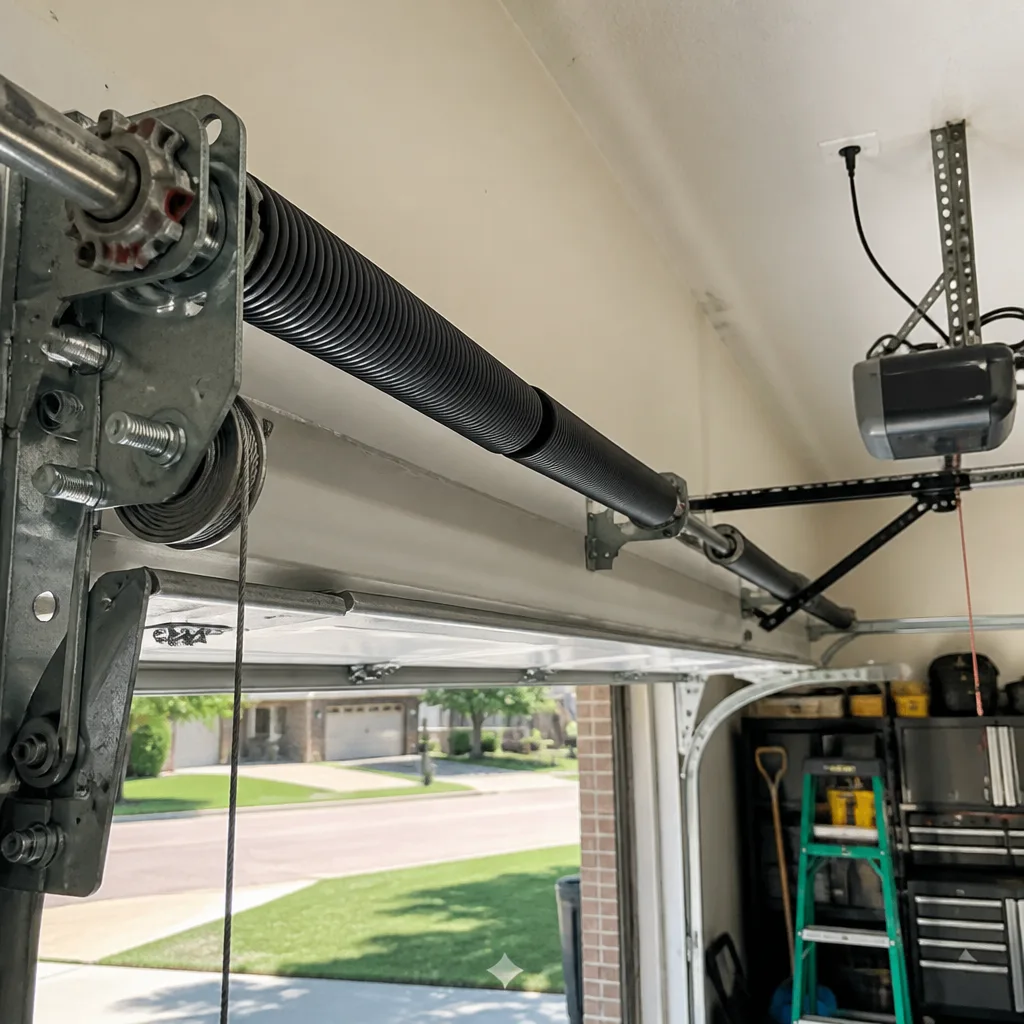
Check cables with the door fully closed (maximum tension, maximum visibility). Wear leather work gloves. Look for broken strands, rust powder, or cable flattening where it wraps the drum. Any of these means call a professional - cable failure under load causes uncontrolled door drop.
Spring Coil Gaps
A healthy torsion spring has coils that sit nearly touching when the door is closed. Gaps between coils indicate the spring has stretched and lost tension. The gap pattern tells the story: gaps concentrated on one end mean uneven wear; gaps throughout mean general fatigue. Either way, the spring is no longer doing its full job.
The 60-Second Test: Motor Failure vs. Drive Mechanism Failure
Homeowners often replace entire openers when only a $40 gear kit is needed, or conversely, they replace gears twice when the motor itself is dying. This test separates the two in under a minute.
The Disconnect Test
- Close the door fully.
- Pull the emergency release cord - the red handle hanging from the opener trolley. This disengages the door from the opener.
- Lift the door manually to waist height and release. A properly balanced door should stay put or drift slowly. If it crashes down, springs are the problem, not the opener.
- With the door disengaged and in the closed position, press the opener button.
- Watch and listen to the opener head (the motor unit mounted to the ceiling).
What the Results Mean
- Motor runs, chain/belt does not move: Drive gear failure. The motor is healthy but the nylon gear that transfers power to the chain has stripped. Repair: gear and sprocket assembly, typically $45-$85 in parts plus labor. Common on Craftsman and LiftMaster chain-drive units over 8 years old.
- Motor hums or buzzes but does not turn: Motor capacitor failure or motor death. Capacitor replacement is economical; motor replacement usually means new opener. This sound is distinct - a strained electrical hum without mechanical rotation.
- Motor runs, chain moves, but trolley does not engage: Trolley or limit switch issue. Often a $20-$30 part.
- Everything works smoothly with no door attached: The opener is fine. The problem is door balance, binding, or excessive weight.
We run this test on every service call in Richardson before quoting any opener work. It takes 60 seconds and eliminates guesswork. Last month in Springridge Estates, this test saved a homeowner $680 - they needed a $140 spring adjustment, not a new opener.
“It Works Fine, It Just Takes Two Tries”: What Intermittent Failure Really Means
This phrase is the most expensive sentence a homeowner can speak about their garage door. Intermittent failure - the door opens on the second button press, or works in the morning but not afternoon, or responds to the remote but not the wall button - feels manageable. It is not. It is the final warning before total failure, and the timeline is shorter than intuition suggests.
Why Intermittent Failure Accelerates
Electrical and mechanical components do not heal. A failing logic board in a Raynor opener may work when cool and fail when warm, which in a Richardson garage means morning success and afternoon failure. A cracked solder joint expands with heat and breaks connection. Each thermal cycle widens the crack. The interval between failures shortens geometrically, not linearly.
Mechanically, a cable that slips its drum every tenth cycle is progressively grooving the drum surface. The groove deepens, the slip frequency increases, and eventually the cable jumps completely - usually with the door in motion.
The Specific Patterns and Their Meanings
- First press fails, second press works: Usually a logic board or wall button connection issue. The first press “wakes” a failing component enough for the second press to complete the circuit. Timeline: days to 2 weeks.
- Remote works, wall button does not (or reverse): Narrow the problem. If the wall button fails, check for loose low-voltage wiring - common in Richardson homes where rodents occasionally chew doorbell-gauge wire. If the remote fails, check for LED bulb interference (a known issue with some LiftMaster models) or failing remote battery masquerading as opener failure.
- Door works until 2 PM, then fails until evening: Thermal failure. Logic board, motor winding, or safety sensor alignment changing with temperature expansion. Timeline: 1-3 weeks before permanent failure.
- Door reverses immediately after touching floor: Misadjusted close limit or failing limit switch, not a safety sensor issue. The door thinks it has hit an obstacle. Timeline: indefinite, but the repeated impact stresses the door and opener.
The psychological trap is adaptation. Humans normalize gradual change. The homeowner who once pressed once now presses twice without conscious thought. The door that once opened in 12 seconds now takes 18, but the difference spread over months goes unnoticed. We recommend quarterly cycle timing and deliberate attention to any change in sound or response.
How Richardson’s Climate Accelerates Specific Failures
Richardson’s climate is harder on garage doors than many homeowners recognize, as covered in our complete guide to garage doors in Richardson. The combination of intense summer heat, occasional ice storms, and clay soil foundation movement creates specific failure modes we see repeatedly across the city.
Summer Heat: The Hidden Accelerator
Garage temperatures in Richardson regularly exceed 120 degrees in July and August. At these temperatures:
- Opener logic boards operate at their thermal limit. Capacitors age faster. We see more opener failures in August than any other month.
- Lithium grease on screw-drive openers (common in Wayne Dalton systems) thins and runs off the drive screw, causing metal-on-metal wear.
- Vinyl door panels soften slightly and sag between reinforcement struts, increasing load on the opener.
- Rubber weatherstrip bakes to the concrete floor, then tears when the door opens.
In Cottonwood Heights and other south-facing neighborhoods, we recommend checking opener ventilation and considering a thermal blanket for the motor unit if the garage lacks insulation. For additional tips, explore more guides & resources on our blog.
Winter Cold Snaps: Thermal Shock
Richardson’s occasional single-digit nights cause rapid steel contraction. A torsion spring that was balanced at 45 degrees is over-tensioned at 10 degrees. The stress concentrates at microscopic flaws in the steel. Springs that were near end-of-life fail during the first hard freeze - we take dozens of emergency calls on those mornings.
Cold also thickens lubricants. A door that ran quiet in October may grind in January because the same grease has become viscous. We use synthetic lubricants rated to -40 degrees for Richardson winter prep.
Foundation Movement and Soil
Richardson’s expansive clay soils swell when wet and shrink when dry. A door frame that was plumb in spring may be 1/4 inch out by late summer. This binds rollers, twists panels, and stresses openers. Homes in Breckinridge Park and other areas with mature trees see additional foundation influence from root systems seeking moisture.
The warning sign is seasonal: a door that sticks in August but runs free in November is telling you the frame is moving with soil moisture, not that the door itself is failing. Track realignment with slotted mounting holes allows seasonal adjustment without full replacement.
A Seasonal Maintenance Timeline for Richardson Homes
Preventive maintenance in Richardson should follow the climate, not the calendar month. Here’s the schedule we recommend based on 42 years of local observation.
Pre-Summer (Late April to Early May)
- Inspect all rollers for flat spots, cracks, or bearing failure. Replace steel rollers with sealed nylon rollers if the door is over 15 years old.
- Lubricate hinges, rollers, and spring coils with synthetic lubricant rated to 350 degrees. Wipe off excess - dust sticks to wet lubricant and forms abrasive paste.
- Test door balance with the disconnect test described above.
- Inspect weatherstrip for hardening or cracking. Replace if it has lost flexibility.
- Check opener ventilation. Clear dust from motor housing fins.
Pre-Winter (Late October to Early November)
- Repeat lubrication with cold-rated synthetic product.
- Inspect cables for rust jacking, especially on north-facing doors.
- Test safety reverse system: place a 2×4 flat on the floor in the door’s path. The door should reverse on contact. If it does not, the close force is excessive or the safety system has failed.
- Check all fasteners for tightness. Thermal cycling loosens hardware over time.
- Inspect spring coils for gaps or rust.
Our Garage Door Repair in Richardson service includes a 26-point inspection that covers all of this. For homeowners who prefer to handle basics themselves, we offer the $89 Seasonal Tune-Up where we do the inspection and you decide what to address.
Common Mistakes to Avoid
- Ignoring a change in sound because “it’s always been a little noisy.” Garage doors do not age into noise. Noise is always a symptom of a specific mechanical change. The “little noisy” door of 2023 is the “won’t open” door of 2024.
- Adjusting the opener force settings to compensate for a heavy door. When springs weaken, homeowners turn up the opener’s force to make it lift anyway. This strips drive gears, bends door panels, and creates a safety hazard - the door will not reverse properly if it hits an obstruction. Fix the springs, not the settings.
- Replacing the opener when the door is unbalanced. We see this mistake weekly in Richardson. A new opener on an unbalanced door fails in 2-3 years instead of 15. Always verify door balance before any opener work.
- Using WD-40 on garage door components. WD-40 is a solvent and water displacer, not a lubricant. It evaporates and leaves metal bare. Use lithium or synthetic grease rated for the temperature range.
- Testing the safety reverse with a hand or foot instead of a solid object. The safety test requires a rigid object that simulates a trapped limb. Using your body is dangerous and does not test the system correctly.
- Waiting for “both springs” to fail before replacing. Torsion springs are installed in matched pairs. When one fails, the other has identical cycle count and fatigue. Replace both, or you’ll be calling again in weeks.
- Hiring based on the lowest bid without verifying insurance and local presence. In Richardson’s competitive market, some operators carry no general liability insurance and disappear when callbacks are needed. We carry full coverage and have served this community since 1984.
When to Call a Professional
Call a technician immediately if you observe any of the following: a broken spring or cable, a door that will not stay open when released from the opener, a grinding noise accompanied by visible metal shavings, or any intermittent failure pattern that is worsening. These conditions pose safety risks that outweigh any cost savings from delay.
Also call if your door is over 12 years old and has never had professional maintenance. Most components have predictable lifespans, and a scheduled inspection prevents the emergency call at 6 AM on a workday.
Mainspring Garage Door Co. offers free estimates in Richardson. Carl Dutton and our team answer the phone live, 24 hours a day, including holidays. Most repairs are completed in a single visit because our trucks carry springs, cables, rollers, and openers for all major brands. Call (945) 495-3552 to schedule.
Frequently Asked Questions
Most common repairs in Richardson range from $180 for a spring replacement to $340 for dual-spring systems on heavier doors. Cable replacement typically runs $140-$220. Opener repairs range from $120 for gear replacement to $650-$1,400 for full opener replacement with installation. We state the flat price before any work begins, and our $50 Off Any Repair Over $250 standing offer applies automatically. Call (945) 495-3552 for an exact quote - estimates are free.
Torsion and extension springs cannot be repaired - they must be replaced when they break or lose tension. Springs are manufactured to specific cycle ratings (typically 10,000 cycles for standard, 25,000-50,000 for high-cycle). Once fatigued, the steel has microscopically crystallized and lost elasticity. Any “repair” would be temporary and dangerous. We replace both springs simultaneously even if only one has failed, because matched pairs share identical wear.
This pattern indicates thermal failure of an electrical component - usually the opener logic board, motor capacitor, or a failing safety sensor connection. Morning cool allows marginal solder joints or windings to conduct; afternoon heat expands and breaks the connection. The interval shortens over time. In Richardson’s summer garage temperatures, this progression accelerates. Schedule diagnosis before total failure leaves your vehicle trapped.
A quality opener in a ventilated, insulated garage typically lasts 12-15 years in Richardson. In uninsulated garages with summer temperatures exceeding 130 degrees, lifespan shortens to 8-10 years. Screw-drive openers require more frequent lubrication in our heat. Belt-drive and direct-drive units generally outlast chain-drive in thermal stress conditions. We are factory-familiar with all major brands including LiftMaster, Chamberlain, Genie, and Craftsman and can recommend specific models for Richardson’s climate.
True “no reason” reversal is rare. The door is detecting something: misaligned safety sensors, excessive close force, binding in the track, or a damaged limit switch. First, check that sensor eyes are clean and aligned (both LEDs should be solid, not blinking). If sensors are correct, the door may be binding due to track misalignment or worn rollers, causing the opener to interpret resistance as an obstruction. Persistent reversal needs professional diagnosis - the safety system is trying to protect you, and overriding it creates hazard.
Yes. For repair and emergency calls, we offer same-day response throughout Richardson, including Canyon Creek, Heights Park, Duck Creek, Greenwood Hills, and surrounding neighborhoods. Our phones are answered by a live person 24/7 - no voicemail, no phone trees. Most repairs are completed in a single visit because our technicians arrive with springs, cables, rollers, and openers already on the truck. Installation and replacement work is measured, ordered, and scheduled, with a free measure and written price provided first.
The Bottom Line
Every garage door failure we see in Richardson was preceded by warnings the homeowner either missed or dismissed. The grinding that started in March. The two-press routine that became normal by June. The extra two seconds to open that nobody timed. This guide gives you the language to read those warnings and the tests to confirm your suspicions. What it cannot give you is the training to safely repair high-tension springs, adjust cable drums, or replace worn tracks. That work belongs to technicians who carry the right tools and the right insurance. Garage Door Installation in Richardson and repair are what we’ve done since 1984, and the 90-Day Done Right Promise means if we miss something, we come back. No paperwork, no argument. The door should simply work, and you should never have to think about it again.
Written by Carl Dutton, Owner at Mainspring Garage Door Co., serving Richardson since 2016.