
Last updated September 10, 2026
Full 25-point door and opener safety check with every visit - springs, cables, rollers, tracks, and your LiftMaster or Chamberlain opener included
You get a price before we start. It does not change when the truck arrives.
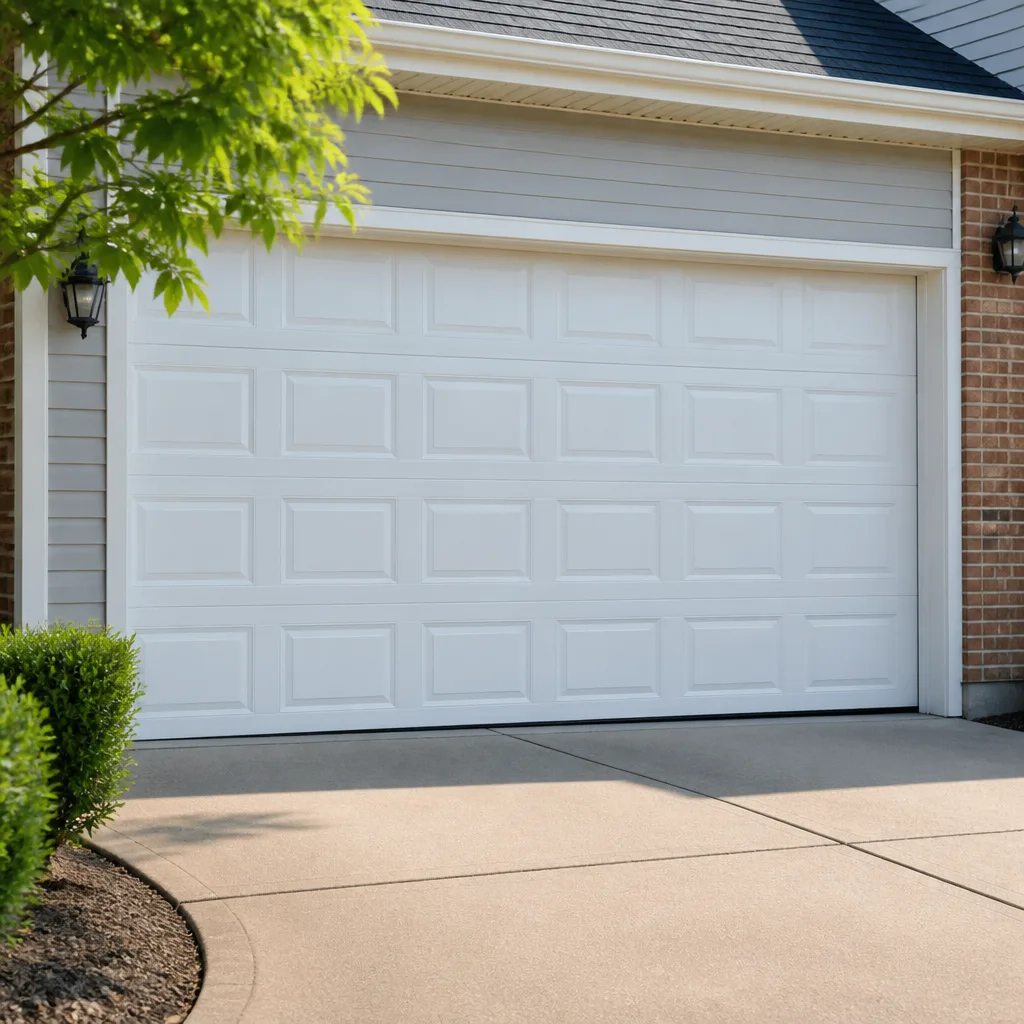
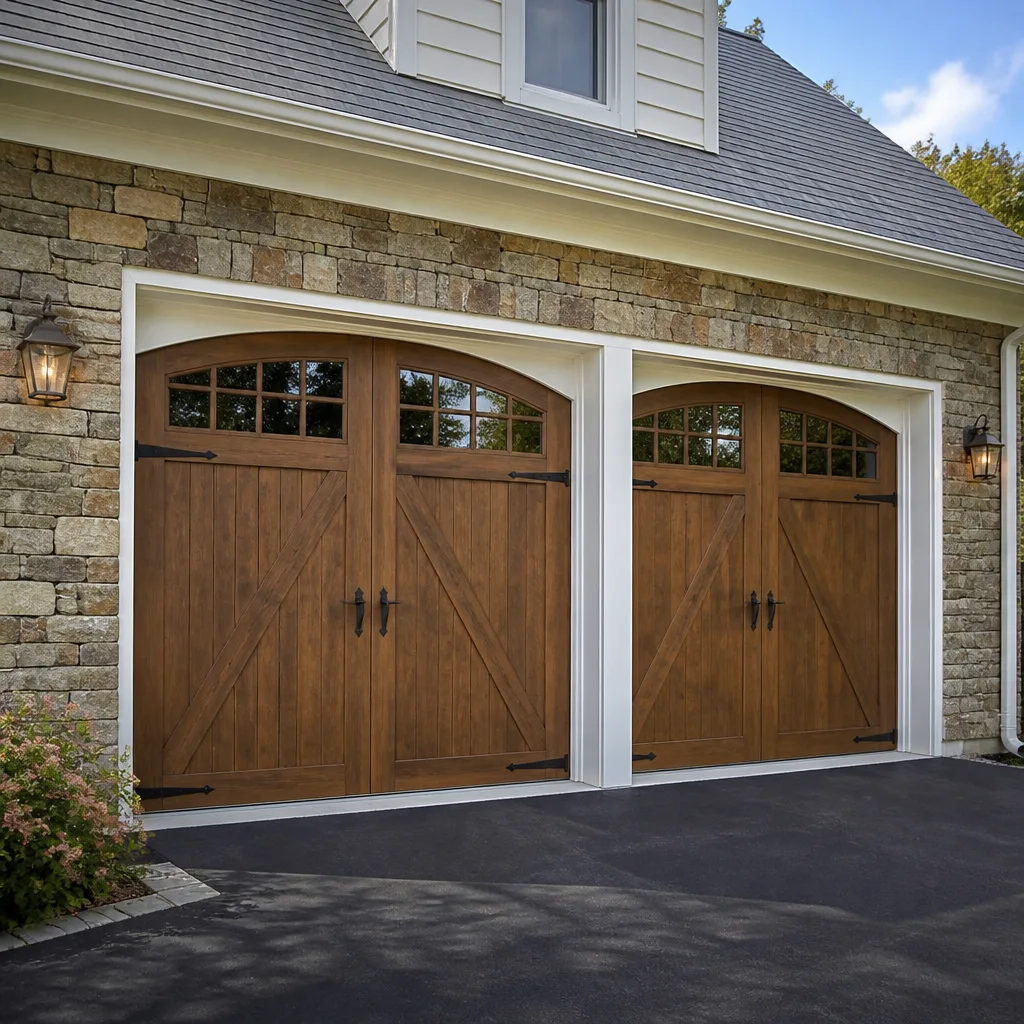
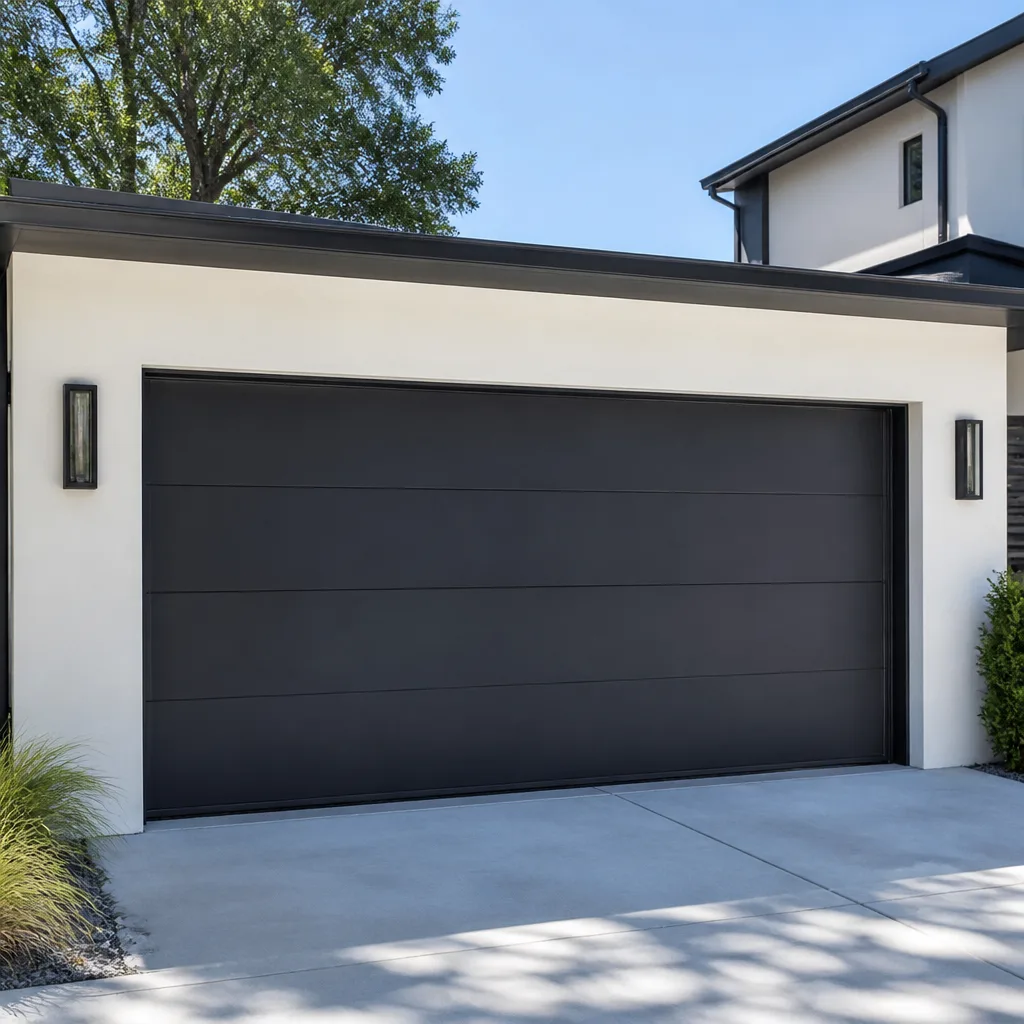
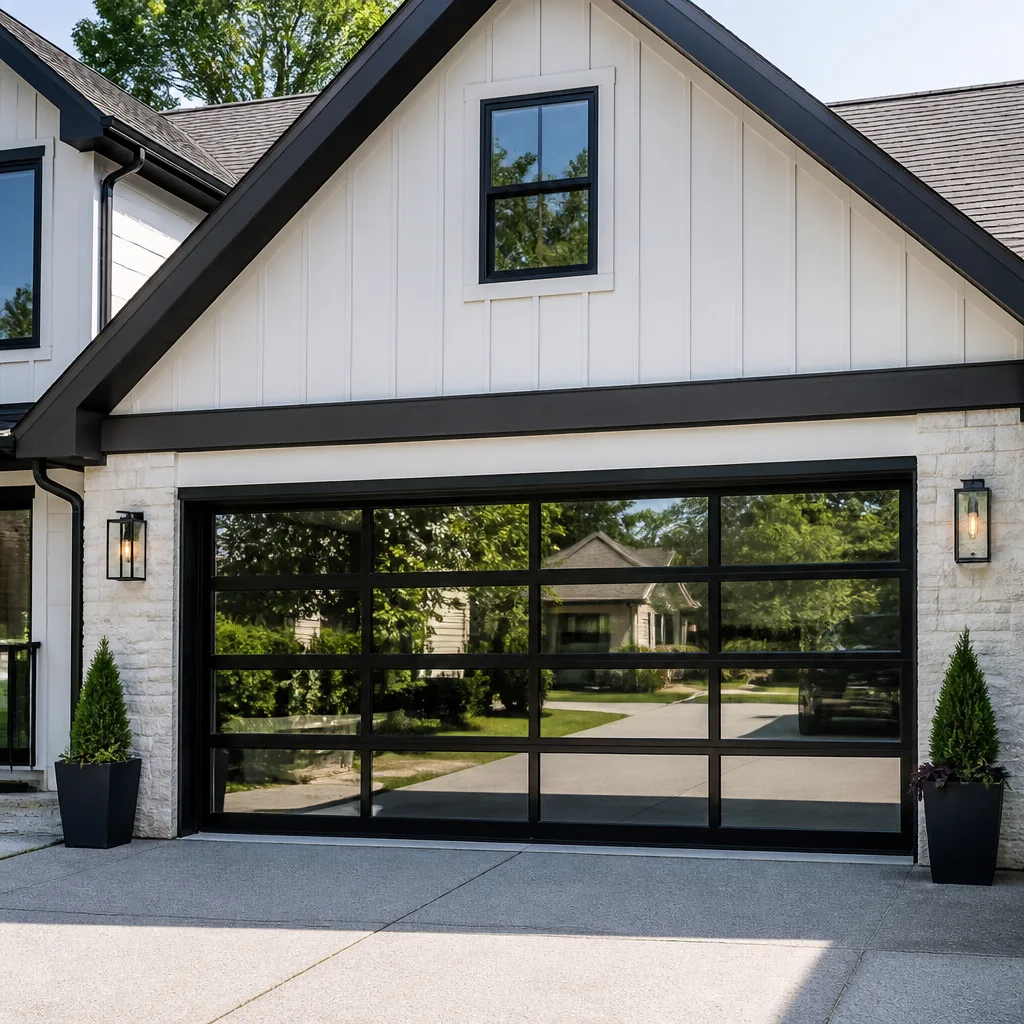
 Before
 After
After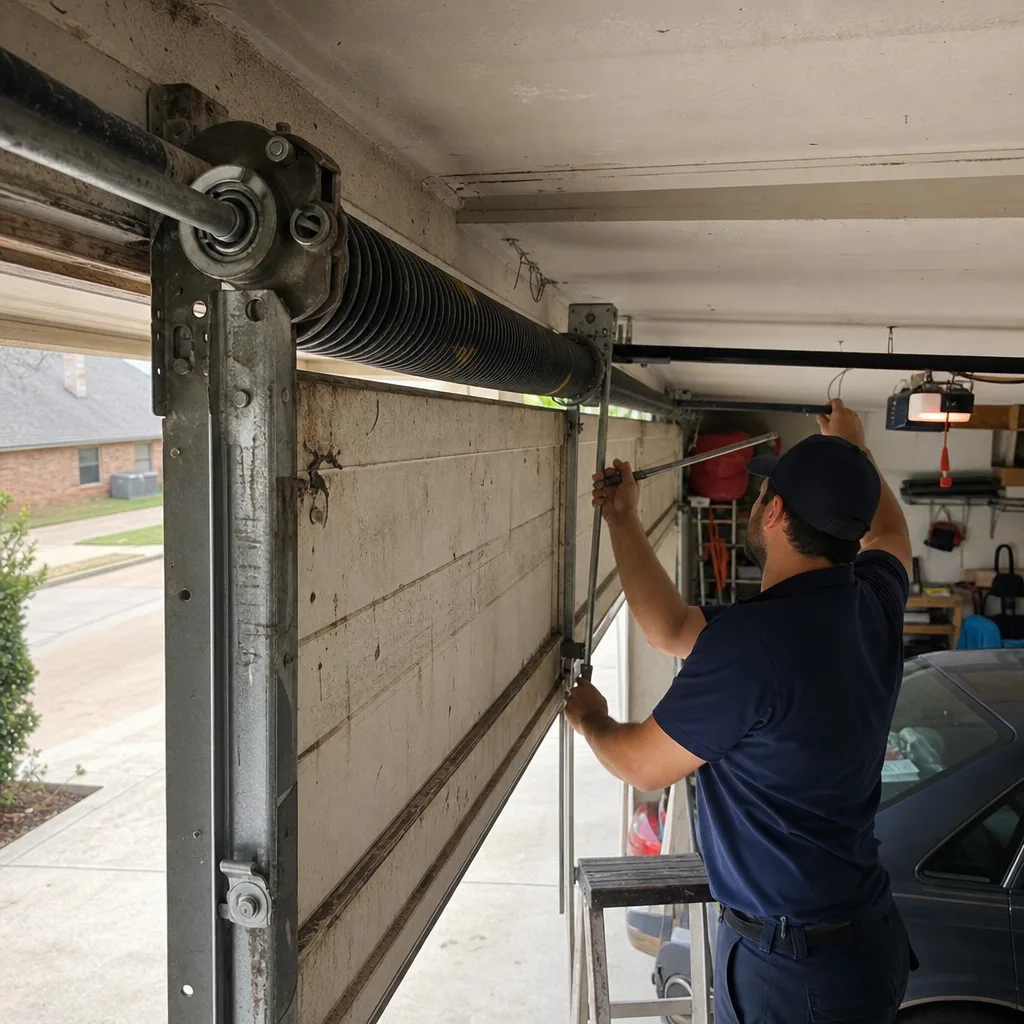 Before
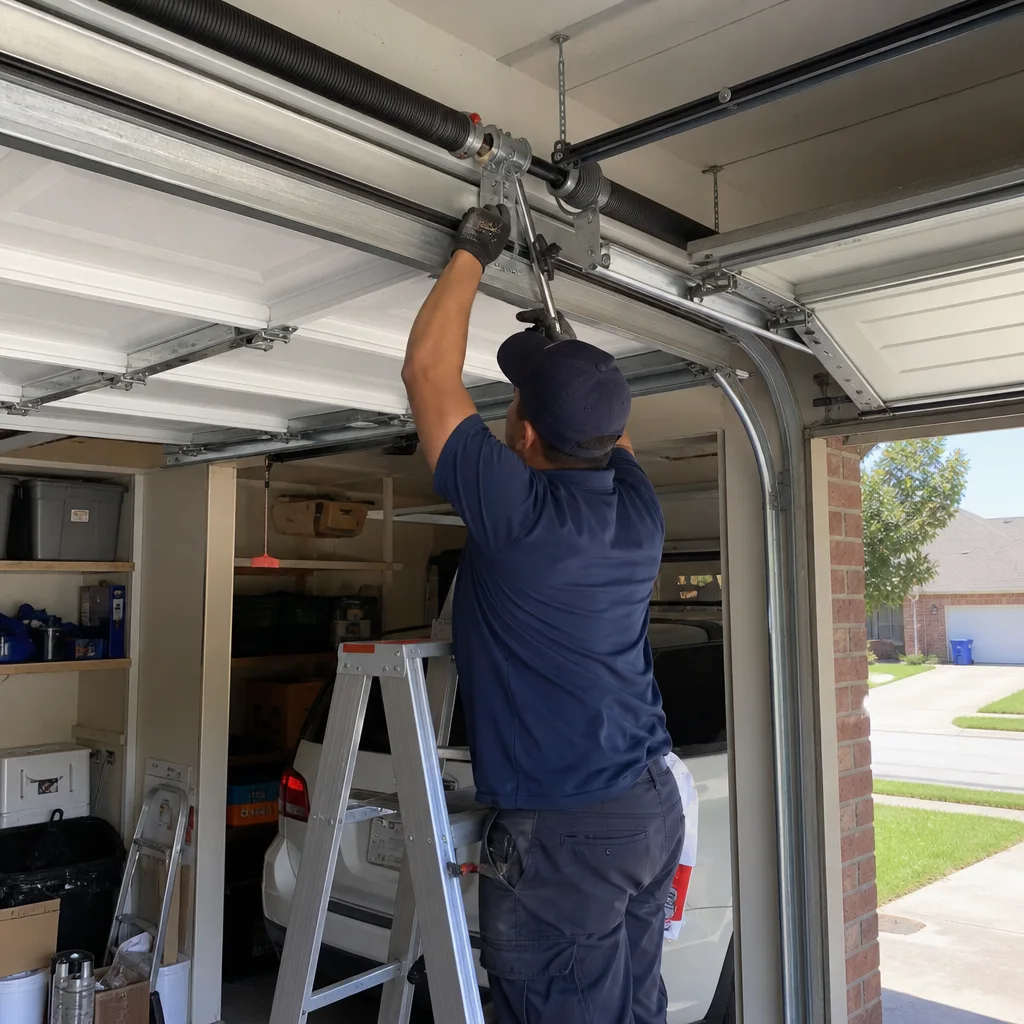 After
After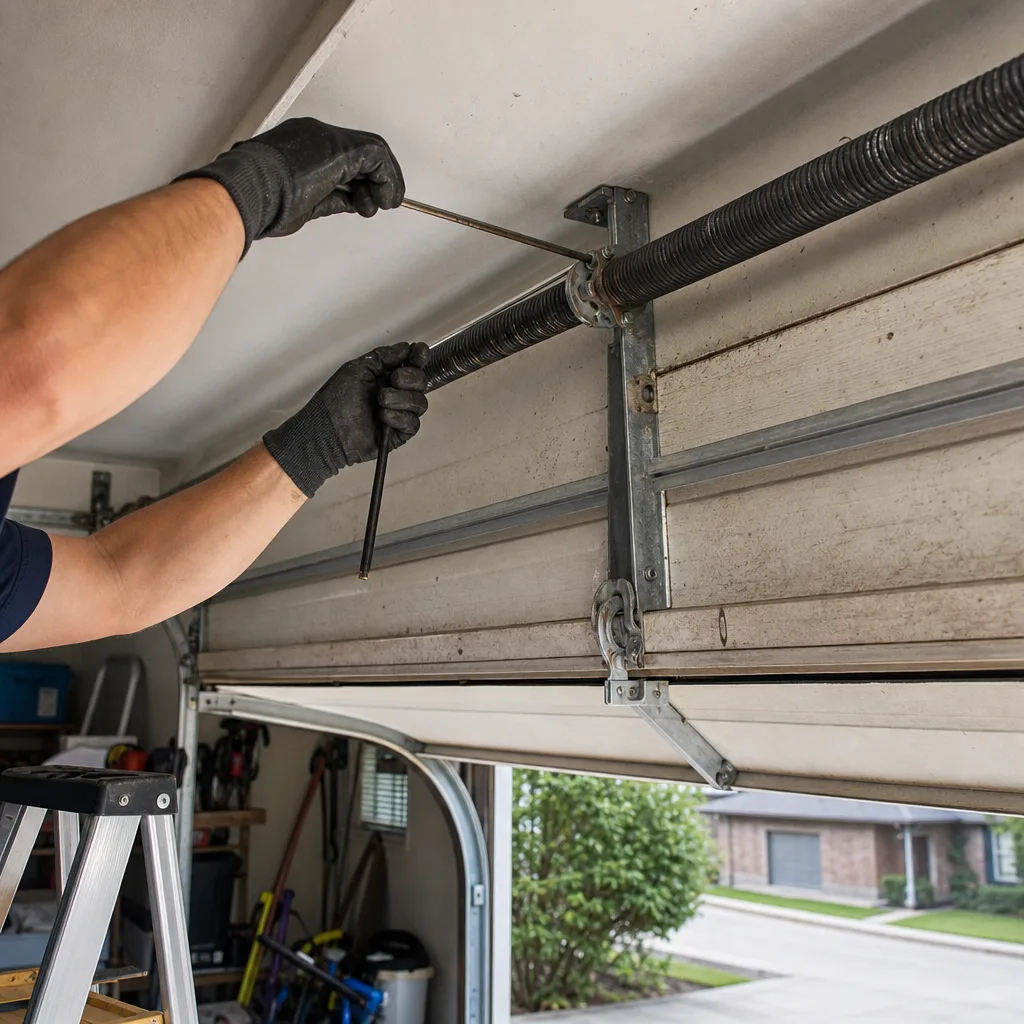 Before
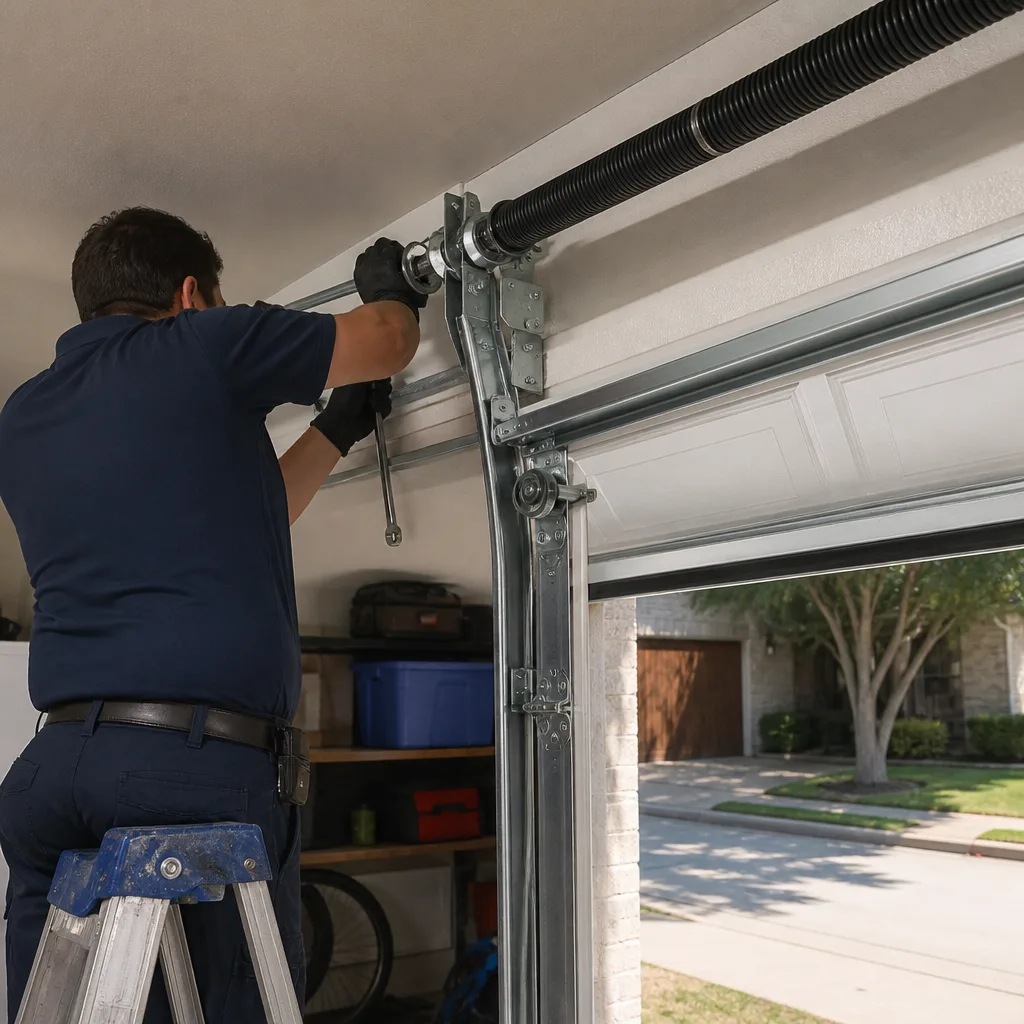 After
AfterThe Complete Guide to Garage Door in Richardson
The garage door is the largest moving part of a Richardson home, and most owners only learn how it works the day it stops working. In a city where summer heat pushes past 100°F and clay soil shifts foundations slowly enough to go unnoticed for years, that ignorance costs money. We’ve been called to homes in Canyon Creek where a door that “worked fine last month” now hangs crooked in its tracks, the cumulative effect of soil movement and worn rollers finally crossing the threshold into failure. This guide explains what actually matters when you choose, maintain, or replace a garage door in Richardson - not generic advice from a national buying guide, but the specific conditions and decisions that determine whether your door runs quiet for fifteen years or starts complaining in three. For more guides & resources on Richardson home maintenance, see our blog.
Quick Answer
A garage door in Richardson should be selected for thermal performance, wind load rating, and material stability under North Texas temperature extremes. Steel or composite doors with R-value of 12-18, paired with a belt-drive opener, handle Richardson’s climate and common garage layouts best. Expect to invest $1,200-$3,800 for a complete replacement, with annual maintenance adding $89-$150 per year to protect that investment. See our Garage Door Cost Breakdown: The Richardson Homeowner’s Reference for 2026 for detailed pricing factors.
Table of Contents
- How Richardson’s Climate and Soil Affect Your Garage Door
- Choosing the Right Material for North Texas
- Insulation and R-Value: Why It Matters in Richardson
- Drive Types Explained: Belt, Chain, and Jackshaft
- Opener Features That Actually Matter
- The Real Cost Over 10 Years
- A Maintenance Schedule That Prevents Surprises
- Warranty, Permits, and Resale Value in Richardson
How Richardson’s Climate and Soil Affect Your Garage Door
Richardson sits on the Blackland Prairie, a band of clay-heavy soil that expands when wet and contracts during dry spells. This is not abstract geology. We’ve measured door frames in Arapaho Village that shifted 3/8 inch out of square over five years, slowly binding the rollers and stressing the torsion spring until it snapped without warning. The homeowner heard the crack from the kitchen and found the door jammed half-open, the car trapped inside on a Monday morning.
The expansion-contraction cycle creates three specific problems for garage doors in Richardson:
- Frame distortion: The garage opening twists subtly, causing rollers to bind in the tracks and the door to “walk” sideways during operation.
- Concrete cracking: The floor slab shifts independently of the foundation, creating gaps where weatherstripping cannot seal and allowing water intrusion during spring storms.
- Hardware fatigue: Misalignment puts uneven load on hinges, cables, and the torsion spring system, accelerating wear by 30-50% compared to doors on stable soil.
Temperature swings compound the issue. Richardson sees 40°F days in January and 105°F days in August, sometimes within the same week. Steel tracks expand and contract. Lubricants thin in heat and gum in cold. Rubber weatherstripping hardens and cracks. In our experience, doors on west-facing garages - which absorb afternoon sun after morning shade - need roller replacement two years earlier than identical doors on north-facing structures.
The practical implication: material choice and installation precision matter more here than in regions with stable soil and moderate temperatures. A door that “fits” on installation day must also accommodate movement over its lifetime. We specify heavy-duty adjustable hinges and recommend annual track alignment checks for any Richardson home over ten years old, particularly in established neighborhoods like Heights Park and Richland Park where soil settlement patterns are well-documented.
Wind is the lesser-known factor. Richardson lies just east of Tornado Alley proper, but the city still sees severe thunderstorms with straight-line winds exceeding 70 mph. A garage door is the largest breach in your home’s envelope. If it fails, internal pressure can lift the roof. Modern doors carry wind load ratings; for Richardson, we specify 20 PSF minimum for single-car doors and 25 PSF for doubles, particularly in open-exposure lots near Campbell Road and the Telecom Corridor. Check Garage Door Permits, Codes & Inspections in TX: What You Need to Know for local requirements.
Choosing the Right Material for North Texas
Garage door materials fall into four categories, but only three make practical sense for Richardson’s climate. Wood, steel, aluminum, and composite each carry tradeoffs that look different when you factor in thermal cycling and UV exposure.
Steel: The Practical Default
Steel dominates the Richardson market for good reason. It resists denting, accepts insulation well, and does not warp in humidity. The critical specification is gauge: 24-gauge steel for the outer skin minimum, with 25-gauge on the back panel of sandwich-construction doors. Anything thinner dents from basketball impacts and flexes visibly in wind.
The failure mode we see most often in Richardson is rust at the bottom section, where road salt and lawn chemicals accumulate in the rubber seal’s channel. We specify galvanized steel with a baked-on polyester finish, not just primer, and recommend hosing the bottom seal track monthly during growing season. Clopay’s Gallery and Amarr’s Stratford collections both use this construction; we’ve installed hundreds in Richardson over fifteen years and track their longevity.
Composite and Fiberglass: The Wood Alternative
Composite doors - fiberglass skin over a steel or composite frame - solve the thermal expansion problem entirely. They do not conduct heat, so the surface temperature stays closer to ambient. This matters for west-facing garages where steel can reach 140°F in August, hot enough to burn skin and degrade weatherstripping faster.
The downside is cost: composite runs 40-60% above equivalent steel. For attached garages with living space above, or for homeowners planning to stay fifteen-plus years, the energy savings and reduced maintenance often justify the premium. In Canyon Creek, where homes trend larger and owners tend long-tenured, composite represents roughly 30% of our installations.
Wood: The Aesthetic Burden
We do not recommend wood for Richardson’s climate. The humidity swings cause checking and warping. The UV degrades finish in two to three years. The maintenance burden - sanding, staining, sealant - runs $400-$600 annually for a double door. We’ve replaced wood doors in Richland Park that were beautiful at installation and miserable at year seven. If the architectural review board requires wood appearance, composite with wood-grain embossing achieves the look without the liability.
Aluminum: The Edge Case
Full-view aluminum doors suit contemporary architecture and resist corrosion, but they conduct heat aggressively and dent easily. We install perhaps ten annually, always on detached garages without climate-sensitive storage. For most Richardson homeowners, they are the wrong tool.
Our recommendation for Richardson: Insulated steel for value and durability; composite for thermal performance and long-term ownership; avoid wood and limit aluminum to specific architectural contexts. Garage Door Installation in Richardson requires matching material to exposure, not just matching the sample board to the brick.
Insulation and R-Value: Why It Matters in Richardson
R-value measures thermal resistance. For garage doors, it ranges from 0 (uninsulated single-layer steel) to 18+ (triple-layer polyurethane-filled). The marketing often treats higher R-value as an upsell. In Richardson, it is a functional necessity for a specific subset of homes.
The question is not “how much insulation can you afford?” but “what is the garage connected to?”
| Garage Configuration | Recommended R-Value | Typical Annual Energy Impact |
|---|---|---|
| Detached, unconditioned | 6-10 | Minimal |
| Attached, no living space above | 10-14 | $80-$150 cooling savings |
| Attached with room above | 14-18 | $200-$400 cooling savings |
| Attached with HVAC ductwork in garage | 16-18 | $300-$500 system efficiency gain |
Richardson’s summer heat creates a specific problem: an attached garage with a low-R door becomes a thermal battery. By 6 PM, the garage air temperature can exceed 115°F. That heat radiates through shared walls into the kitchen or bedroom above, forcing the air conditioner to run longer into the evening. We’ve measured attic temperatures in Heights Park homes where the garage ceiling - the floor of the bonus room above - ran 12°F hotter with an R-6 door versus an R-16 door on identical floor plans.
Insulation type also matters. Polystyrene (white board insulation) fills the cavity but leaves gaps. Polyurethane (foamed-in-place) expands to fill voids, adheres to the steel skins for structural rigidity, and achieves higher R-value per inch. A 1-3/8 inch polyurethane door achieves R-12; the same thickness in polystyrene achieves R-8. For Richardson, we specify polyurethane in all attached-garage installations.
The bottom section deserves particular attention. It sits closest to the hot driveway, absorbs radiant heat, and is the first point of failure for insulation degradation. We order doors with thermal break construction - a plastic separator between inner and outer steel skins - to prevent thermal bridging at this critical point.
Drive Types Explained: Belt, Chain, and Jackshaft
The opener drive mechanism determines noise, speed, reliability, and whether the opener fits your garage at all. Richardson’s housing stock spans 1960s ranches to new construction, and garage dimensions vary enormously. The drive type must match the space, not just the budget.
Belt Drive: The Default for Attached Garers
Belt drive openers use a reinforced rubber belt to pull the trolley. They run at roughly 60 decibels - quiet enough that you will not hear them from the bedroom with the door closed. For Richardson’s dense neighborhoods like Arapaho Village, where bedrooms often share a wall with the garage, this is the practical choice.
The belts are fiberglass-reinforced and last 10-15 years in normal use. Heat is their enemy: sustained temperatures above 120°F in an unventilated garage can accelerate rubber degradation. We recommend belt-drive openers with thermal overload protection and advise leaving the garage door open a few inches during the hottest afternoons if the garage lacks ventilation. Chamberlain’s B970 and Genie’s SilentMax lines both include this protection; we stock both on our trucks.
Chain Drive: The Workhorse for Detached Garages
Chain drives use a metal bicycle-style chain. They cost 20-30% less than belt drives, last longer under heavy doors, and tolerate temperature extremes better. The tradeoff is noise: 75-85 decibels, comparable to a vacuum cleaner. For detached garages or workshops where noise does not penetrate living space, chain drives remain a sound choice.
In Richardson, we specify chain drives primarily for detached garages in older neighborhoods like Richland Park, where the garage sits at the rear of a deep lot and noise is not a factor. For heavy composite or solid-wood doors, the chain’s strength margin provides reliability that belts cannot match.
Jackshaft (Wall-Mount): The Clearance Solution
Jackshaft openers mount on the wall beside the door, turning the torsion tube directly. They eliminate the overhead rail entirely, freeing ceiling space for storage or high-lift door tracks. This matters in Richardson’s newer townhome developments and in Canyon Creek homes where owners have finished the garage ceiling with drywall or storage platforms.
The limitation is door type: jackshafts require a torsion spring system and a solid shaft, and they cannot be used with low-headroom track configurations. They also cost 50-100% more than ceiling-mounted openers. We evaluate the existing hardware before recommending jackshaft conversion; in about 20% of Richardson homes, the torsion shaft diameter or bearing support is inadequate for the torque a jackshaft delivers.
Direct Drive and Screw Drive: The Marginal Cases
Direct drive (Sommer’s design, with the motor traveling the rail) offers exceptional quietness but limited service support in Texas. Screw drive (Genie’s legacy design) requires frequent lubrication and struggles with temperature extremes. We do not recommend either for Richardson’s climate and market.
Decision framework for Richardson:
- Attached garage with living space nearby? Belt drive, period.
- Detached garage or heavy door? Chain drive for value and durability.
- Need ceiling clearance or have a finished garage? Jackshaft, pending hardware evaluation.
- Replacing an opener that failed in under five years? We inspect the door balance first; an unbalanced door destroys any opener prematurely. Garage Door Opener in Richardson consultations include this check at no charge.
Opener Features That Actually Matter
Modern openers carry a blizzard of features. Most are irrelevant to reliable operation. These five matter for Richardson homeowners:
Battery backup. Texas storms knock out power with little warning. A battery backup lets you open the door 3-4 times during an outage, enough to get a car out or medical equipment in. Since 2019, California has required battery backup by law; we specify it standard on all Richardson installations regardless, because the cost delta is $80-$120 and the failure mode - trapped car, trapped person - is not worth the savings.
Security+ 2.0 or equivalent rolling code. Fixed-code openers can be cloned with $30 devices available online. Modern openers change the code with every use. If your opener is more than fifteen years old, this alone justifies replacement.
Timer-to-close. The door closes automatically after a set interval if left open. Useful for forgetful households and for security when the garage connects directly to the kitchen. We program this feature during installation and show the homeowner how to adjust or disable it.
MyQ or equivalent smartphone integration. The practical value is delivery access - opening the garage for Amazon or grocery delivery when you are not home - and the ability to verify the door closed after leaving. The security implications require thought: we discuss two-factor authentication and guest access limits during setup.
Force and travel limit adjustment. Critical for Richardson’s shifting foundations. An opener set too aggressively will damage a slightly binding door; one set too loosely will reverse on a cold morning when seals are stiff. We adjust these seasonally during tune-ups and teach homeowners the manual override procedure.
Features we do not emphasize: LED lighting (adequate on all modern units), ultra-fast opening speed (safety sensors limit this regardless), and voice control integration (gimmicky and unreliable). The core functions - reliable lifting, secure closing, power-outage resilience - determine satisfaction over a fifteen-year lifespan.
The Real Cost Over 10 Years
Sticker price is the least informative number in garage door economics. We have analyzed our Richardson service records to build a realistic total cost of ownership model, and the results surprise most homeowners.
| Component | Initial Cost | 10-Year Maintenance | 10-Year Repair Reserve | Total 10-Year Cost |
|---|---|---|---|---|
| Basic steel door, chain opener, professional install | $1,200-$1,800 | $890 ($89 × 10 tune-ups) | $400-$600 | $2,490-$3,290 |
| Mid-grade insulated steel, belt opener, professional install | $2,200-$3,000 | $890 | $200-$400 | $3,290-$4,290 |
| Premium composite, belt opener, professional install | $3,200-$4,500 | $1,200 ($120 × 10 enhanced tune-ups) | $100-$250 | $4,500-$5,950 |
The pattern is counterintuitive: the cheapest initial option becomes the most expensive over time. Basic steel doors lack thermal stability, so hardware fatigues faster. Chain openers need more frequent adjustment. The repair reserve reflects this: we budget $400-$600 for spring, cable, and roller replacement on uninsulated doors versus $100-$250 on composite.
Energy savings modify the calculation for attached garages. The mid-grade insulated option saves $150-$300 annually on cooling in Richardson’s climate. Over ten years, that $1,500-$3,000 offsets much of the premium. For homes with rooms above the garage, the payback is faster still.
DIY vs Professional Garage Door: The Richardson Homeowner’s Decision Guide - DIY installation appears to save $400-$700, but we have reinstalled enough homeowner attempts to warn against it. The risks are specific and serious: torsion springs store lethal energy, track alignment requires precision within 1/4 inch, and warranty coverage is voided by non-professional installation. In Richardson, we have responded to three emergency calls in the past two years where homeowners were injured by spring release during DIY attempts. The savings evaporate against a single ER visit.
Our Garage Door Repair in Richardson records show that professionally installed doors require 40% fewer service calls in years 1-5, and 60% fewer in years 6-10. The installation precision - proper spring torque, plumb tracks, sealed perimeters - determines longevity more than brand selection.
A Maintenance Schedule That Prevents Surprises
Preventive maintenance is where Richardson homeowners save the most money and avoid the most inconvenience. We have structured this around the specific stresses this climate imposes.
Monthly (Homeowner, 10 Minutes)
- Visual inspection of cables for fraying or rust. Do not touch; note and call if damaged.
- Listen to the door in operation. Grinding, squealing, or rhythmic clicking indicates binding or wear.
- Test the auto-reverse: place a 2×4 flat on the threshold and close the door. It should reverse within 2 seconds of contact.
- Clear the bottom seal track of leaves and debris, particularly after spring storms.
Quarterly (Homeowner, 20 Minutes)
- Lubricate rollers, hinges, and bearings with silicone-based spray. Do not use WD-40; it attracts dust and gums in heat.
- Inspect weatherstripping for cracks or hardening. Replace if daylight is visible at the sides or bottom.
- Tighten track bolts and bracket screws. The vibration of daily operation loosens hardware over time.
- Wash the door surface with mild detergent. Road film and pollen trap heat and accelerate finish degradation.
Annually (Professional, 60-90 Minutes)
Our $89 Seasonal Tune-Up includes what homeowners cannot safely do:
- Torsion spring balance test and adjustment. An unbalanced door strains the opener and crashes if the spring fails.
- Track alignment check with laser level. We measure for the subtle distortion that Richardson’s soil movement causes.
- Opener force and limit calibration. Seasonal temperature shifts affect seal stiffness and travel requirements.
- Safety sensor alignment and cleaning. Pollen and spider webs obscure beams without obvious symptoms.
- Hardware torque verification. We check every bolt to factory specification; loose hardware is the leading cause of premature roller and hinge failure.
- Written condition report with photo documentation. You keep this for warranty claims and resale disclosure.
The annual professional visit catches the problems that develop slowly: spring fatigue before breakage, track misalignment before binding, opener strain before motor failure. In our Richardson records, doors with annual professional maintenance average 14 years to first major repair; doors without average 6 years.
Spring replacement is the most common unplanned expense. Torsion springs are rated in cycles (one open-close pair). Standard springs: 10,000 cycles, or roughly 7 years at four uses daily. High-cycle springs: 25,000-50,000 cycles. For Richardson homes where the garage is the primary entry, we recommend high-cycle springs at installation. The cost premium is $80-$150; the replacement avoidance is one less emergency call, one less trapped car, one less Saturday ruined.
Warranty, Permits, and Resale Value in Richardson
The document that matters most after installation is not the sales receipt. It is the written warranty, and specifically what it covers, who honors it, and whether it transfers to a new owner.
Manufacturer warranties on doors typically cover defects in materials and workmanship for 1-3 years on moving parts, 10-20 years on sections, and lifetime on certain premium models. These warranties are limited: they do not cover damage from impact, weather events, or - critically - improper installation. A door installed by an unlicensed contractor or homeowner carries no manufacturer warranty protection.
Opener warranties run 1-5 years on motors, with lifetime coverage on premium belt-drive units. The same installation caveat applies. Chamberlain and Genie both require proof of professional installation for full warranty activation; we register this documentation at installation and provide the homeowner a copy.
Our 90-Day Done Right Promise operates independently of manufacturer coverage. If anything about our work is not right - alignment, hardware torque, opener calibration, seal contact - we return at no charge, no paperwork, no dispute. It is stated in writing on every invoice. This matters for Richardson homeowners because it covers the installation quality that manufacturer warranties exclude, and because Mainspring Garage Door Co. home has been in business since 1984; the promise is backed by a local entity that will still exist when it is called upon.
Permits are required for garage door replacement in Richardson when the work involves structural modification to the opening or electrical work on the opener circuit. Pure replacement - same size, same location, no wiring changes - typically does not require permitting, but we verify with Richardson’s Building Inspection Department on every job. The permit costs $75-$150 when required; the penalty for unpermitted work is a stop-work order and potential resale disclosure liability.
Resale value is where warranty transferability becomes concrete. Richardson’s market includes many buyers who request maintenance records and warranty documentation. A transferable manufacturer warranty plus our Done Right Promise documentation signals responsible ownership. We have had sellers call specifically to request copies of our service records for disclosure packets. The door itself - condition, insulation, opener modernity - appears on inspection reports and can trigger repair credits. A well-maintained, warrantied installation is a negotiating asset; a neglected or non-warrantied door is a liability that costs $1,500-$3,000 in credits or replacement demands.
One practical step: create a file with the installation invoice, warranty cards, permit documentation, and all service records. Store it with your other home documents. When you sell, this file answers questions before they become objections.
Common Mistakes to Avoid
- Ignoring the R-value because “it’s just a garage.” In Richardson’s heat, an uninsulated attached garage transfers enough thermal load to measurably increase cooling costs and degrade comfort in adjacent rooms.
- Buying on brand name without checking local parts availability. We service all major brands, but some import lines have 2-3 week parts lead times. A broken spring with no parts is a garage you cannot use.
- Matching the neighbor’s door without considering exposure. Their north-facing garage with mature shade trees faces different thermal and UV stress than your west-facing exposure on open clay soil.
- Neglecting to adjust opener limits after seasonal temperature swings. Cold-stiffened seals in January and heat-expanded tracks in August both change door travel; uncorrected, this strains the opener or creates safety gaps.
- Assuming all quotes include the same scope. Low bids often exclude disposal, hardware upgrade, or opener programming. We itemize every component so the comparison is honest.
- DIY spring replacement. Torsion springs store enough energy to cause serious injury or death. This is not hyperbole; we have seen the results. The $200-$350 professional replacement is the only safe path.
- Waiting for total failure before calling. A door that “works but makes noise” is already damaging itself. Early intervention costs less and prevents the emergency of a door that will not open on a Monday morning.
When to Call a Professional
Some symptoms demand immediate professional attention. A door that reverses unexpectedly, hangs crooked in its tracks, or operates with visible cable slack has crossed from maintenance into safety hazard. The same applies to any spring that shows a gap in its coils, any opener that runs but does not lift, and any door that has been struck by a vehicle - even slowly, even if it “seems fine.”
We also recommend professional evaluation before any home sale, after any foundation repair (common in Richardson’s clay soil), and whenever you notice new gaps at the sides or bottom of the closed door. These gaps indicate frame shift or seal failure, both of which admit pests, water, and unconditioned air.
Mainspring Garage Door Co. offers free estimates in Richardson. A technician arrives with a fully stocked truck, evaluates the door and opener, and provides a written, itemized quote before any work begins. There is no charge for the visit, no pressure to decide immediately, and no surprise on the bill if you proceed. Call (945) 495-3552 to schedule at your convenience.
Frequently Asked Questions
A complete garage door replacement in Richardson typically ranges from $1,200 for basic single-layer steel with a chain opener to $3,800 for insulated composite with a belt opener and smart features. The price depends on door size, material, insulation level, opener type, and whether the existing frame requires modification. We provide written, itemized quotes before any work begins, and our $50 Off Any Repair Over $250 offer applies to qualifying replacement projects. Call (945) 495-3552 for a free measure and exact pricing.
A properly installed and maintained garage door lasts 15-25 years in Richardson. The lower end applies to uninsulated steel on west-facing garages with no maintenance; the upper end to composite or high-grade steel with annual professional service. The torsion spring typically requires replacement at 7-12 years regardless of door condition. Soil movement and thermal cycling are the primary accelerators of wear; annual track alignment checks add 3-5 years to typical lifespan.
We do not recommend DIY opener installation. The electrical work requires code-compliant wiring and GFCI protection. The door must be professionally balanced before opener attachment; an unbalanced door destroys the opener motor in 1-3 years. Most manufacturer warranties require professional installation for validation. The savings of $400-$700 are outweighed by warranty voidance, safety risk, and the likelihood of premature failure. We install openers with full warranty registration and demonstrate all features before departure.
Cold-stiffened lubricant and contracted metal components cause binding that resolves as temperatures rise. In Richardson’s variable winters, this is common but not harmless - the binding indicates inadequate lubrication or emerging misalignment. We recommend seasonal lubrication with silicone-based product and a professional inspection if noise persists above 50°F. Grinding or squealing at any temperature warrants immediate evaluation; it indicates metal-on-metal contact that accelerates wear.
Permits are required for structural modification to the opening or electrical circuit changes, but typically not for direct replacement of the same size door in the same location. We verify permit requirements with Richardson Building Inspection on every job and handle all permitting when needed. Unpermitted structural work creates resale disclosure liability and potential stop-work orders. Our quotes specify whether permitting applies and include the cost when relevant.
Belt-drive openers suit Canyon Creek’s attached garages and proximity to living spaces, with noise levels around 60 decibels. The tight side-clearance lots in portions of the neighborhood may require a compact rail design or jackshaft conversion if ceiling storage is installed. We evaluate headroom, side room, and existing torsion hardware before recommending a specific model. Chamberlain and Genie belt-drive units with battery backup and MyQ integration handle most Canyon Creek configurations well. Schedule a free evaluation to confirm the right fit for your garage.
The Bottom Line
A garage door in Richardson must be chosen for conditions that generic guides ignore: clay soil that shifts frames, summer heat that tests materials and insulation, and wind loads that demand structural integrity. The right door - insulated steel or composite, properly specified for exposure, professionally installed with attention to alignment and hardware torque - runs quietly for fifteen to twenty-five years with modest annual maintenance. The wrong door, or the right door poorly installed, becomes a recurring expense and occasional emergency.
The decisions that matter most are material matched to climate, R-value matched to garage configuration, drive type matched to space and noise constraints, and installation quality that accommodates foundation movement. Total cost of ownership over ten years favors mid-grade and premium options over basic construction; energy savings and repair avoidance offset the higher initial investment. Maintenance is not optional in this climate, but it is predictable and modest: $89 annually for professional service that prevents $400-$800 emergency calls.
Keep your warranty documentation, verify permit compliance, and address symptoms early before they become failures. The garage door is the largest moving part of your home; it deserves the same informed attention as your roof, your HVAC, or your foundation.
Written by Carl Dutton, Owner at Mainspring Garage Door Co., serving Richardson since 2016.