
Last updated September 10, 2026
Full 25-point door and opener safety check with every visit - springs, cables, rollers, tracks, and your LiftMaster or Chamberlain opener included
You get a price before we start. It does not change when the truck arrives.
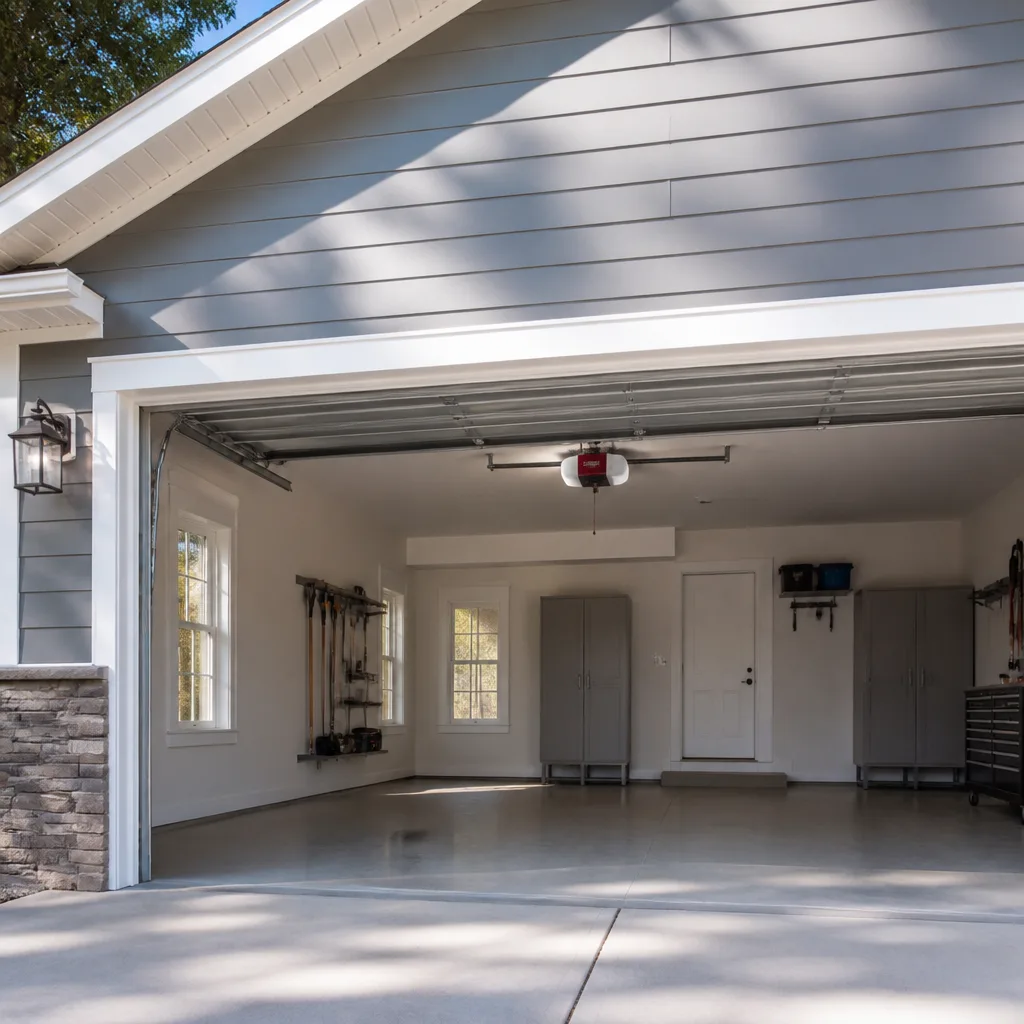
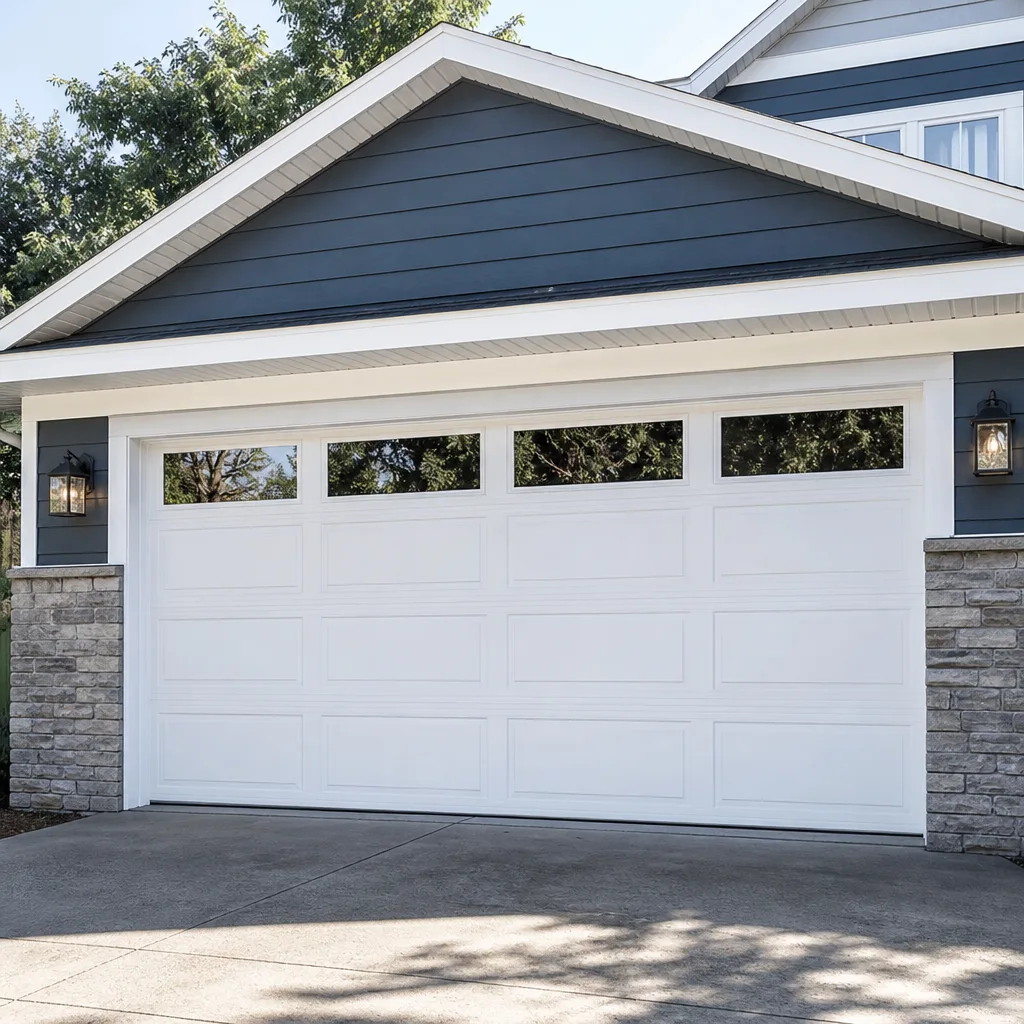
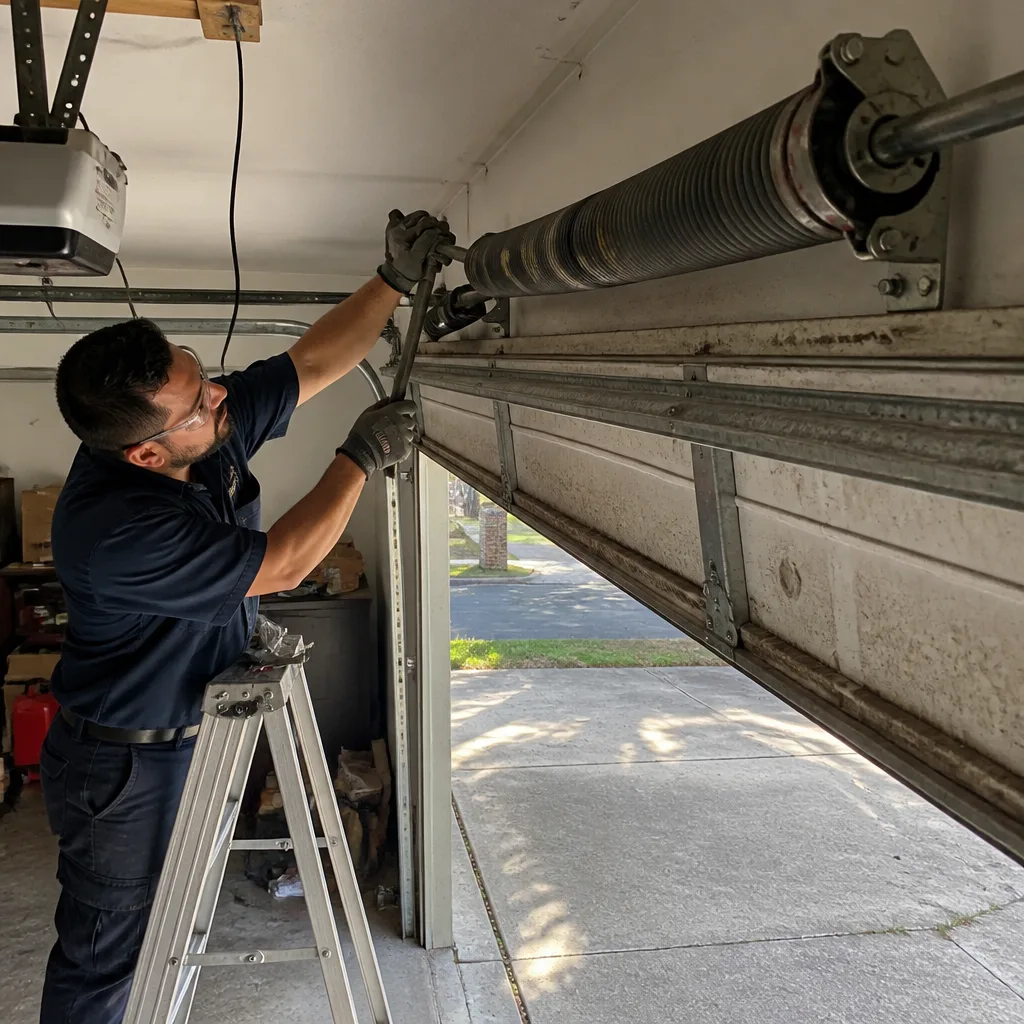 Before
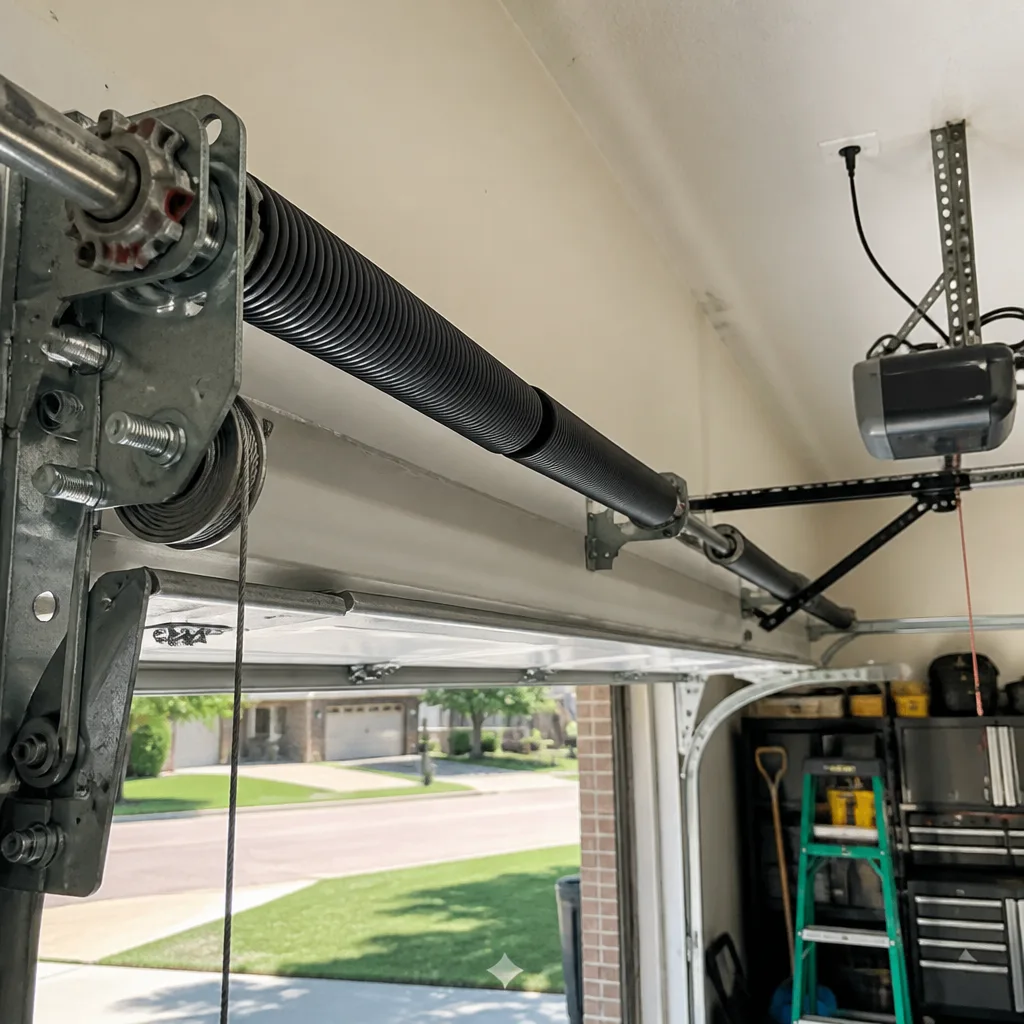 After
After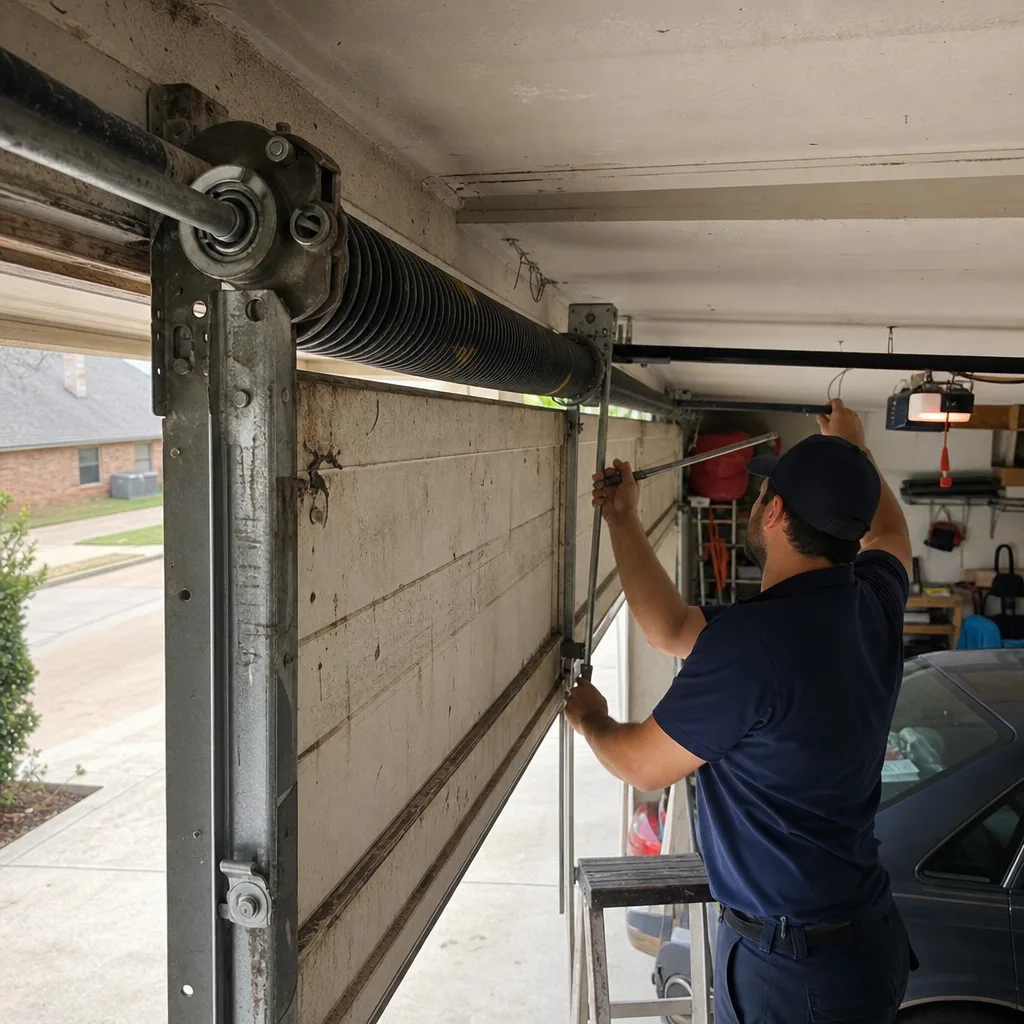 Before
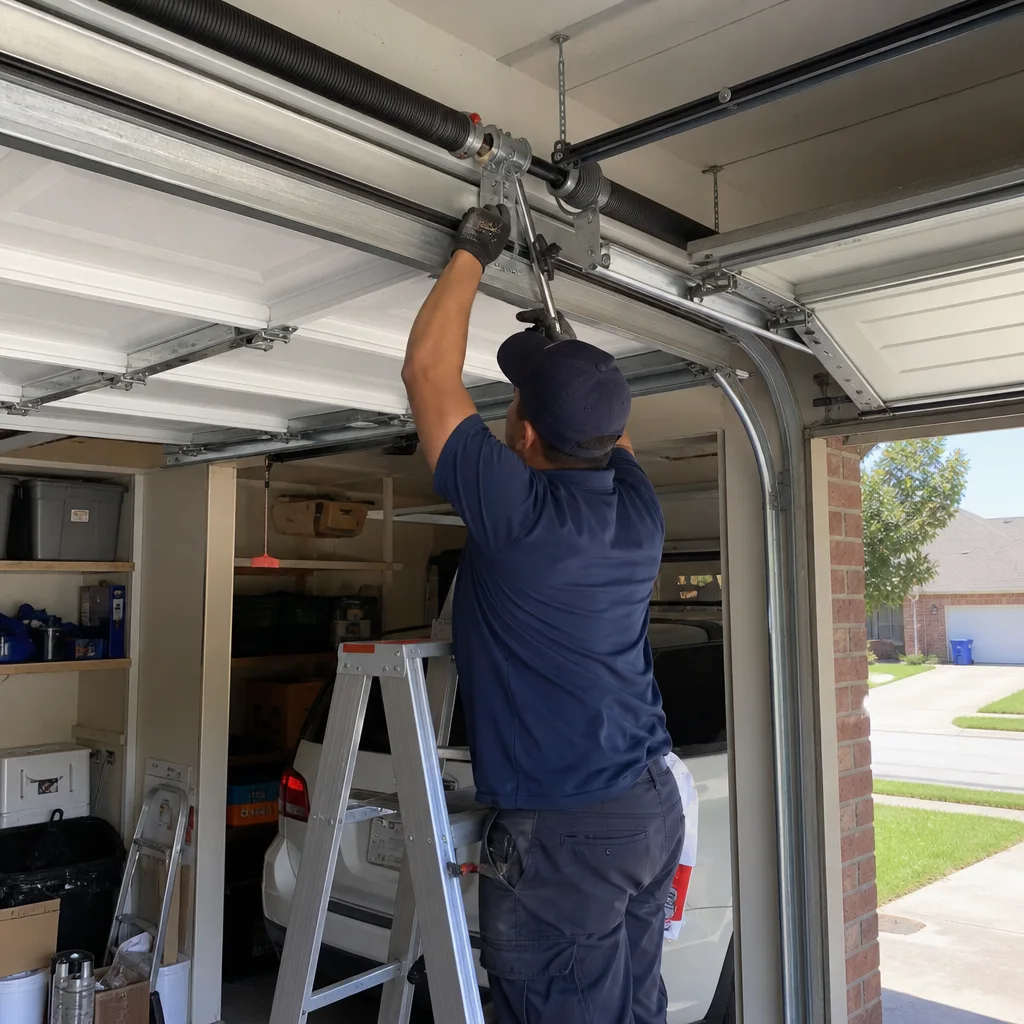 After
After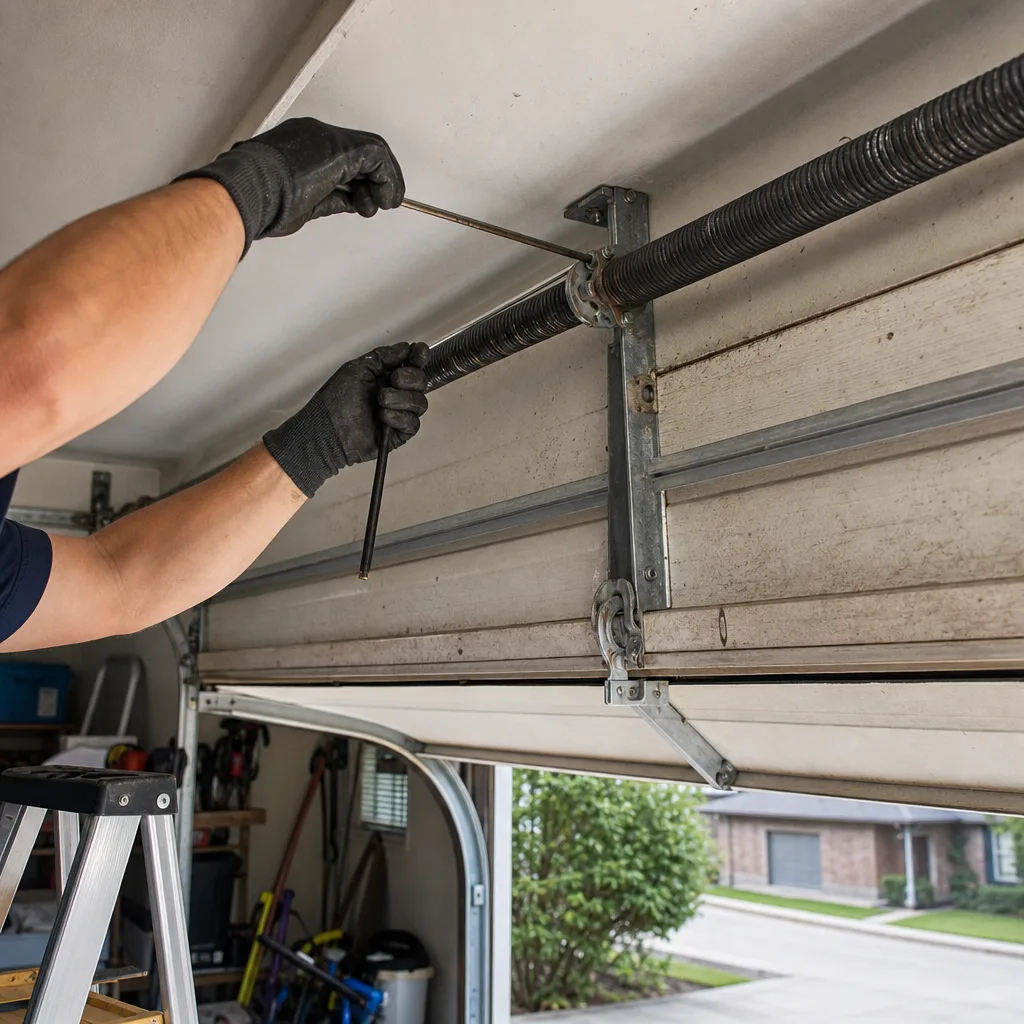 Before
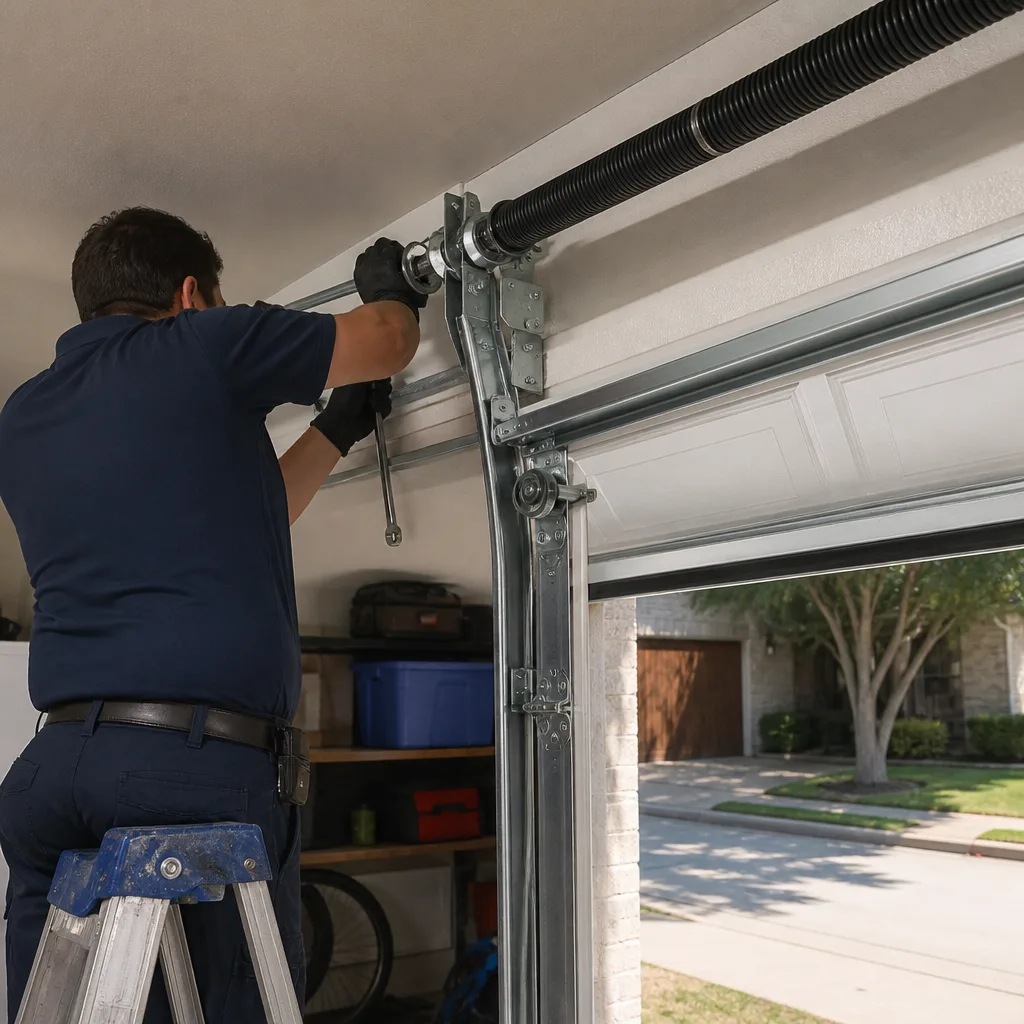 After
AfterSeasonal Garage Door Care for Richardson: Year-Round Homeowner’s Guide
Richardson averages fewer than 20 freezing days per year, but those days cause a disproportionate share of garage door failures because no one prepares for them. In our 42 years serving North Texas, we’ve learned that Richardson’s climate doesn’t divide neatly into four seasons. It divides into two high-stress periods, summer heat and the brief but severe winter freeze window, with two transition windows in between when maintenance actually pays off. This guide shows you what to do in each window, why timing matters for our specific climate, and how to avoid the repairs that keep us busiest in January and July. For The Complete Guide to Garage Door in Richardson and more guides & resources, see our blog.
Quick Answer
Garage door maintenance in Richardson should follow a two-stress, two-window schedule: service your door in April before summer heat damages springs and opener electronics, and again in November before the freeze window seizes lubrication points and cracks weather seals. A basic seasonal tune-up includes spring tension check, track alignment, lubrication of rollers and hinges, and seal inspection. Most Richardson homeowners who follow this schedule avoid the emergency calls that spike during our first hard freeze and the first sustained 100-degree week. Those debating DIY vs Professional Garage Door: The Richardson Homeowner’s Decision Guide should note that seasonal tune-ups require specialized tools.
Table of Contents
- Richardson’s Two-Stress, Two-Window Climate
- Pre-Summer Checklist: What April Maintenance Prevents
- How Summer Heat Damages Garage Doors in Richardson
- The Fall Transition Window: Why October-November Matters
- Pre-Freeze Checklist: November’s Three Critical Tasks
- Assessing Your Door’s Insulation After Five Texas Summers
- Post-Storm Panel Check: The Task Most Homeowners Skip
- What You Can Handle and What You Shouldn’t
Richardson’s Two-Stress, Two-Window Climate
Most seasonal maintenance guides pretend every city has four equal seasons. Richardson doesn’t. Our weather pattern creates two periods of genuine threat to garage door systems, separated by mild stretches when preparation actually works.
The first stress period runs roughly June through September. We see 50 to 60 days above 95 degrees, with garage interior temperatures in attached garages regularly hitting 110 to 120 degrees. That heat does specific, predictable damage to springs, opener electronics, and bottom seals.
The second stress period is shorter but sharper: mid-December through mid-February, when one to three hard freezes typically arrive with little warning. In Richardson, these freezes often follow 70-degree days, which catches homeowners off guard. The temperature swing itself, 40 degrees in 24 hours, causes metal contraction and expansion that stresses already-worn components.
The two maintenance windows are April and November. April maintenance prepares the door for heat stress. November maintenance prepares it for freeze stress. Work done in these windows lasts because the door isn’t already under seasonal strain.
We’ve seen this pattern repeat across Richardson neighborhoods from Berkner Park to Canyon Creek to the older homes near Downtown Richardson. The homeowners who call us in January for emergency spring replacements are almost always the ones who skipped the November window.
Pre-Summer Checklist: What April Maintenance Prevents
April in Richardson is the last comfortable month before garage interiors become ovens. This is when we perform our garage door repair in Richardson pre-summer tune-ups, and the checklist is specific to what heat will damage.
1. Torsion Spring Tension Check
Torsion springs are calibrated to a specific number of cycles, usually 10,000 for standard springs. Heat accelerates metal fatigue by increasing the molecular activity in the steel. A spring that’s already near its cycle limit in April is far more likely to fail in July or August, when the metal is expanded and under additional thermal stress.
We measure remaining cycle life with a spring gauge. If a spring is below 2,000 remaining cycles, we recommend replacement before summer. The cost of planned replacement in April is roughly half the cost of emergency service in July, when you’re trapped inside or outside your garage. See our Garage Door Cost Breakdown: The Richardson Homeowner’s Reference for 2026 for detailed pricing.
2. Opener Logic Board Inspection
Opener logic boards, particularly on older Craftsman and Raynor units common in Richardson’s 1980s and 1990s housing stock, are vulnerable to heat damage. The board sits in a metal housing that radiates garage heat directly onto the circuitry.
We check for three warning signs: intermittent operation that clears when the garage cools, delayed response to remote commands, and failure of the safety reverse system under load. Any of these indicates the board is beginning to fail under thermal stress. Replacement in April means you’re not calling us on a Saturday evening in August when the board finally quits entirely.
3. Bottom Seal and Threshold Evaluation
Richardson’s summer heat bakes bottom seals, particularly the PVC and rubber compounds used in older Wayne Dalton doors. A seal that’s already stiffening in April will be cracked by September, letting conditioned air escape and allowing water intrusion during our brief but intense spring and fall storms.
We measure seal flexibility with a simple bend test. If the seal won’t flex 90 degrees without surface cracking, it needs replacement. For attached garages in Richardson, this is also an energy efficiency issue: a failed seal can add 8 to 12 percent to cooling costs by allowing superheated air to press against the interior door.
4. Track Alignment and Roller Condition
Heat expansion affects track geometry. We check vertical track plumb and horizontal track level, then inspect rollers for flat spots or bearing wear. Nylon rollers, common on Amarr doors, soften in sustained heat and can deform if the door is operated frequently during peak temperature hours.
Our Mainspring Garage Door Co. home page lists our current $89 Seasonal Tune-Up, which covers all four of these checks. Most jobs are completed in a single visit because our trucks carry springs, rollers, seals, and opener components for all major brands.
How Summer Heat Damages Garage Doors in Richardson
Understanding what heat actually does helps you recognize early warning signs before they become emergency calls. Visit our blog for more guides & resources on Richardson garage door care.
Torsion Spring Thermal Fatigue
Torsion springs work by twisting and untwisting to counterbalance the door’s weight. In Richardson’s summer garage temperatures, the metal expands slightly. This changes the spring’s torque output, making the opener work harder. More importantly, the combination of thermal expansion and operational cycling creates microfractures in the spring wire.
We’ve replaced springs in Richardson’s Glenville Heights that showed clear thermal fatigue patterns: the fracture surface was discolored from oxidation, indicating the crack had been growing slowly through multiple heat cycles before final failure. A spring that breaks from simple cycle exhaustion shows a clean, bright fracture. Thermal fatigue is sneakier and more dangerous because the spring weakens gradually, sometimes allowing the door to operate until a final stress event.
Opener Electronic Degradation
Capacitors in opener power supplies are particularly heat-sensitive. In LiftMaster and Chamberlain units from the 2010s, we’ve seen capacitor bulging that correlates directly with garage temperature history. The capacitor filters electrical current to the motor; when it fails, the motor receives dirty power and overheats.
Safety sensors also suffer. The photoelectric eyes on Genie and older Craftsman openers can drift out of alignment when their plastic housings warp in heat. This causes the maddening symptom of the door reversing immediately after touching the floor, or refusing to close at all.
Insulation and Panel Stress
Steel garage doors with polyurethane insulation experience thermal stress at the steel-insulation interface. The steel expands more than the foam; after enough cycles, the adhesive bond begins to fail. You may notice panel “oil-canning,” a popping sound when the door moves, or visible separation at panel edges.
For Richardson homeowners with west-facing garage doors, this effect is amplified. Afternoon sun on a dark-colored door can create surface temperatures above 150 degrees. If your door faces west and is more than 10 years old, summer is when hidden damage becomes visible.
The Fall Transition Window: Why October-November Matters
Here’s what most competitors get wrong: they tell homeowners to check weather seals “before winter.” In Richardson, that’s too late. By December, we’ve usually had our first freeze, and any seal that was going to fail has already failed.
The correct window is mid-October through mid-November. This gives you time to order and install replacement seals before the first serious cold snap, which in Richardson can arrive as early as mid-November. It also lets you address any summer damage while the door is under minimal stress.
Why Fall, Not Spring, for Seal Replacement
Spring in Richardson is storm season. Replacing a bottom seal in March or April means it immediately faces wind-driven rain, hail, and debris. The seal hasn’t had time to seat properly before it’s tested.
Fall installation gives the seal time to conform to your specific floor contour through normal daily operation. By the time freeze weather arrives, the seal has compressed to its optimal shape. We’ve measured this: seals installed in November show 15 to 20 percent better air infiltration resistance in January than identical seals installed in April.
The Richardson Freeze Pattern
Our freezes aren’t prolonged, but they’re sharp. A typical Richardson winter event drops from 50 degrees at 6 PM to 22 degrees by 6 AM. That rapid temperature collapse causes immediate problems with three specific components:
- Garage door lubricant that hasn’t been refreshed since summer has thickened and may gel, causing the opener to strain or the door to stick in the tracks.
- Steel rollers and hinges contract slightly, increasing friction in already-worn bearings.
- Weather seals that have hardened with age lose their remaining flexibility and crack when the door first operates on a cold morning.
Fall maintenance addresses all three before they’re tested.
Pre-Freeze Checklist: November’s Three Critical Tasks
This is the checklist we use for our November tune-ups in Richardson. Each task targets a specific freeze-failure mode we’ve documented across thousands of service calls.
Task 1: Refresh the Three Lubrication Points
Not all lubrication points are equal in freeze conditions. These three seize most often:
- Hinge pins: Use a lithium-based grease, not WD-40, which evaporates and leaves metal bare. Apply sparingly; excess grease attracts grit that becomes abrasive.
- Roller bearings: Nylon rollers have sealed bearings that don’t need lubrication, but steel rollers need a drop of light machine oil at the axle. In Richardson’s climate, we see more steel rollers on older doors in neighborhoods like Richardson Heights and Heights Park.
- Torsion spring coils: A light coating of silicone spray prevents coil binding when the metal contracts. Never use grease on springs; it traps moisture and accelerates corrosion.
Task 2: Replace the Bottom Seal Before It Cracks
The bottom seal is the single most important weatherization component for Richardson’s brief freezes. Cold air enters at the floor level and rises, creating a convection current that undercuts even well-insulated doors.
We use a specific test: close the door on a bright day and look for light from outside. Any visible line means the seal has compressed or hardened beyond recovery. For Richardson’s typical 2-inch threshold gap, we recommend a bulb-style EPDM rubber seal rated to -40 degrees. PVC seals, common on budget installations, become brittle at 20 degrees and will crack on first contact with a frozen floor.
Task 3: Test the Emergency Release and Manual Operation
Every garage door opener has a red emergency release handle. In a power outage during a freeze, which Richardson sees when ice accumulates on power lines, you may need to operate the door manually. Test this in November:
- Pull the emergency release with the door closed.
- Lift the door manually. It should move smoothly and stay open at waist height without drifting down.
- If the door feels heavy or won’t stay open, the spring balance is off. This is not a DIY adjustment. Torsion springs carry lethal tension and require professional service.
If the door fails this test, garage door repair in Richardson should be scheduled before freeze season. A door that’s hard to lift manually will strain your opener to failure when power returns.
Assessing Your Door’s Insulation After Five Texas Summers
Thermal degradation of garage door insulation is real, measurable, and rarely discussed. After five or more Richardson summers, polyurethane foam insulation loses 10 to 15 percent of its R-value through a combination of outgassing and moisture infiltration at panel seams.
The Five-Year Test
You don’t need special equipment to assess insulation performance. On a 100-degree July afternoon, touch the interior surface of your closed garage door. It should feel warm, not hot. If it’s too hot to keep your hand on comfortably for 10 seconds, the insulation has degraded significantly.
Another indicator: compare your garage temperature to outdoor shade temperature on a still summer day. A well-insulated attached garage in Richardson should run 15 to 20 degrees cooler than ambient. If the difference is less than 10 degrees, the insulation is failing.
When Replacement Makes Sense
For Richardson homeowners planning to stay in their homes, insulation degradation is a factor in the replace-versus-repair decision. A new Clopay or Amarr insulated door with current polyurethane formulation will outperform a 15-year-old door that was top-of-line when installed.
We provide free measurements and written estimates for garage door installation in Richardson. Our estimates include the calculated R-value improvement and, for attached garages, an estimated annual cooling cost reduction. There’s no pressure and no surprise on the bill; the price we quote is the price you pay.
The Attached Garage Factor
In Richardson’s 1970s and 1980s neighborhoods, many homes have attached garages with bedrooms above. Poor garage door insulation creates a thermal bridge that makes those rooms the hottest in summer and coldest in winter. We’ve had homeowners report that a new insulated door did more for upstairs comfort than attic insulation improvements costing twice as much.
Post-Storm Panel Check: The Task Most Homeowners Skip
North Texas hail is famous for roof damage, but garage doors take a beating too. The task most homeowners skip, and the one that turns a $200 repair into a $2,000 replacement, is checking panel alignment after every significant hail event.
Why Hail Damage Is Often Hidden
Modern steel garage doors have relatively thin face sheets, 24 to 26 gauge, over an insulation core. Hail dents the face sheet and compresses the insulation locally. This doesn’t always affect operation immediately. The door may open and close normally for weeks or months.
But the dent creates a stress riser. Every cycle, the panel flexes slightly more at the damaged point. Eventually, the face sheet cracks at the dent perimeter, or the insulation core delaminates and the panel begins to “oil-can,” popping in and out with temperature changes.
The Alignment Check
After any hail event with stones larger than quarter-size, perform this check:
- Close the door and stand inside the garage with the lights off.
- Look for daylight showing around panel edges. Any new line of light indicates a panel has shifted in its track or a hinge has been stressed.
- Open and close the door slowly, listening for new scraping or popping sounds.
- Check the exterior for dents, but more importantly, run your hand along the panel seams. A sharp edge or gap that wasn’t there before means the panel has deformed.
We respond to storm damage calls across Richardson, from Spring Valley to Reservation to Richardson Terrace. Early intervention, often just panel replacement or hinge adjustment, prevents the structural damage that requires full door replacement. Our 90-Day Done Right Promise covers all storm repairs: if the fix doesn’t hold, we return at no charge, no paperwork, no arguing.
What You Can Handle and What You Shouldn’t
We’re plain about this. Some maintenance is appropriate for homeowners. Some work carries genuine danger and should never be attempted without training and proper tools.
Safe for Homeowners
- Visual inspection of springs, cables, rollers, and hinges for obvious wear or damage
- Lubrication of hinge pins and roller axles with appropriate products
- Cleaning photo-eye sensors with a soft cloth
- Testing the emergency release and manual operation
- Checking and replacing remote batteries
- Clearing track obstructions and debris
Never Attempt Without Professional Training
Torsion spring adjustment or replacement: These springs carry enough stored energy to cause serious injury or death. The winding cones can explode if mishandled. We’ve seen DIY attempts result in broken wrists, facial injuries, and worse. This is not hyperbole. If a spring is broken or the door feels heavy, call us.
Cable replacement: Cables are under similar tension and can whip unpredictably when detached.
Track realignment: Improperly supported tracks can drop suddenly, and the geometry must be precise for safe operation.
Opener force adjustment: Modern openers have safety systems calibrated to specific door weights. Incorrect adjustment can cause the door to close with dangerous force or fail to reverse on obstruction.
Our technicians are trained as journeymen under our K.E.Y.S. values code: Krafted right, Every time, Your home first, Standing behind it. Every technician is background-checked and uniformed. When we arrive, we diagnose, quote a flat price before any work begins, and complete most jobs in a single visit because our trucks carry the parts.
Common Mistakes to Avoid
- Using WD-40 as garage door lubricant. WD-40 is a solvent and water displacer, not a lubricant. It evaporates within days, leaving metal unprotected. In Richardson’s climate, this means rust by summer and seized components by winter. Use lithium grease on hinges and silicone spray on springs.
- Ignoring the door until it breaks. The homeowners who call us most often for emergency service are those who haven’t operated the door manually in years. They don’t know the spring is weakening until the opener burns out trying to lift an unbalanced door.
- Replacing the opener when the spring is the problem. A failing torsion spring makes the opener strain. Many homeowners replace the opener, then call us six months later when the new opener also fails. We always check spring balance first. It’s usually the root cause.
- Installing weather seal in cold weather. EPDM rubber needs to be warm and flexible to seat properly. Installing in December or January, even on a mild day, means the seal never conforms to your floor’s specific contour. The result is gaps that let in Richardson’s coldest air.
- Assuming insulation lasts forever. Polyurethane outgasses and degrades. After 10 to 15 years, even a high-end insulated door performs like an uninsulated one. If your garage is uncomfortably hot in summer despite a supposedly insulated door, the insulation has likely failed.
- Skipping post-hail inspection. That small dent from March hail becomes a cracked panel by November. The repair cost doubles or triples. Check after every storm.
- Adjusting torsion springs from online videos. The videos never show the injuries. We’ve responded to emergency calls where the homeowner was lucky to escape with minor injuries. The tools alone, winding bars of precise diameter, are specialized equipment most homeowners don’t own.
When to Call a Professional
Call when the door makes new noises, operates unevenly, reverses unexpectedly, or feels heavy to lift manually. Call after any hail damage, even if operation seems normal. Call if your opener is more than 10 years old and showing intermittent problems, before it fails completely.
Call if you can’t remember the last time a professional inspected the door. For most Richardson homeowners, that’s the case, and it’s the single biggest risk factor for emergency failure.
Mainspring Garage Door Co. offers free estimates in Richardson. A technician will inspect your door, explain what we find, and quote a flat price before any work begins. No surprises on the bill. Call (945) 495-3552. If you have a written estimate from another company, we’ll provide a free second opinion.
Frequently Asked Questions
Our seasonal tune-up is $89 and includes spring tension check, track alignment, lubrication of all moving parts, safety system test, and seal inspection. Most tune-ups are completed in a single visit. We also offer $50 off any repair over $250, and a permanent 5% discount for seniors and veterans. Call (945) 495-3552 to schedule.
Homeowners can safely handle visual inspections, sensor cleaning, lubrication, and manual operation tests. Torsion spring work, cable replacement, track realignment, and opener force adjustment should never be attempted without professional training. These components carry lethal tension or affect safety systems. If you’re unsure whether a task is safe, call us for guidance. We’re happy to explain over the phone.
Standard torsion springs last 7 to 12 years in Richardson, depending on cycle count and summer heat exposure. High-cycle springs, which we often recommend for attached garages with daily use, last 15 to 20 years. We measure remaining cycle life during tune-ups and recommend replacement before failure, not after. A broken spring always requires professional replacement.
The lubricant has thickened or the weather seal has hardened and is gripping the floor. This is a classic sign of skipped fall maintenance. The fix is usually straightforward: refresh lubrication with cold-rated products and replace the bottom seal with EPDM rubber. If the door still sticks after these steps, the track alignment may have shifted. We can diagnose and fix this in a single visit.
Yes, for attached garages and any garage with living space above. Richardson’s summer heat makes uninsulated garage interiors unbearable, and that heat transfers to adjacent rooms. A properly insulated door with intact seals can reduce cooling costs by 8 to 12 percent for attached garages. After 5 to 10 Texas summers, insulation degrades and should be assessed. We include insulation evaluation in every tune-up and installation estimate.
First, check for daylight around panel edges with the door closed and lights off. Any new gap indicates panel shift. Second, operate the door slowly and listen for new noises. Third, photograph all visible damage for insurance. Then call us for inspection. Early panel replacement or hinge adjustment often prevents full door replacement. We work with all insurance carriers and provide documentation for claims.
The Bottom Line
Richardson’s garage doors face two real enemies: summer heat that degrades springs and electronics, and brief, sharp freezes that seize neglected components. The homeowners who avoid emergency calls are the ones who use the April and November maintenance windows, who replace seals before they crack, who check panel alignment after storms, and who know which work is safe to attempt and which requires a trained professional.
We’ve been serving Richardson and surrounding communities since 1984. Our trucks carry the parts to finish most jobs in one visit. Our price is stated upfront, before any work begins. Our 90-Day Done Right Promise is in writing on every job. If you’re unsure where your door stands, call us for a free estimate. We’ll tell you exactly what we find and exactly what it costs to fix it right.
Call (945) 495-3552. A live person answers, 24/7, including nights, weekends, and holidays. No phone trees. No voicemail. No after-hours answering service.
Written by Carl Dutton, Owner at Mainspring Garage Door Co., serving Richardson since 2016.