
Last updated September 10, 2026
Full 25-point door and opener safety check with every visit - springs, cables, rollers, tracks, and your LiftMaster or Chamberlain opener included
You get a price before we start. It does not change when the truck arrives.
 Before
 After
After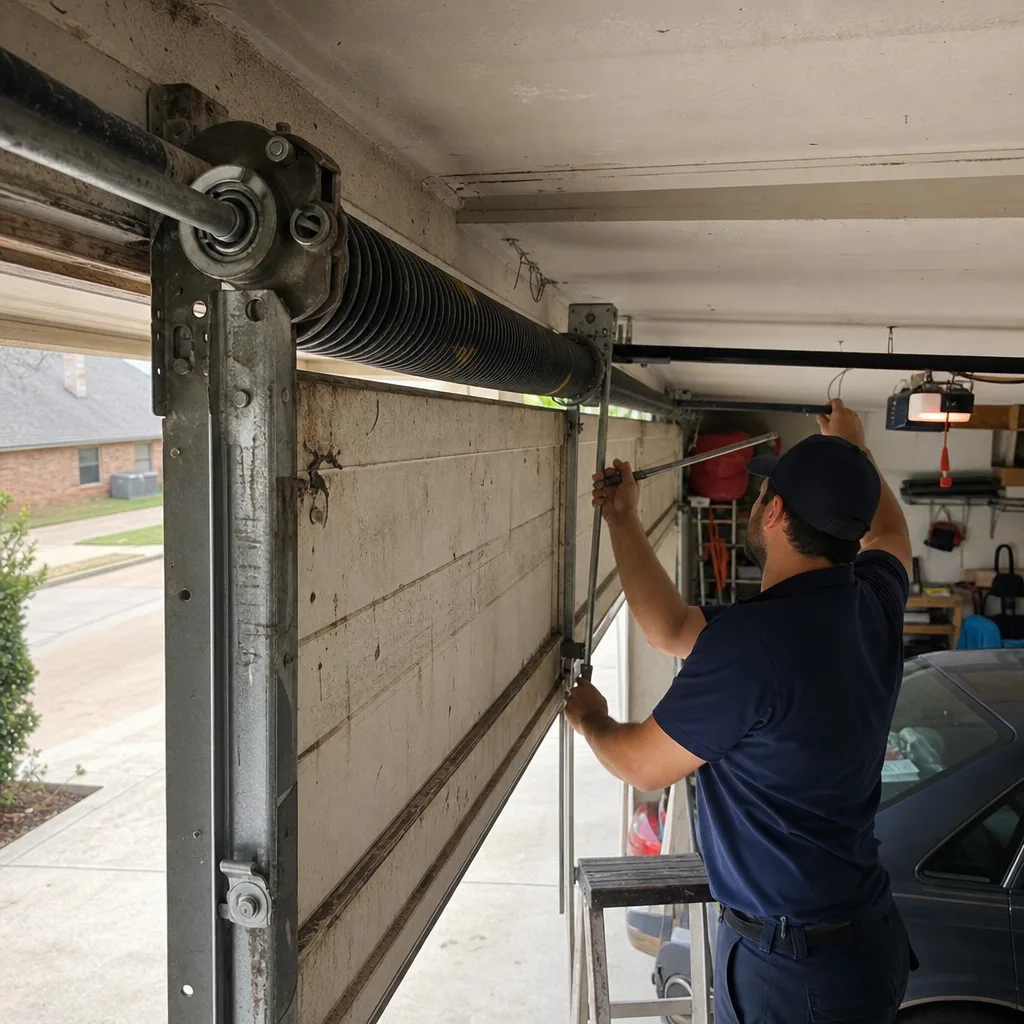 Before
 After
After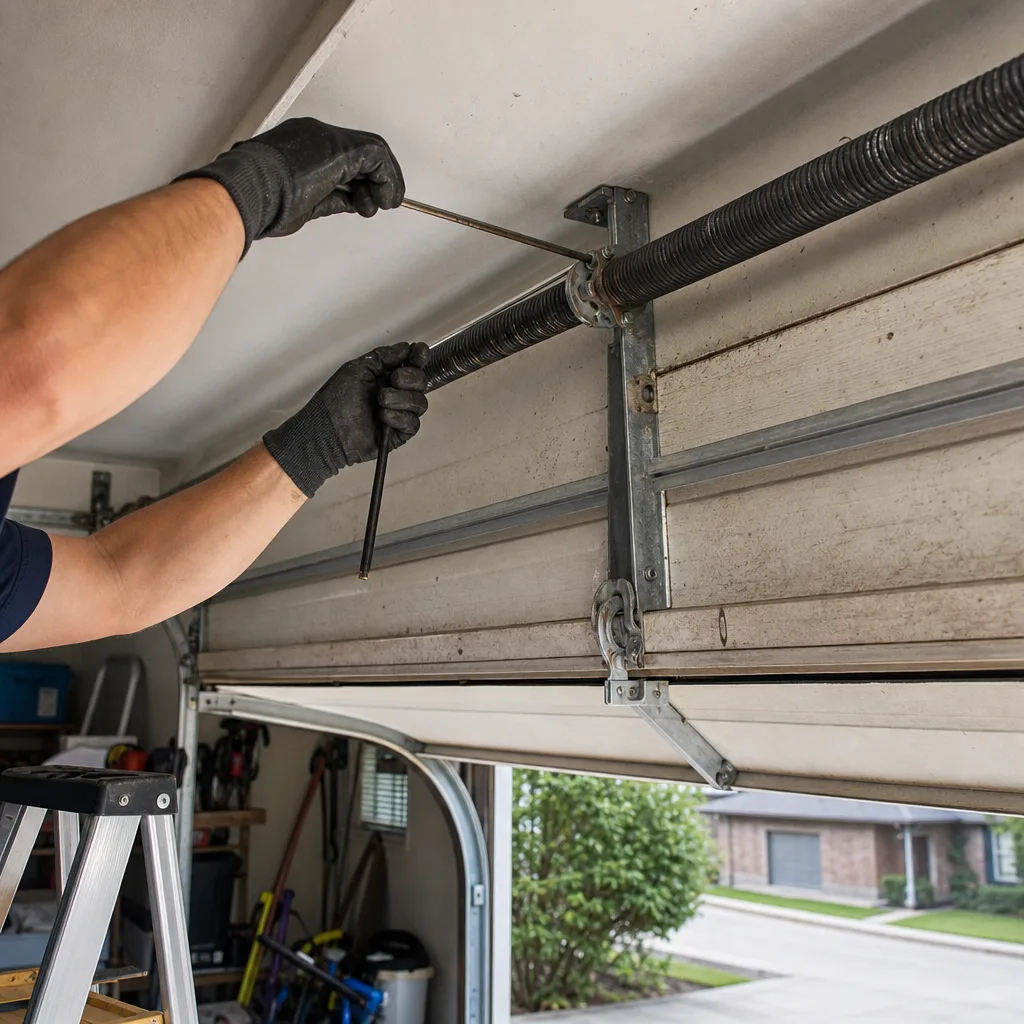 Before
 After
AfterGarage Door Repair Maintenance Checklist for Richardson Homeowners
A garage door does not fail all at once. It fails in a sequence, and every step in that sequence is visible if you know where to look. In Richardson, where summer stretches past six months and the first 90-degree week arrives before Easter some years, that sequence accelerates. We’ve been called to homes in Heights Park where a $15 roller became a $400 panel replacement, and to Canyon Creek where a ignored spring warning turned into a door crashing off its tracks-situations that our Garage Door Repair services handle regularly. This checklist is built around the failure sequence, not a generic task list. You’ll learn what degrades fastest in North Texas heat, what sounds mean trouble, and how to break the chain before you’re trapped inside your garage on a Saturday morning.
Quick Answer
Richardson homeowners should inspect their garage door every spring before the first sustained heat wave, focusing on three components: the torsion spring system, nylon rollers, and photo-eye sensors. A proper maintenance routine takes 20 minutes, requires only silicone-based lubricant and a visual check, and can prevent the majority of emergency repair calls we receive between May and September. For more guides & resources on keeping your door running smoothly, see our blog.
Table of Contents
- Why the Failure Sequence Matters More Than a Task List
- The Three Components North Texas Heat Destroys First
- Visual Inspection: Ordered by Consequence
- Lubrication Guide: What Goes Where, and What Never to Use
- Auto-Reverse and Photo-Eye Tests: No Tools Required
- What a Healthy Door Sounds Like Versus Warning Sounds
- When to Perform Maintenance in Richardson’s Climate
- Common Mistakes to Avoid
- When to Call a Professional
- Frequently Asked Questions
- The Bottom Line
Why the Failure Sequence Matters More Than a Task List
Most maintenance checklists treat every component as equal. They are not. A worn roller causes vibration. Vibration loosens hardware. Loose hardware stresses the spring. A stressed spring snaps, and when it snaps, it can take cables, panels, and sometimes the opener with it. The cost climbs by powers of ten at each step.
We see this progression constantly in Richardson. A homeowner in Duck Creek hears a rattle in March, ignores it through April, and calls us in May when the door won’t open at all. What began as a $120 roller replacement has become a $680 spring, cable, and hardware rebuild. The sequence was visible. It was audible. It was preventable. See Garage Door Warning Signs: A Richardson Homeowner’s Reference Guide to learn what to watch for.
The checklist below orders inspections by consequence: what fails first, what that failure damages next, and what catches the problem before the chain reaction starts. This is how a journeyman thinks about maintenance. Not as tasks, but as interruption of failure modes.
Three principles guide every step:
- Check what moves most often before what moves rarely
- Check what carries load before what guides load
- Check what protects people before what protects property
These principles explain why we start with rollers and springs, not paint or weatherstripping. Aesthetics matter, but they do not end in emergency calls at 6 a.m. on a Sunday.
The Three Components North Texas Heat Destroys First
Richardson’s climate is harder on garage doors than most homeowners recognize. The concrete slab absorbs and radiates heat. An attached garage in August can hold 110°F air for hours after sunset. That thermal cycling, dry air, and occasional severe hail create specific failure patterns we do not see at the same rates in cooler, more humid climates.
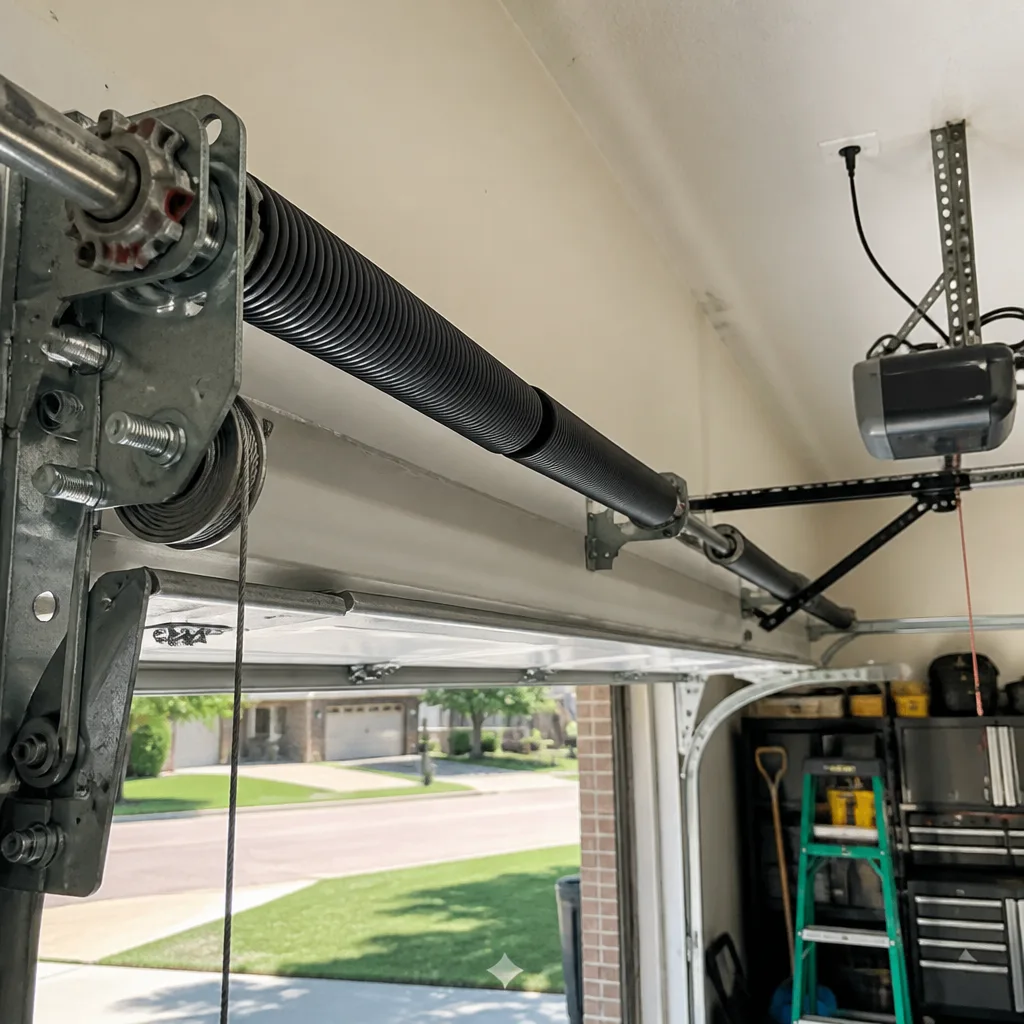
Torsion springs are the first casualty. Most residential doors use oil-tempered torsion springs rated for 10,000 cycles. In normal conditions, that is seven to ten years. In a Richardson garage with poor ventilation and a south-facing door, the heat accelerates metal fatigue. We replace springs in Richardson homes after five or six years with regularity, especially in neighborhoods like Greenwood Hills where homes from the 1970s and 1980s still have original doors with undersprung systems.
The warning sign is subtle: the door feels heavier to lift manually, or the opener strains in the last 18 inches of travel. That strain is the spring losing torque. Once a spring loses 15% of its tension, the opener works overtime. Once it loses 25%, the opener’s gears begin to fail too. We see this paired failure in Richardson every summer.
Nylon rollers degrade second. The plastic wheels soften in sustained heat, then flatten where they contact the track. A round roller becomes oval. An oval roller vibrates. Vibration loosens every bolt it touches. In our experience, rollers in Richardson need inspection every two years and replacement every four to five, sooner if the garage faces west and receives afternoon sun directly.
The third component is the photo-eye sensors. Heat affects the circuitry, but more commonly, dust and spider webs accumulate faster in dry climates. A sensor that reads marginally in March may fail entirely in July when expansion shifts its alignment by a millimeter. The door reverses randomly or refuses to close. Homeowners blame the opener. Usually, it is the sensors.
These three components should be checked every spring, before the first sustained heat wave. In Richardson, that means by mid-March at the latest. The 90-degree week arrives unpredictably, and once it does, the damage accelerates.
Visual Inspection: Ordered by Consequence
This sequence takes 15 minutes and requires no tools. Perform it in this order. Do not skip steps.
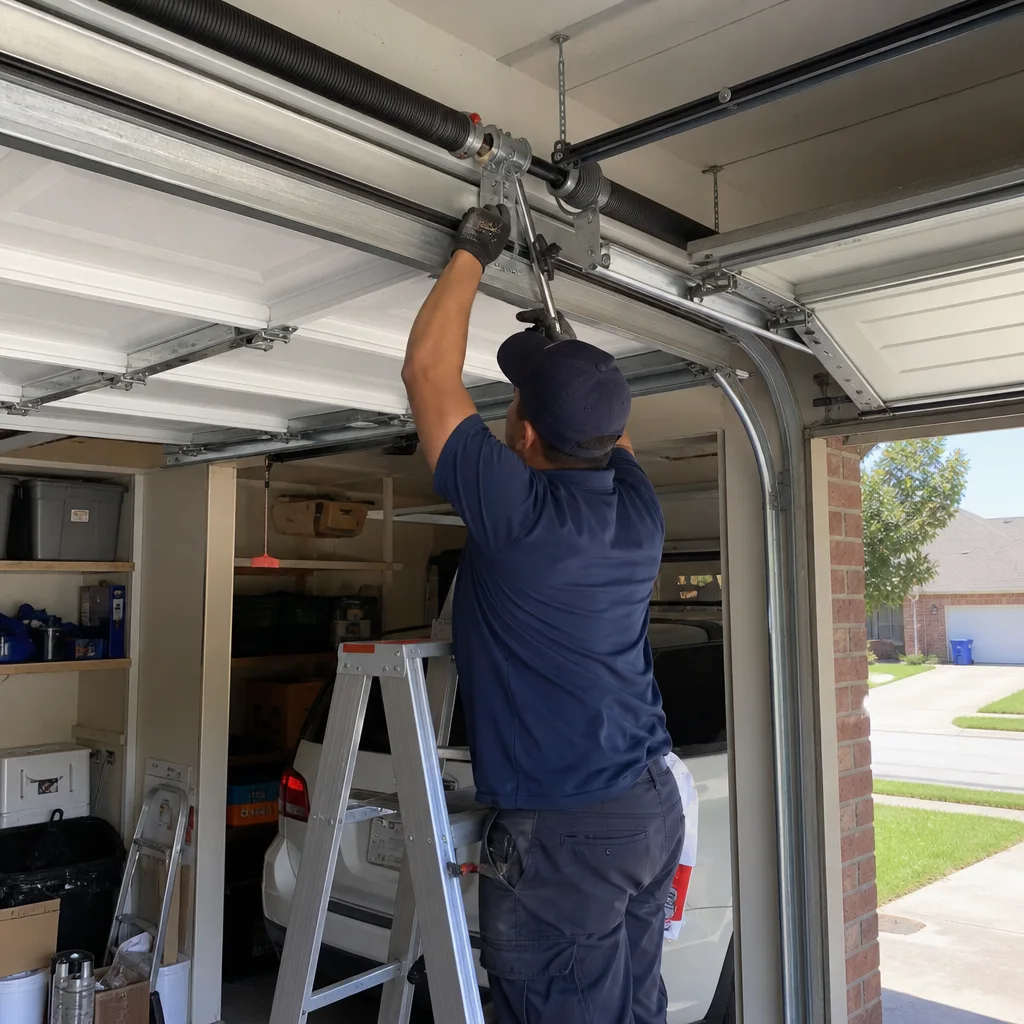
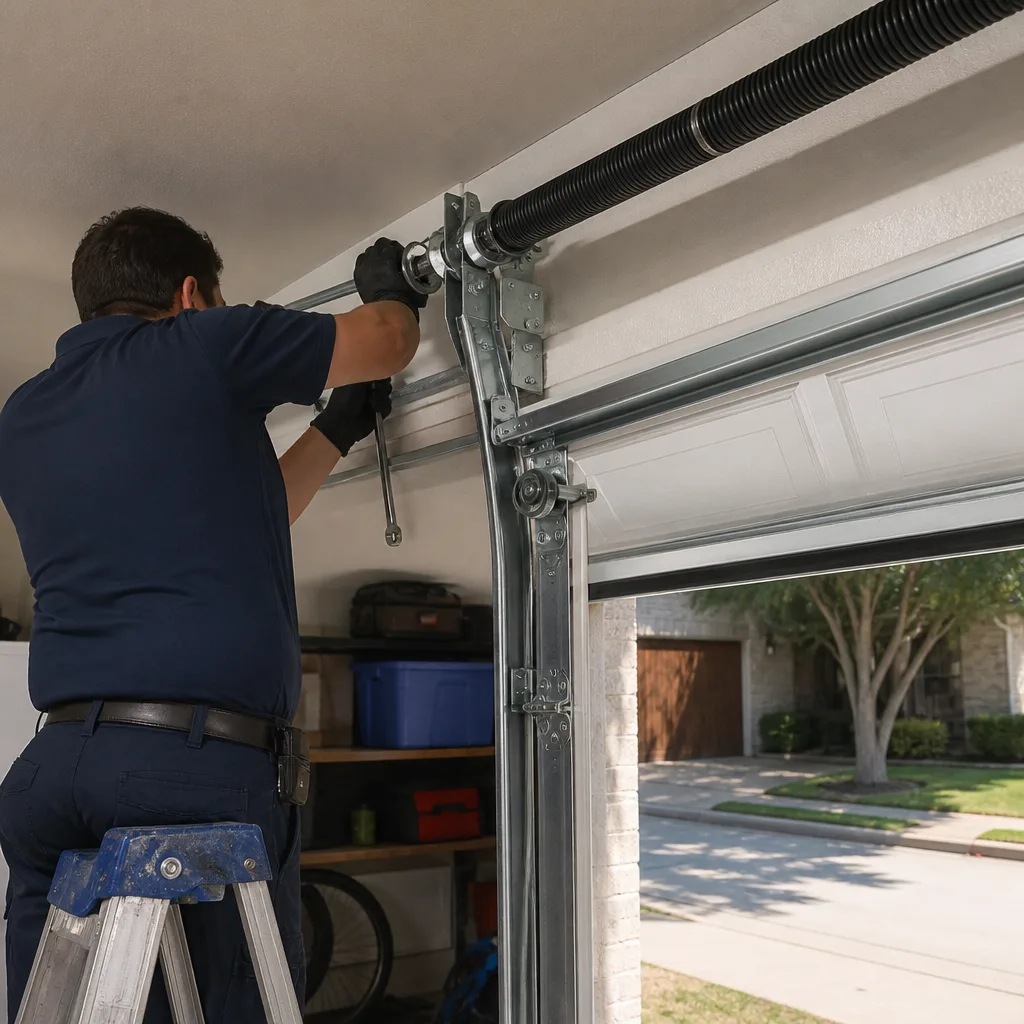
- Disconnect the opener and test manual lift. Pull the red release cord and lift the door halfway. A properly balanced door stays in place. If it falls, the springs are weak. If it rises, they are over-torqued. Either condition stresses the opener. Do not attempt to adjust springs yourself. The torque stored in a torsion spring can cause serious injury or death. Note the result and call a professional if the door does not balance.
- Inspect rollers while the door is at waist height. Look at each roller where it meets the track. The wheel should be round, not oval, and it should spin freely. Wiggle each roller side-to-side. Excessive play means the stem is wearing in its bracket. In Richardson, we find flattened rollers most often on the top section, where heat concentrates and the door changes direction most frequently.
- Check all hardware for looseness. Start with the roller brackets, then the hinges between panels, then the track mounting bolts. Use a socket wrench only if you find looseness, do not over-tighten. Over-tightened bolts strip the threads in thin-gauge steel, a common DIY error we repair in Richardson homes. The bolt should be snug, not torqued.
- Examine cables for fraying or rust. Look along the full length of each cable, especially where it wraps around the bottom drum. A single frayed strand indicates replacement is near. Multiple frays mean imminent failure. Never touch a cable under tension. If you see fraying, stop the inspection and call a professional. A snapping cable carries enormous force.
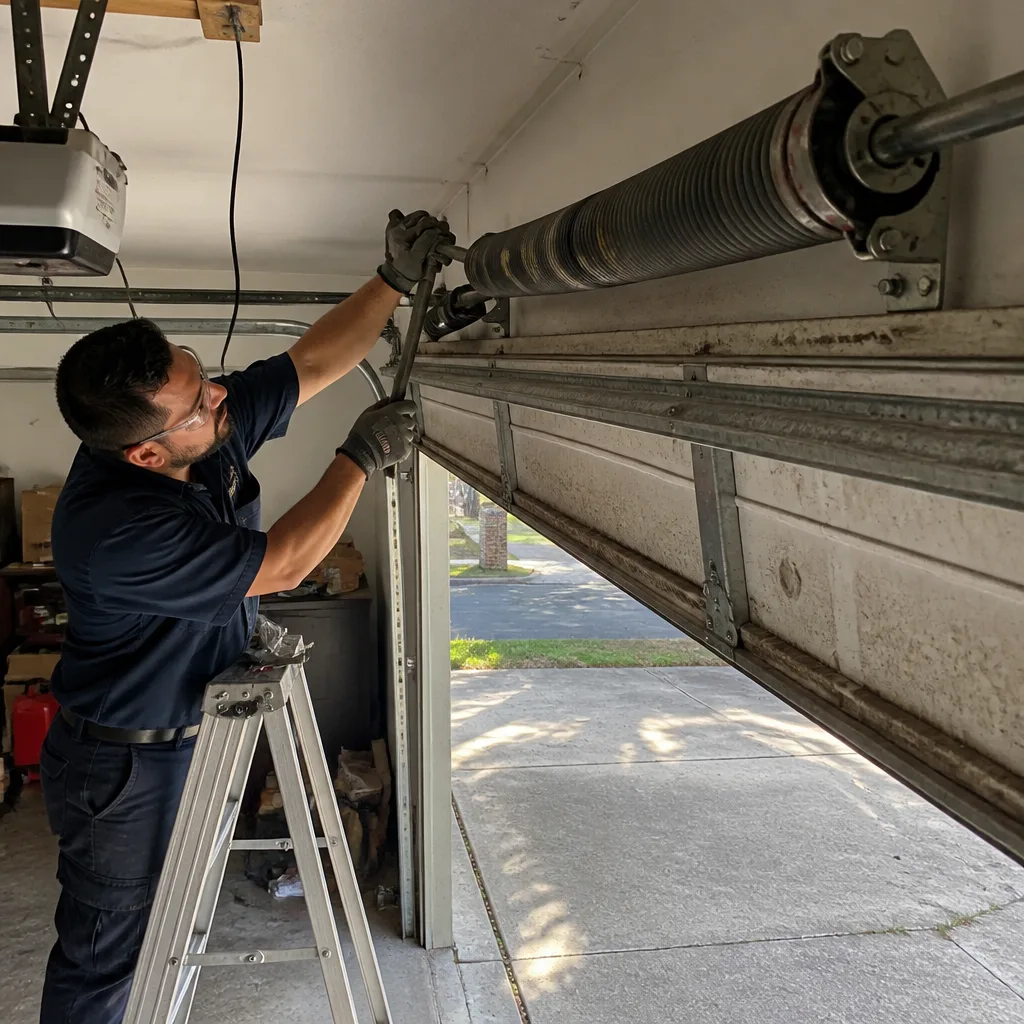
- Inspect the spring for gaps in the coils. A torsion spring should have consistent spacing between coils. A visible gap, or a section where coils touch, indicates the spring has set and lost tension. In Richardson’s heat, we see this most often on springs more than five years old. Do not attempt to measure or adjust. Document with a photo and schedule replacement.
- Check the weatherstrip at the bottom of the door. It should be flexible and intact. Cracked rubber admits water during Richardson’s spring storms and allows rodents entry. This is the lowest-consequence item on the list, which is why it comes last. Replace when cracked, but do not prioritize it over load-bearing components.
Document what you find. A dated photo on your phone creates a record for comparison next year. We recommend this to every Richardson homeowner who asks about maintenance schedules.
Lubrication Guide: What Goes Where, and What Never to Use
Lubrication is where the most damage is done with the best intentions. The wrong product turns to gum in heat, attracts dust, or strips protective coatings. In Richardson’s climate, product selection matters more than frequency.
What to use: Silicone-based spray lubricant or lithium grease specifically formulated for garage doors. We carry both on our trucks and recommend them for the components below. Avoid multi-purpose products that claim to do everything. They do nothing well.
Where to apply:
- Hinges: Light spray at the pivot points where the hinge halves meet. Wipe excess. The hinge does not need to drip; it needs to move without grinding.
- Roller stems: A brief spray where the roller stem enters the bracket. Do not spray the wheel itself if it is nylon. Lubricant on nylon attracts dust that abrades the wheel faster. Steel rollers can receive light wheel lubrication, but most modern doors use nylon for quiet operation.
- Track interior: None. The track should be clean and dry. Lubricant in the track collects grit and creates a grinding paste. Wipe the track with a dry cloth if dusty.
- Spring: Light coating across the coils. This reduces friction between coils as the spring winds and unwinds. In Richardson’s dry heat, a light annual application prevents the squeal we hear so often in June and July.
- Lock mechanism: Graphite powder or dry lubricant. Oil-based products gum in heat and freeze the lock.
What never to use: WD-40 is the single most common homeowner mistake we encounter in Richardson. It is a water displacer and light solvent, not a lubricant. It evaporates within days, leaving a sticky residue that attracts North Texas dust and hardens into a paste. We have replaced dozens of rollers and hinges in Richardson homes where WD-40 was applied annually for years, accelerating the wear it was meant to prevent.
Apply lubricant in March, before the heat arrives. A second light application in October, after the last 90-degree day, extends component life through the mild winter.
Auto-Reverse and Photo-Eye Tests: No Tools Required
These tests verify the safety systems that prevent injury and meet Richardson’s adopted building code. The International Residential Code, as adopted by the city, requires all automatic garage door openers manufactured after 1993 to have both auto-reverse and photo-eye protection. A door without these features, or with disabled features, violates code and creates liability.
Photo-eye test: Locate the two sensors, one on each side of the door track, typically 4-6 inches above the floor. They should face each other with indicator lights steady, not blinking. Clean the lenses with a dry cloth. Then, with the door open, start the close cycle and pass a broom handle through the beam. The door must reverse immediately. If it continues, the sensors are misaligned or failed. Check for obvious obstructions, clean again, and retest. If still failing, call for service. Do not bypass sensors.
Auto-reverse test: With the door fully open, place a 2×4 board flat on the floor in the door’s path. This is the standard test object specified by UL 325, the safety standard referenced by code. Start the close cycle. The door must reverse within two seconds of contacting the board. If it does not reverse, or if it crushes the board, the force setting is excessive. This adjustment requires a professional. The force limit is not a user setting in modern openers; it requires calibration.
Contact reverse sensitivity: A secondary check we recommend in Richardson, where thermal expansion affects door travel. Open the door fully, then close it. At the bottom of travel, listen for a distinct pause or hesitation before the motor stops. A healthy system stops smoothly. A system that bangs against the floor or reverses unexpectedly needs adjustment.
Perform these tests monthly. They take two minutes and require no tools. Document the date. If you have grandchildren who visit, or if you are in a neighborhood like Richland Park with many young families, these tests are not optional. They are the difference between a close call and a hospital visit.
What a Healthy Door Sounds Like Versus Warning Sounds
Sound is the most ignored diagnostic tool. A garage door in good condition makes a consistent, low rumble during travel. The pitch does not change significantly from bottom to top. There is no grinding, no popping, no squeal that resolves at a particular height.
Warning sounds and their causes:
- Grinding that worsens at the top of travel: Worn top rollers or a bent track section near the curve. In Richardson, we see this where heat has softened the roller and it has flattened against the track radius. Address before the roller seizes and the opener tears the bracket from the door.
- Popping or snapping during opening: A panel hinge binding, or a spring coil setting and releasing. The spring sound is sharper and more metallic. Either condition worsens with each cycle. The popping hinge will eventually crack the panel at its mounting point.
- Squeal that begins after the door is halfway up: Dry spring coils rubbing. This is the most common sound we hear in Richardson homes that have not been lubricated in two or more years. It precedes spring failure by months, sometimes weeks. The squeal is metal-on-metal friction that accelerates fatigue.
- Rattle that varies with wind: Loose hardware, often track mounting bolts or opener rail supports. In Richardson’s spring storm season, this rattle loosens hardware further. We have found track brackets hanging by a single bolt after wind events.
- Opener straining, motor laboring: Not a door sound, but a critical signal. The opener should not work hard. If it does, the door is out of balance, a roller is binding, or a spring is weak. Continuing to operate strains the opener’s gears and motor. Opener replacement is more expensive than spring or roller service.
Record unusual sounds on your phone. Play them for a technician. We can often diagnose from a recording what would take twenty minutes to identify in person. This saves time and confirms whether a service call is urgent or can be scheduled.
When to Perform Maintenance in Richardson’s Climate
Richardson’s climate demands a two-season maintenance approach. The traditional “spring and fall” schedule works elsewhere, but North Texas heat compresses the critical window.
Primary maintenance: Mid-February to mid-March. Before the first 90°F week, which in Richardson has arrived as early as March 10 in recent years. This maintenance addresses heat-accelerated wear before it becomes failure. The inspection, lubrication, and safety tests described above all happen now. If you do nothing else, do this.
Secondary check: Late October. After the last sustained heat, assess what the summer cost. Check for new looseness, re-lubricate the spring if it squealed during August, and test safety systems before holiday visitors arrive. This is also when to replace weatherstrip before winter cold drafts, a lower priority but worthwhile for energy efficiency in older Richardson homes with attached garages.
After severe weather: Richardson’s spring storm season brings hail and wind that can dent panels, shift tracks, and damage photo-eye alignment. Inspect after any storm that produces visible damage elsewhere on your property. A dented top panel may not affect operation immediately, but it alters hinge geometry and accelerates wear.
Before extended travel: If you will be away for more than two weeks, verify the door closes fully and the opener’s vacation lock, if equipped, functions. A door that fails while you are away invites security issues and weather damage.
The $89 Seasonal Tune-Up we offer covers this full inspection with documentation. For homeowners who prefer not to climb a ladder or handle lubricants, it is a flat price with no surprises on the bill. We have performed thousands of these in Richardson since 2016.
Common Mistakes to Avoid
- Using WD-40 on any garage door component. It is not a lubricant. In Richardson’s heat, it becomes an abrasive paste that destroys rollers and hinges within two years. We replace components damaged by WD-40 weekly during summer.
- Ignoring a door that opens slowly or pauses mid-travel. This is not “just getting old.” It is a spring losing tension or an opener straining toward failure. The pause will become a stop, usually at the worst possible time.
- Tightening every bolt to maximum torque. Garage door hardware uses thin-gauge steel. Over-tightening strips threads and cracks brackets. Snug is sufficient. If you do not own a torque wrench, do not guess.
- Testing auto-reverse with your hand or foot. The test requires a rigid object, not body parts. We have treated injuries from homeowners who trusted a 20-year-old opener to respond in time. Use the 2×4 method specified by UL 325.
- Applying lubricant to the track. The track guides; it does not need lubrication. Product in the track collects North Texas dust and grit, creating a grinding compound that wears rollers and track together.
- Delaying service until the door fails completely. In Richardson, a failing spring or roller does not give warning forever. The progression from “sounds funny” to “won’t open” can be a single cycle. Schedule service at the first warning sign, not after the door traps your car.
- Attempting spring or cable repair without training. These components carry lethal tension. Every year, emergency rooms treat homeowners who underestimated this. There is no safe DIY method for torsion spring replacement. The flat price for professional service is less than a hospital bill, and far less than a funeral.
When to Call a Professional
Some conditions require immediate professional attention. Do not attempt to operate the door if you observe any of the following: a broken spring, a frayed or detached cable, a door that is visibly off its tracks, or an opener that hums but does not move the door. These conditions present genuine safety hazards, and continued operation causes cascading damage.
Schedule service promptly for: doors that do not balance when tested manually, grinding or popping sounds that persist after lubrication, safety systems that fail testing, or any condition where you are uncertain of the cause. A professional inspection costs less than emergency repair, and far less than replacement of multiple components. Read How to Hire a Garage Door Contractor in Richardson: A Step-by-Step Guide to choose the right technician.
Mainspring Garage Door Co. offers free estimates in Richardson - call (945) 495-3552. Our technicians arrive with springs, cables, rollers, and openers for all major brands on the truck, so most jobs are completed in a single visit. The price is stated before any work begins, and every job carries our 90-Day Done Right Promise in writing.
Frequently Asked Questions
A professional seasonal tune-up typically runs $89 to $150, depending on door size and condition. Mainspring Garage Door Co. offers a flat $89 Seasonal Tune-Up that includes full inspection, lubrication, safety testing, and written documentation. Call (945) 495-3552 for an exact quote - estimates are free.
Perform a full inspection and lubrication every March before the first sustained heat wave, with a secondary check in late October. The North Texas climate accelerates wear on springs and rollers, so the traditional annual schedule is insufficient for Richardson homeowners.
Homeowners can safely perform visual inspection, lubrication of hinges and springs, and safety system testing. Never attempt to adjust, repair, or replace torsion springs, cables, or opener force settings. These components carry lethal tension or require calibrated equipment. If your inspection reveals issues with these components, call a trained professional.
Using WD-40 as a lubricant. It is a solvent, not a lubricant, and in Richardson’s heat it attracts dust that forms an abrasive paste. We replace more rollers and hinges damaged by WD-40 than by any other single cause. Use silicone-based spray or lithium grease formulated for garage doors.
Standard oil-tempered springs rated for 10,000 cycles typically last five to seven years in Richardson’s climate, compared to seven to ten years in cooler regions. South-facing garages with poor ventilation see shorter lifespans. The first sign of weakening is a door that feels heavy to lift manually or an opener that strains.
Richardson adopts the International Residential Code, which requires auto-reverse and photo-eye protection on all automatic openers installed after 1993. Your door must reverse within two seconds of contacting a test object, and photo-eyes must stop and reverse the door when the beam is interrupted. These are not suggestions; they are code requirements enforced during home sales and permitted work.
The Bottom Line
Garage door maintenance in Richardson is not a list of tasks to complete and forget. It is a sequence of inspections that interrupts a predictable failure chain. Check the components that heat degrades first: springs, rollers, and sensors. Lubricate with the right products, never WD-40. Test safety systems monthly with the proper methods. Listen for sounds that change, and act on them before the door stops moving entirely.
The 20 minutes this checklist requires in March can prevent the emergency call that defines your summer. We have served Richardson homeowners since 2016, and we have learned that the doors that last are the doors that are watched. Not obsessively, but attentively. The way a craftsman watches a tool that must perform every day.
If you would rather a professional perform this inspection, Mainspring Garage Door Co. offers the $89 Seasonal Tune-Up with no surprises on the bill. We arrive with the parts to fix what we find, state the price before we begin, and stand behind the work for 90 days. Call (945) 495-3552 to schedule. A live person answers, 24/7.
Written by Carl Dutton, Owner at Mainspring Garage Door Co., serving Richardson since 2016.