
Last updated September 10, 2026
Full 25-point door and opener safety check with every visit - springs, cables, rollers, tracks, and your LiftMaster or Chamberlain opener included
You get a price before we start. It does not change when the truck arrives.
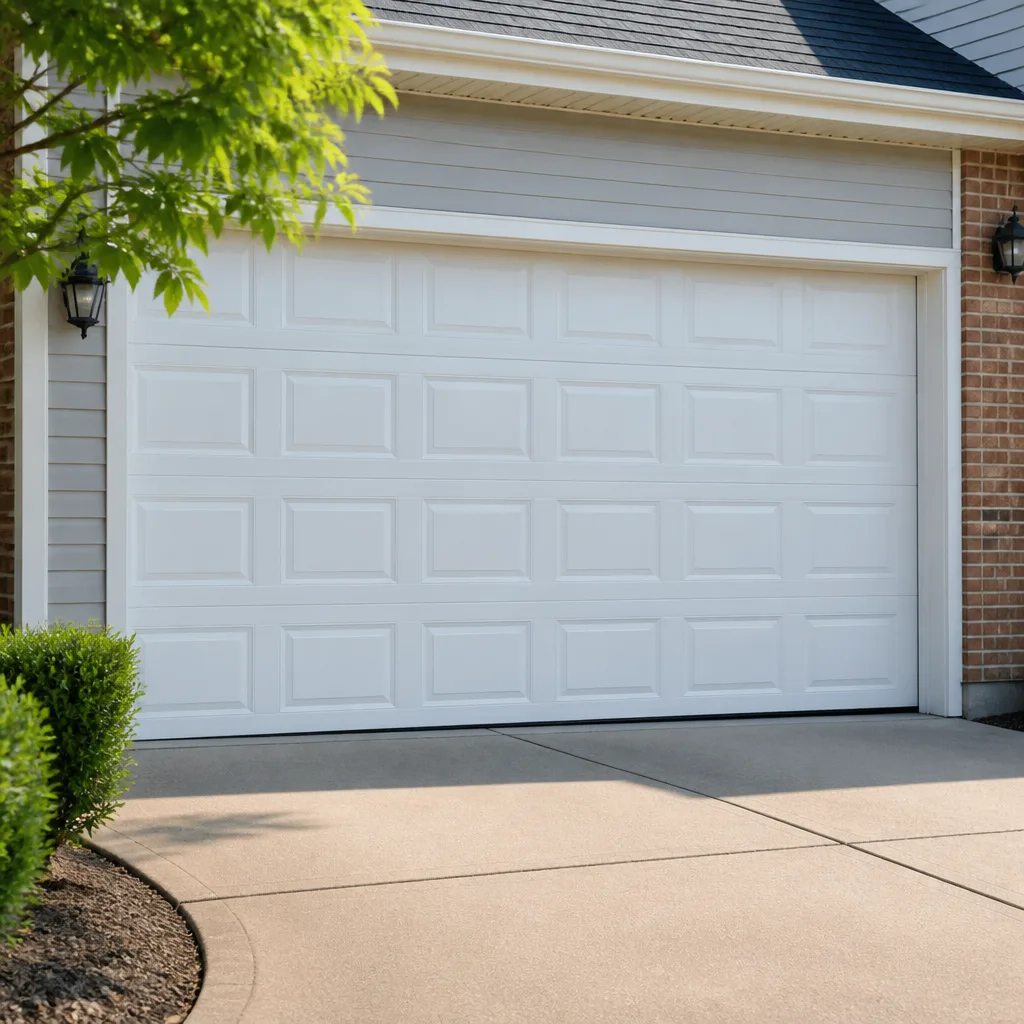
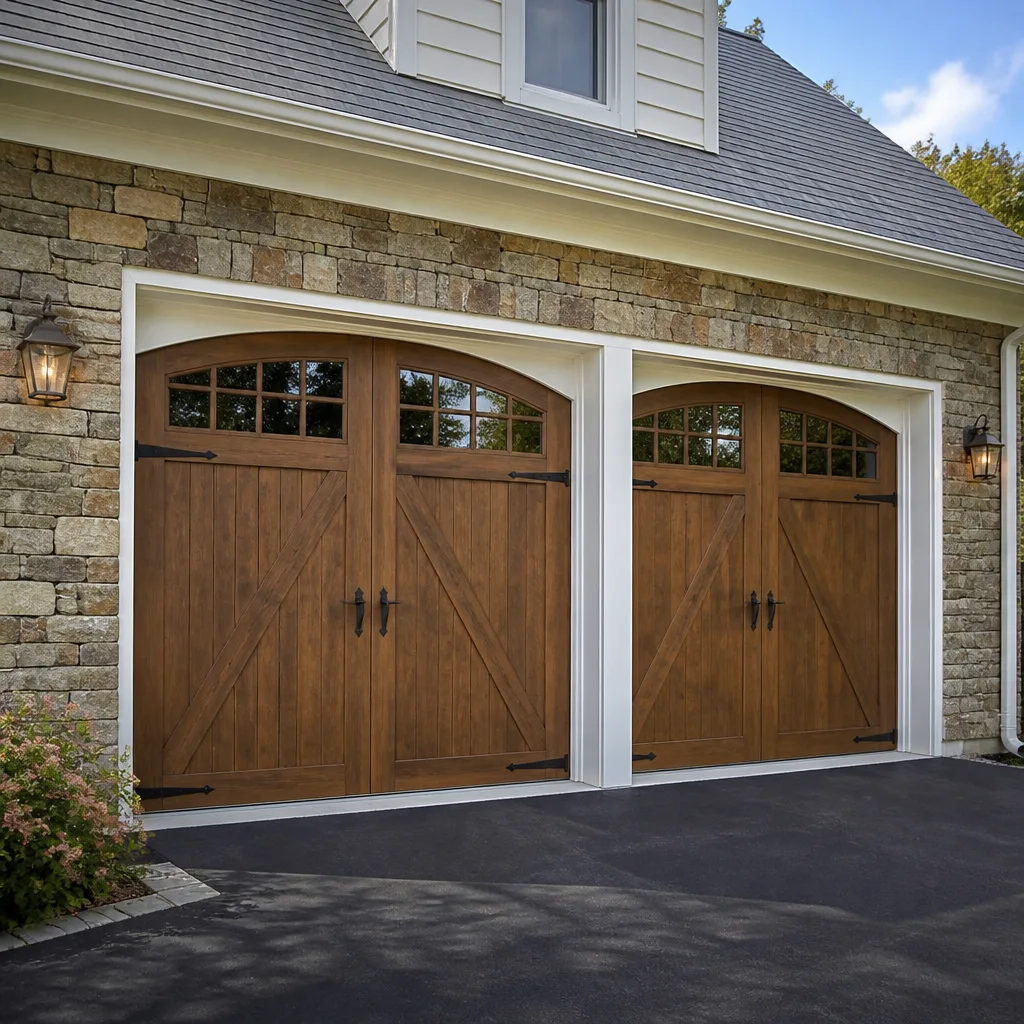
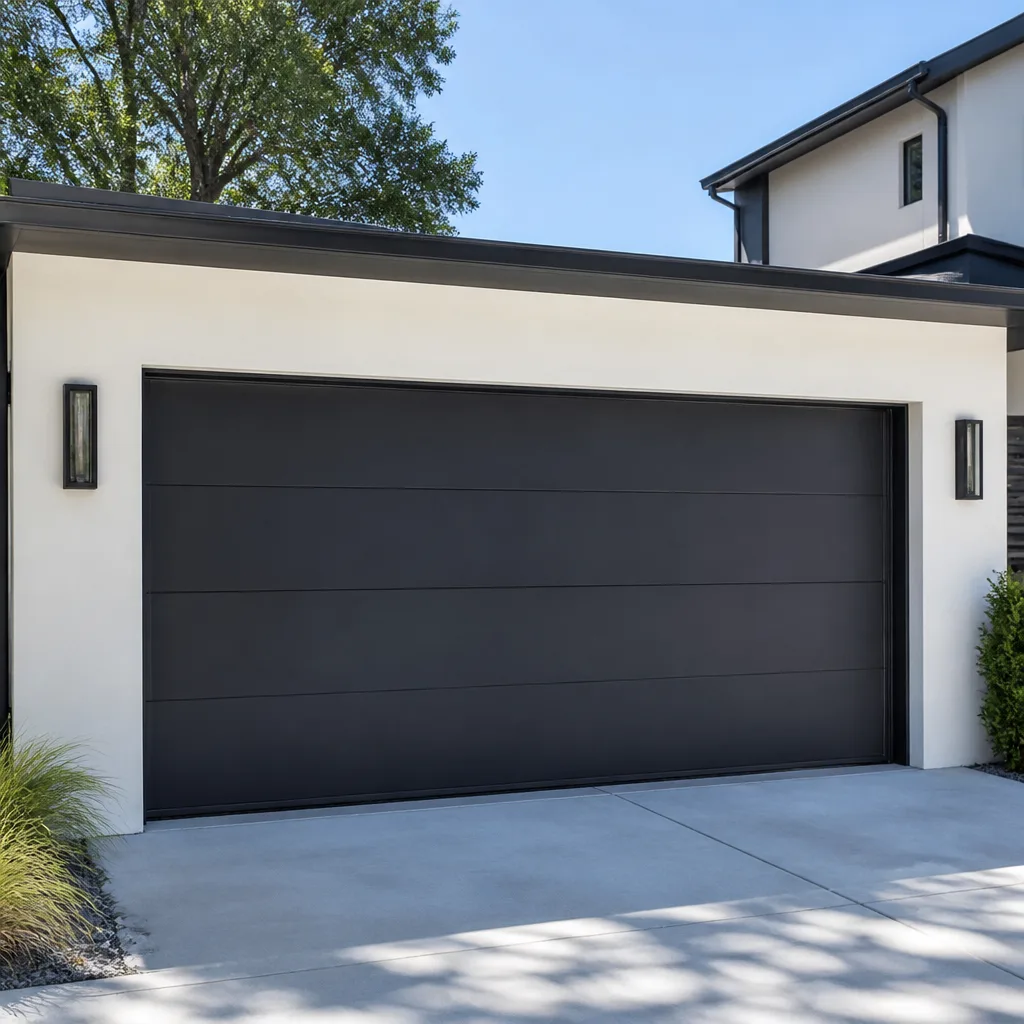
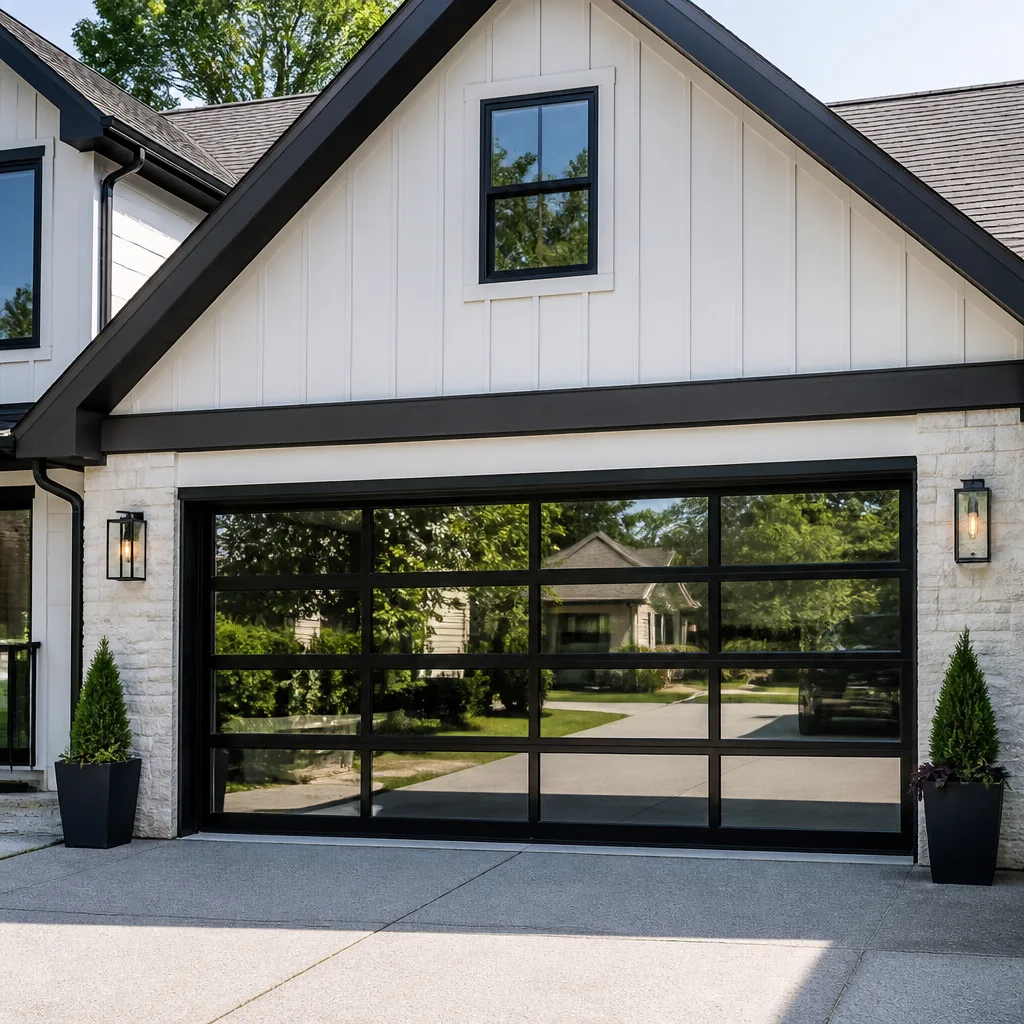
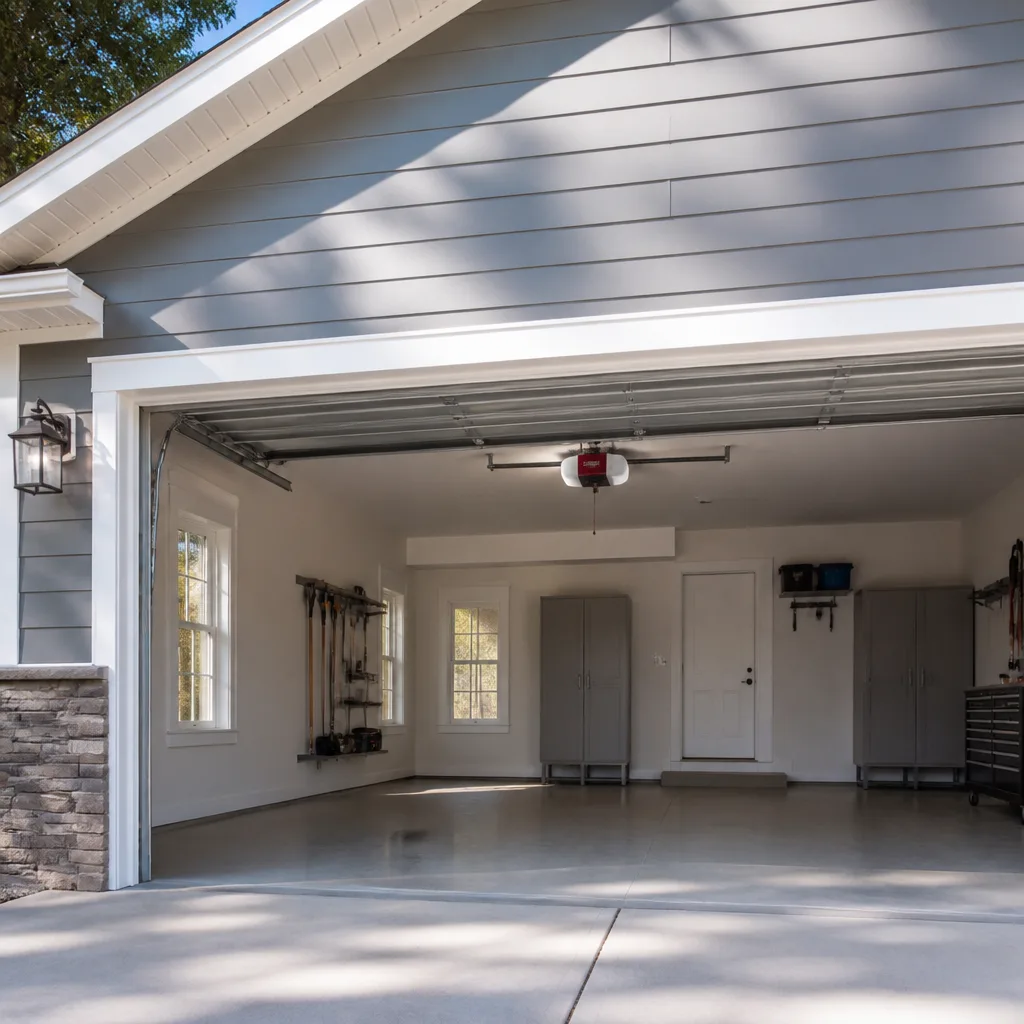
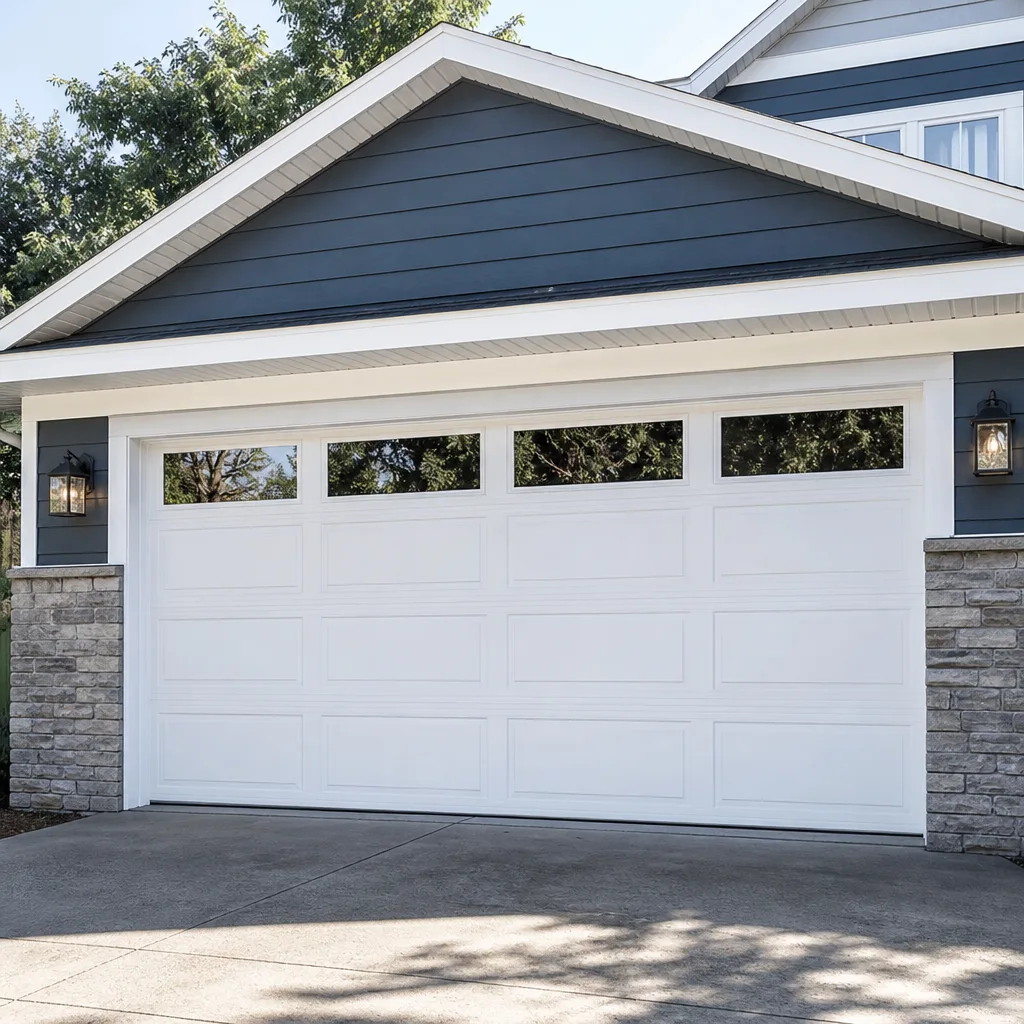
 Before
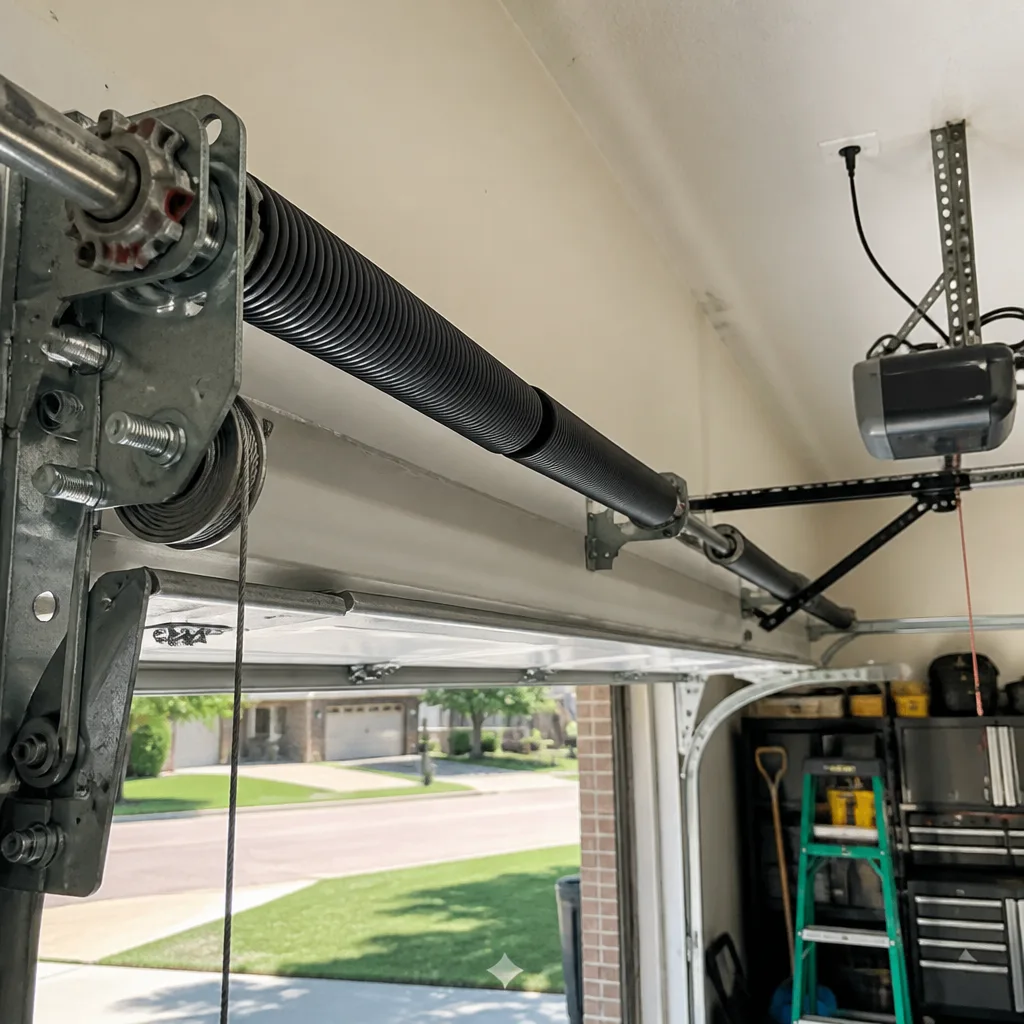 After
After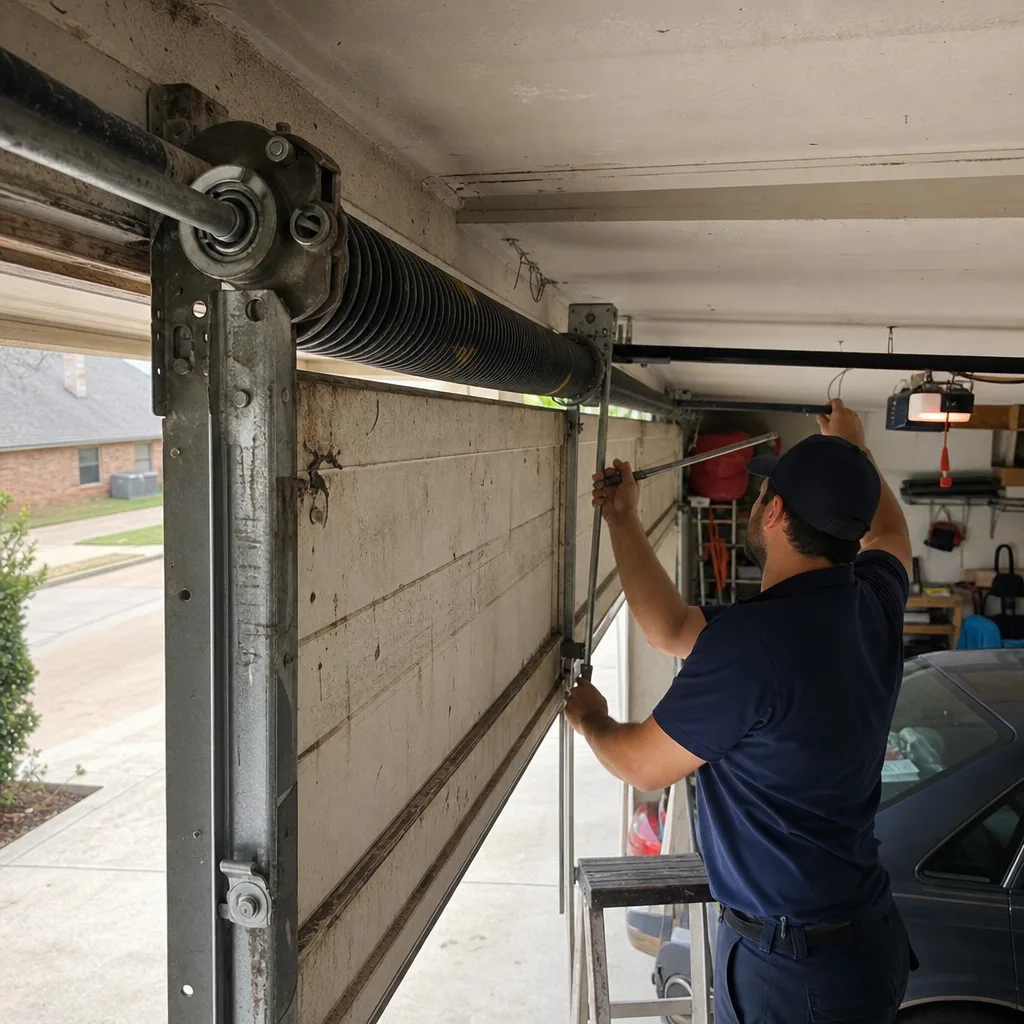 Before
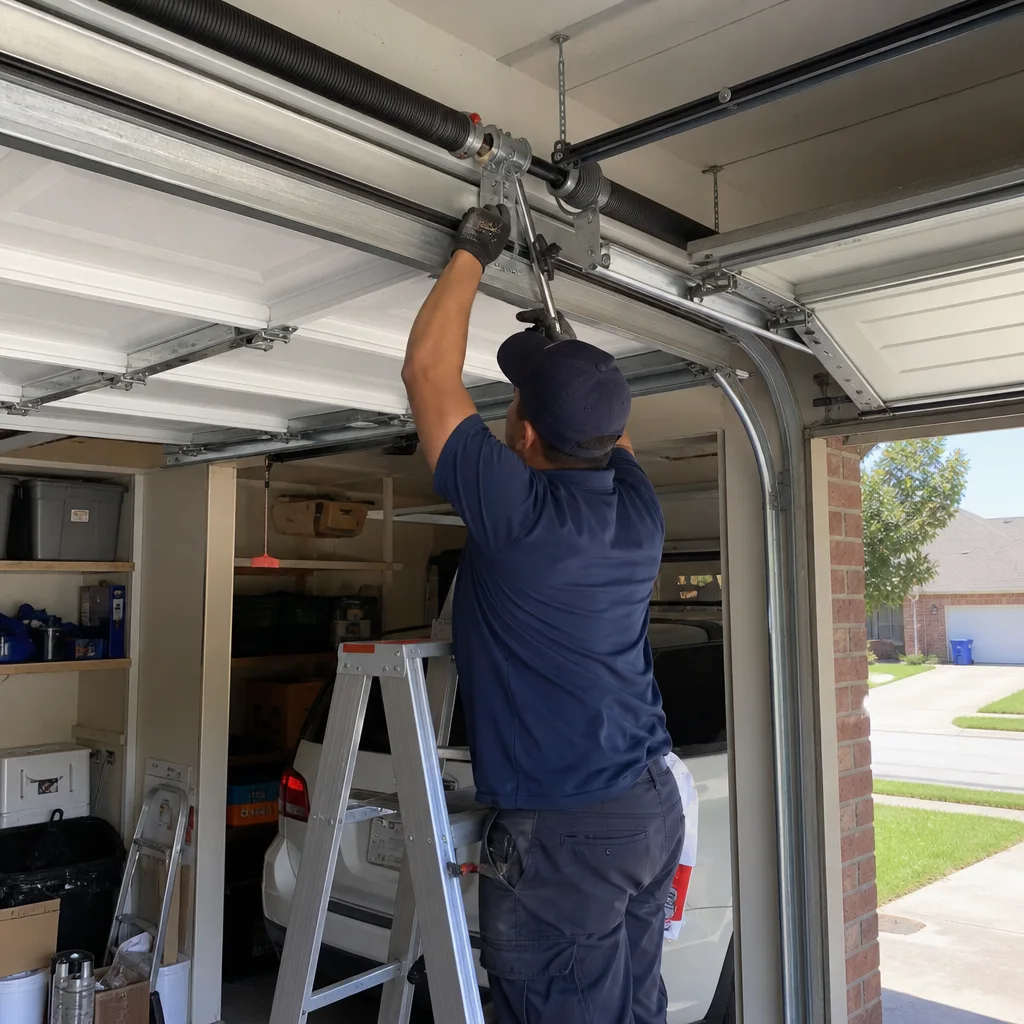 After
After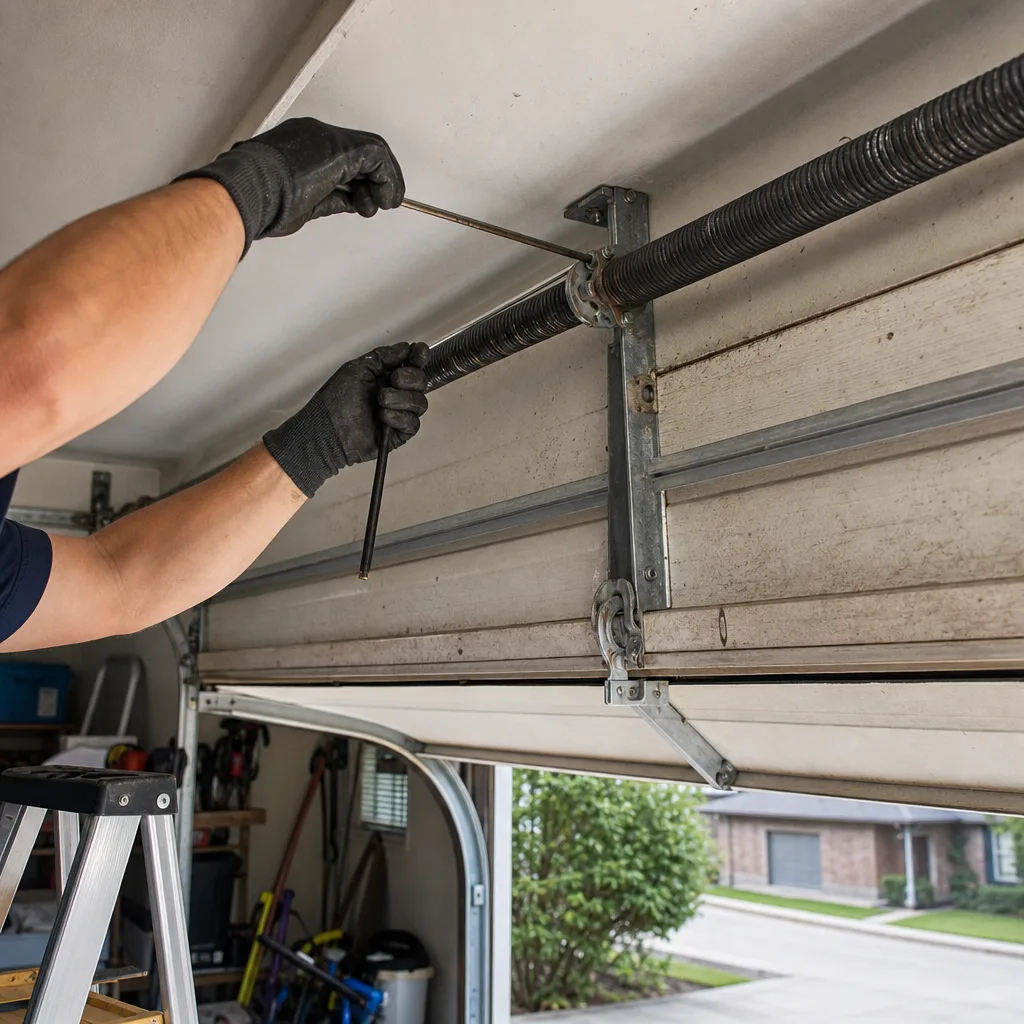 Before
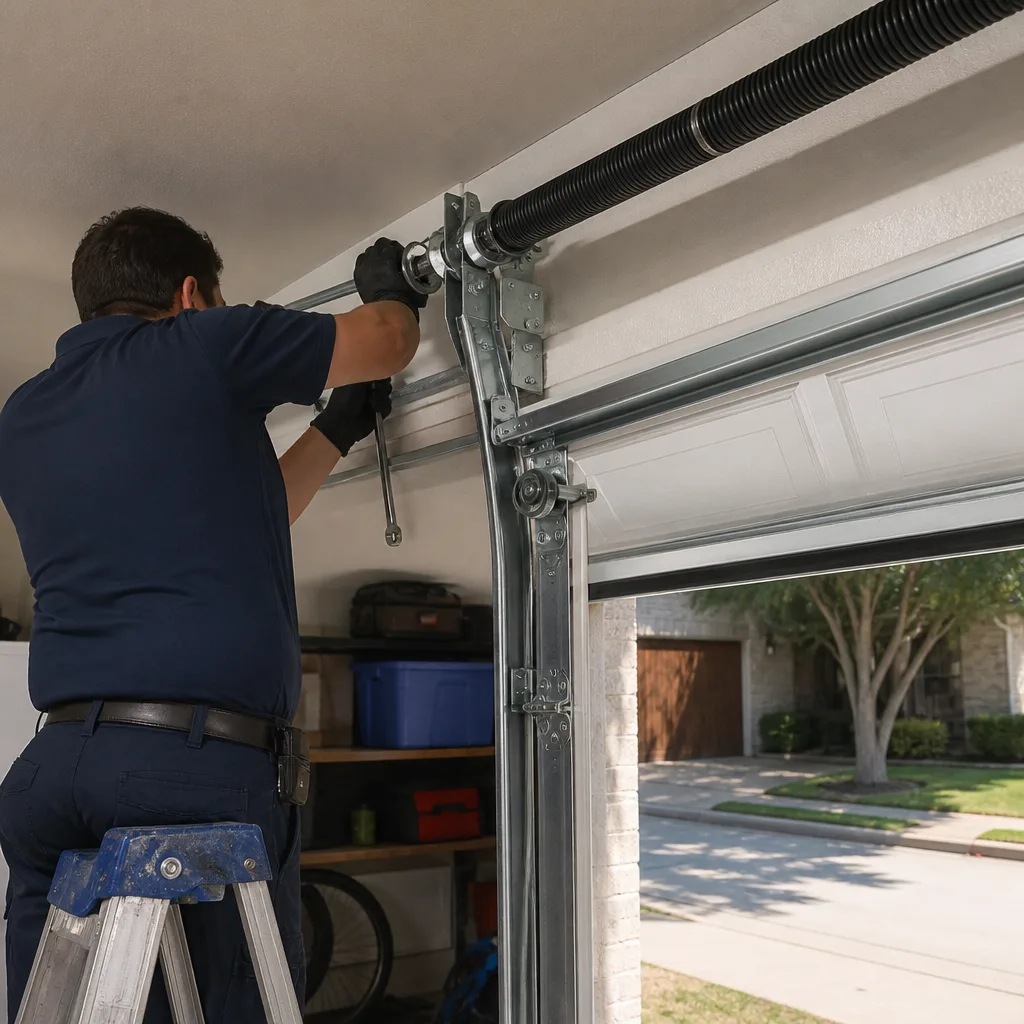 After
AfterGarage Door Permits, Codes & Inspections in TX: What You Need to Know
Most garage door replacements in Richardson do not require a permit. The ones that do are exactly the jobs where skipping it causes the most expensive problems. After 42 years in this trade, we’ve seen homeowners in neighborhoods like Canyon Creek and Heights Park learn the hard way that a $150 permit could have prevented a $3,000 remediation. This guide explains when Texas garage door work needs a permit, what Richardson specifically requires, how to verify past work before buying a home, and what happens when an inspector fails an installation. For more guides & resources, see our blog. You’ll learn the exact thresholds, the IRC fire-separation rules that apply to every attached garage in Texas, and how to protect yourself whether you’re hiring out or doing the work yourself.
Quick Answer
Texas does not require a statewide contractor license for garage door work, so oversight falls to individual cities. In Richardson, a permit is generally required only when the work involves structural alteration, creation of a new door opening, or new electrical circuits for an opener. Standard replacements of existing doors and openers on existing wiring typically do not need a permit, though all work must comply with the International Residential Code fire-separation requirements for attached garages.
Table of Contents
- When Is a Permit Required in Richardson?
- When You Don’t Need a Permit
- The IRC Fire-Separation Rule Every Attached Garage Must Follow
- How to Verify Permit Status on Past Work Before Buying or Selling
- What a Failed Inspection Actually Requires
- How to Pull a Permit Yourself in Richardson
- Common Mistakes to Avoid
- When to Call a Professional
- Frequently Asked Questions
- The Bottom Line
When Is a Permit Required in Richardson?
Richardson’s Building Inspections Department follows a straightforward threshold, and it’s narrower than many homeowners expect. The city requires a permit when garage door work crosses into three specific territories: structural modification, new opening creation, or new electrical circuit installation.
Structural alteration means any change to the load-bearing framing around the door. If you’re widening a single-car opening to fit a double door, cutting into the king studs or header, or modifying the lateral bracing that keeps the garage wall square during high winds, you’ve triggered the permit requirement. Richardson sits in Collin County’s severe wind zone, and the city amended the 2021 International Residential Code with local wind-load provisions. Any header modification must be engineered for the 115 mph design wind speed that applies here.
New opening creation applies when you’re cutting a door into a wall that never had one. Converting a window to a door, adding a side-entry garage door to a detached workshop, or finishing a new construction garage all require permits and inspections. The inspector will verify header sizing, jack stud placement, and the continuous load path from roof to foundation.
New electrical work is where many homeowners get surprised. Replacing an existing opener on existing wiring does not need a permit. Running a new 120V circuit from the panel to a garage that never had an opener does. So does installing 240V service for a commercial-grade operator, adding receptacles, or modifying the garage’s electrical layout in any way. Richardson requires electrical permits for any new circuit, and the work must be performed by a licensed electrician or a homeowner on their own primary residence.
Here’s the specific trigger list for Richardson permits:
- Widening or narrowing an existing door opening
- Raising the header height (common when homeowners want clearance for a lift or taller vehicle)
- Installing a door in a new wall or newly enclosed space
- Running new electrical circuits for openers, lighting, or accessories
- Converting a carport to an enclosed garage with a door
- Any work on a home in a Richardson historic district that affects exterior appearance
Carl Dutton has walked through the Richardson permitting process with homeowners dozens of times. The city’s building official is straightforward to work with, but they do not grandfather work that should have been permitted. If an inspector sees evidence of recent unpermitted structural work during a real estate inspection, the sale stops until it’s resolved.
When You Don’t Need a Permit
The majority of garage door service calls in Richardson fall outside permit requirements. Understanding this boundary saves time and money, and it helps you evaluate whether a contractor is padding the job with unnecessary bureaucracy or, worse, skipping required oversight.
Standard door replacement on existing framing needs no permit. If your 16×7 door is failing and you install another 16×7 door in the same opening, with the same track configuration and no structural changes, Richardson does not require inspection. This applies whether you’re keeping the same brand or switching from a Wayne Dalton to a Clopay, from steel to composite, or from non-insulated to insulated.
Opener replacement on existing wiring is similarly exempt. Swapping a failed Craftsman for a new LiftMaster, upgrading from chain to belt drive, or replacing a Genie with a wall-mounted jackshaft model all fall within normal maintenance. The existing electrical connection must remain unchanged. If your old opener was hardwired and the new one needs a dedicated receptacle where none exists, you’ve crossed into permit territory.
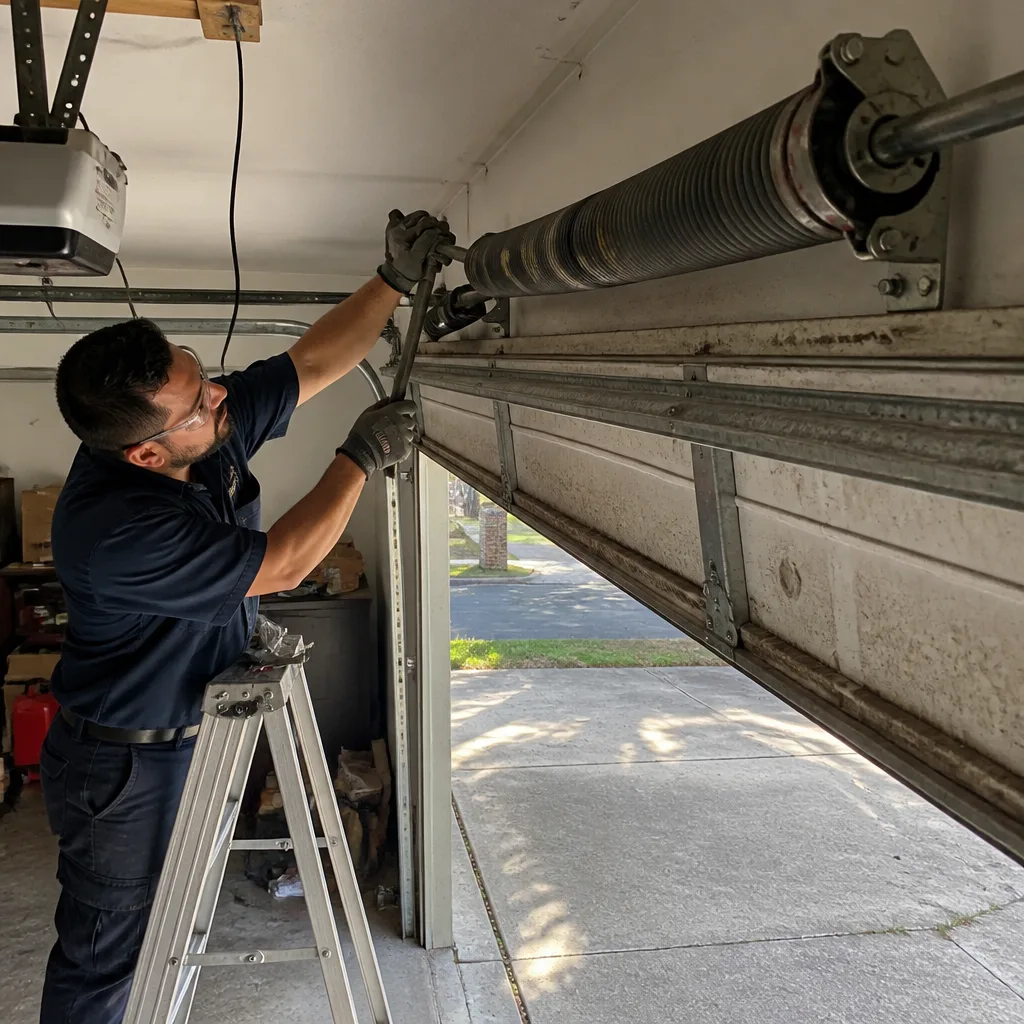
Spring, cable, roller, and hardware replacement never requires a permit. These are repair parts on a system already in place. We’ve replaced thousands of torsion spring assemblies in Richardson homes from Buckingham to Spring Valley without a single permit. The work is dangerous, which is why we send trained technicians, but it’s not regulated by the building code.
Weatherstripping, panel replacement (on sectional doors where individual panels are designed to be replaced), and routine maintenance like track alignment, lubrication, and safety sensor adjustment are all permit-free.
The key distinction Richardson’s building official uses: does the work change the building’s structure, create a new conditioned space, or add new electrical load? No to all three means no permit. When in doubt, a five-minute call to Richardson Building Inspections at City Hall clarifies the specific project, or consult our Garage Door Repair Maintenance Checklist for Richardson Homeowners. We encourage homeowners to make that call. A legitimate contractor will never discourage you from verifying permit requirements with the city directly.
The IRC Fire-Separation Rule Every Attached Garage Must Follow
This is the code requirement that catches the most homeowners and even some contractors off guard. Whether or not your garage door work needs a permit, if your garage is attached to your house, the International Residential Code mandates fire separation between the garage and living space. In Texas, the IRC is adopted at the state level with local amendments, and Richardson enforces it without exception.
IRC Section R302.5 requires that the garage be separated from the residence and its attic area by not less than 1/2-inch gypsum board applied to the garage side. If there’s a habitable room above the garage, the separation must be 5/8-inch Type X gypsum board. The door between house and garage must be 20-minute fire-rated, solid wood not less than 1-3/8 inches thick, or honeycomb steel not less than 1-3/8 inches thick. Self-closing hinges are required.
Where garage door work intersects with fire separation is in three common scenarios:
- Penetrations for opener wiring: When running low-voltage control wires or power cables through the garage ceiling or walls into the house, the penetration must be fireblocked. Unsealed holes create a chimney effect that feeds fire into living spaces. We see this constantly in older Richardson homes in Duck Creek and Richland Park, where DIY opener installations from the 1990s left gaping holes.
- Door panel materials: While the garage door itself is not required to be fire-rated (it’s an exterior opening), the frame and surrounding trim must maintain the wall’s fire-resistance rating. This becomes relevant when homeowners install custom wood frames or insulation packages that modify the wall assembly.
- Firewall continuity at the header: In attached garages with living space above, the header area above the garage door must maintain the 5/8-inch Type X gypsum separation. We’ve encountered remodelers in Richardson who removed this protection to accommodate a taller door, violating the code even when the door replacement itself didn’t need a permit.
Richardson’s inspectors check fire separation during every permitted garage modification and during many real estate inspections. A failed fire-separation inspection requires opening walls, installing proper gypsum, sealing penetrations with rated caulk or intumescent sealant, and re-inspection. The cost typically runs $800 to $2,400 depending on accessibility, far more than doing it correctly the first time.
Our technicians carry fire-rated sealant and gypsum repair materials on the truck for jobs where we discover prior violations. It’s not the headline work, but it’s part of doing the job right. The Garage Door Installation in Richardson page details how we handle fire-separation verification on every attached-garage project.
How to Verify Permit Status on Past Work Before Buying or Selling
Richardson’s housing stock includes homes built from the 1960s through new construction, and garage door work spans decades of varying standards. When you’re buying a home in Richardson, or preparing to sell one, unpermitted work becomes your problem. Here’s how to investigate and what it means.
Step 1: Request a permit history from Richardson Building Inspections. The city maintains records back to the 1980s in digital form, with older records on microfilm. Submit a written request with the property address. There’s typically a small fee for research and copies. The report shows all permits pulled, final inspection dates, and any outstanding violations.
Step 2: Compare permits to visible work. If the home has a newer garage door, opener, or finished garage space that doesn’t appear on the permit history, ask the seller directly. Richardson requires disclosure of known unpermitted work, and intentional concealment creates liability.
Step 3: Check for inspection stickers. Richardson inspectors place dated stickers on electrical panels and sometimes on door frames when work is approved. These are not definitive proof, absent permit records, but they’re a positive indicator.
Step 4: Review the seller’s disclosure and inspection report carefully. A competent home inspector will flag evidence of unpermitted structural modification: header seams where a solid beam should exist, mismatched framing lumber, or electrical work without proper stapling and routing. In Richardson’s competitive market, some buyers waive inspection contingencies. We advise against this for homes with any visible garage modification.
What unpermitted work means for your transaction:
- For buyers: You assume the risk. If the city discovers unpermitted work later, you’re the owner of record and responsible for remediation. Title insurance typically excludes permit violations. Some lenders will not close on properties with open permit issues.
- For sellers: Disclosed unpermitted work reduces sale price or kills deals. Undisclosed work found during inspection destroys trust and can lead to post-sale litigation. The cleanest path is to retroactively permit work that should have been permitted, or obtain a letter from the building official confirming the work meets code.
- For both parties: Richardson offers a voluntary compliance program. For a fee, the city will inspect previously unpermitted work. If it meets current code, they’ll issue a certificate of compliance. If not, they’ll specify required corrections. This is often the best path to clear title and satisfy lenders.
We’ve helped numerous Richardson homeowners through this process, particularly in established neighborhoods where garage conversions and door upgrades were common in the 2000s. The Mainspring Garage Door Co. home page has contact information for scheduling a pre-sale inspection that includes permit verification guidance.
What a Failed Inspection Actually Requires
Inspection failure sounds catastrophic, but in Richardson it’s typically a specific, correctable finding. Understanding what happens helps you evaluate contractor quality and budget realistically for permitted work.
When a garage door project fails inspection, the inspector issues a written correction notice with a re-inspection fee, currently $50 to $100 depending on the project scope. The notice lists every deficiency by code section. Common failures in Richardson include:
- Header undersized for span or load: A 16-foot garage door opening in a load-bearing wall needs a minimum 2-ply 2×12 header with a center support, or an engineered LVL. Many DIYers and handymen use single 2x10s that sag within months. Remediation requires temporary support installation, header replacement, and re-inspection.
- Jack studs missing or improperly placed: The IRC requires full-height jack studs on each side of the opening, with king studs beyond them. Cripples above the header must be properly spaced. We’ve seen failures where a contractor used adjustable steel columns instead of proper framing, or where jack studs were cut short to accommodate a taller door.
- Wind-load anchorage inadequate: Richardson’s 115 mph design wind speed requires specific track anchorage and, for larger doors, reinforced vertical struts. Standard-duty residential hardware fails this requirement. Remediation means adding struts, upgrading to commercial-grade track, and sometimes replacing the door with a wind-load-rated model.
- Fire separation compromised: As detailed above, any penetration without proper fireblocking fails. Remediation involves opening the wall or ceiling, installing proper gypsum and sealant, and repairing finishes.
- Electrical violations: New circuits without GFCI protection in garages, improper wire routing through door frames where abrasion occurs, or open splices instead of junction boxes. These require electrician correction and electrical re-inspection.
The critical point: re-inspection alone is not enough. You must correct every listed deficiency, obtain sign-off from the inspector that corrections are complete, and pay the re-inspection fee before the permit can be finaled. In Richardson, permits that remain open beyond 180 days from issuance require renewal and additional fees. An open permit blocks future permits on the same property.
We’ve taken over failed projects from other contractors in Richardson, particularly after wind-storm seasons reveal inadequate installations. Our approach is to photograph every stage, build to exceed code minimums, and schedule the inspector at completion only when we’re certain of pass. It’s slower than guessing, but it avoids the cost and delay of failure.
How to Pull a Permit Yourself in Richardson
Texas’s lack of statewide contractor licensing means homeowners can perform their own garage door work and pull their own permits. Richardson allows owner-builder permits for work on the owner’s primary residence, with specific requirements and limitations.
Step 1: Determine if you’re eligible. The owner-builder exemption applies only to your primary residence, not rental properties or flips. You must occupy the home or intend to occupy it within 90 days of permit issuance. Richardson verifies this through utility records and sworn affidavit.
Step 2: Prepare your application. Visit Richardson’s Development Services portal or the counter at City Hall. You’ll need:
- A site plan showing the property boundaries, structure location, and work area
- Construction drawings showing framing details, header specifications, and materials
- Manufacturer specifications for the door, track, and opener
- Electrical plans if any new circuits are involved (must be prepared or reviewed by a licensed electrician, though you can still perform the work yourself)
- Proof of ownership and occupancy intent
Step 3: Submit and pay fees. Permit fees in Richardson for garage door structural work typically run $150 to $400 depending on valuation. Electrical permits are separate, typically $75 to $150 per circuit. The city reviews plans within 5 to 10 business days for residential work.
Step 4: Schedule inspections at required stages. For structural work, Richardson requires rough inspection before drywall or finish materials cover the framing, and final inspection after completion. Electrical work requires rough and final inspections separately. You must call for inspection at least 24 hours in advance, and the work must be accessible and complete for the stage being inspected.
Step 5: Obtain final approval. All corrections must be made and re-inspected if necessary. The final inspection sticker and certificate of completion are your proof of compliant work.
Critical limitation: Owner-builder work carries full liability. If your installation fails and damages property or injures someone, your homeowner’s insurance may deny claims for unlicensed work. If you sell the home, you must disclose the owner-builder status, and some buyers’ lenders require licensed contractor completion. For electrical work, many insurers require licensed electrician sign-off regardless of permit status.
Our honest assessment: for standard door replacement, DIY is feasible for skilled homeowners with proper tools and helpers. For structural modification, the risk calculus shifts. A failed header installation can collapse, destroy the door, and damage vehicles. In 42 years, we’ve responded to dozens of DIY failures in Richardson, and the savings rarely survive the remediation cost.
Common Mistakes to Avoid
- Assuming no permit means no rules. Even permit-exempt work must comply with IRC fire-separation and safety standards. An unpermitted opener installation with unsealed wall penetrations creates the same fire hazard as a permitted one, and liability falls harder on the homeowner without inspector verification.
- Hiring based on “we handle permits” without verification. Some Richardson contractors claim to pull permits but never do, or pull permits and never call for inspection. Always verify permit status independently through the city before final payment. A legitimate contractor welcomes this verification.
- Ignoring wind-load requirements. Richardson’s location in the Texas severe wind zone means standard-duty doors often fail inspection or fail in storms. Specify wind-load-rated doors for any new installation, particularly on west and south exposures that take the brunt of spring storm fronts.
- Modifying electrical without understanding the permit trigger. Homeowners frequently replace openers and discover too late that their “simple swap” required new wiring. If your garage lacks a grounded receptacle within 6 feet of the opener location, you’re likely in permit territory.
- Skipping the pre-sale permit search. Richardson’s real estate market moves fast, but a $50 permit history request can reveal six-figure problems. We’ve seen deals fall apart three days before closing over a garage conversion permitted as storage but finished as living space.
- Accepting “it passed in the next city” as equivalent. Plano, Garland, and Dallas have different amendments, fee structures, and inspection standards. Work that passed in Allen may fail in Richardson. Always verify against the specific city’s adopted code and amendments.
- Treating the door as independent of the opener system. A new door on old track with a mismatched opener creates safety hazards that no permit inspection will catch. The inspector verifies code compliance, not operational compatibility. That’s your responsibility or your contractor’s.
When to Call a Professional
Call a professional when the work involves structural modification, new electrical circuits, or any project where failure would cause injury or significant property damage. Torsion spring replacement, while permit-exempt, is genuinely dangerous and requires specialized tools and training. We’ve seen serious injuries from springs releasing unexpectedly in Richardson homes.
Call when you’re buying or selling a home and need permit verification. Call when a previous owner’s work looks questionable. Call when you want the job done once, correctly, with a written guarantee behind it.
Garage Door Repair in Richardson from Mainspring Garage Door Co. includes permit guidance on every project that might require it. We pull permits when needed, schedule inspections, and correct any findings at no additional charge. Our 90-Day Done Right Promise covers every completed job. Free estimates are available by calling (945) 495-3552. A live person answers, 24/7, including nights and weekends.
Frequently Asked Questions
Residential garage door permits in Richardson typically cost $150 to $400 for structural work and $75 to $150 for electrical circuits, plus re-inspection fees if corrections are needed. The exact fee depends on the project’s valuation and scope. Call Richardson Development Services at (945) 495-3552 for a precise quote on your specific project, or call us at (945) 495-3552 and we’ll help you determine what’s required.
No, if you’re replacing an existing opener on existing wiring. Yes, if the installation requires new electrical circuits, new receptacles, or modification to the garage’s electrical system. The distinction matters because many older Richardson homes lack grounded outlets near the opener location, and adding one triggers the electrical permit requirement. We verify this during our free estimate and can coordinate electrician partners when needed.
A competent inspector will flag evidence of unpermitted structural work, such as modified framing without matching permits, or electrical work that doesn’t match the panel’s configuration. Cosmetic door replacement without structural change rarely triggers flags unless the inspector notices fire-separation violations. In Richardson’s competitive market, we recommend proactive permit verification before listing, which we can assist with during a pre-sale inspection call at (945) 495-3552.
You must disclose known unpermitted work on the seller’s disclosure. Failure to disclose creates liability for fraud. Buyers may demand price reductions, require retroactive permitting at your expense, or walk away entirely. Lenders sometimes refuse to fund properties with open permit violations. The cleanest resolution is Richardson’s voluntary compliance program, which inspects the work and issues a certificate if it meets code.
Texas does not require a statewide contractor license for garage door work. This is why local municipal permits matter so much, they provide the only oversight layer. Richardson requires no contractor license for permit applicants, though electrical work must be performed or reviewed by a licensed electrician. When hiring, verify local reputation, insurance, and references rather than relying on a state license that doesn’t exist for this trade.
Plan review for residential garage door permits typically takes 5 to 10 business days in Richardson, assuming complete application materials. Incomplete applications cycle back for revision, adding days or weeks. Once issued, you have 180 days to complete work and call for final inspection. We handle permit submission on permitted projects and typically receive approval within a week because our drawings and specifications are complete the first time.
The Bottom Line
Richardson’s garage door permit rules are narrower than most homeowners expect, but the exceptions carry real consequences. Standard replacement needs no permit. Structural change, new openings, and new electrical circuits do. Every attached garage in Texas must maintain IRC fire separation regardless of permit status. Before buying or selling, verify permit history through the city. If work fails inspection, correction and re-inspection are mandatory, not optional. The cost of doing it right is always less than the cost of fixing it later. At Mainspring Garage Door Co., we quote the flat price before the work begins, pull permits when required, and stand behind every job with our 90-Day Done Right Promise in writing. No surprises on the bill. We’ll be there when we say.
Written by Carl Dutton, Owner at Mainspring Garage Door Co., serving Richardson since 2016.